

It’s a strange time to sign a lease, as the shock of the COVID-19 pandemic wreaked havoc on the real estate industry.
In a recent survey by consultancy Deloitte, just about all measures of the industry are trending down. Leasing volume is down by 25 percent in some markets, investing in development is down and scores of locations remain shuttered. In research from investment firms Baird and BMO Capital Markets, rent collection also trended down through the second quarter.
A lot of questions remain about the real estate environment. Will prices follow past recessions downward? Will there be growth opportunities as businesses close? And for franchisees finding new sites right now: What protections can I get going into these uncharted waters?
"We’re not though this yet," said Peter Block, an executive vice president at Colliers International. "I had a bunch of brands and restaurants call me up and say let’s get going. I was not done with all the COVID issues, but we were seeing the light at the end of the tunnel. That started, and it’s sputtering a teeny bit right now. We’re in this grey area, not everybody thinks we’re full steam ahead."
Positivity exists, he said, with some operators looking to act on opportunities, but right now he’s working more on terminating leases and renegotiating contracts.
Gary Chou, a senior director at Matthews Real Estate Investment Services in California, said he’s also still working on issues related to COVID-19. He said the company basically changed its operations: Instead of searching for deals, it pivoted to helping people work through the rent relief and renegotiation process.

Renters are logically looking for a safety net, but a lot of their ideas are one-sided. Provisions such as allowing renters to break a lease if a pandemic curtails business are a tough sell.
"Holidays for pandemics or acts of God, a lot of leases have that," said Chou. "Basically, the ability to cancel a lease in a situation like this, that doesn’t make any sense for a landlord. Developers that are not disciplined or sophisticated might accidentally agree to stuff like this."
He said taking a rent holiday to the end of a lease doesn’t make much sense either—that’s just free rent and a lease extension. Deferrals might make sense to the landlord, but renters may be biting off too much if they only push into the fall and hope the business and the economy rebounds enough to pay 50 percent more or double rent.
"I’ve heard talk of percentage rents. Realistically, that’s one of the most logical ways to do it. Ten years or 15 years ago, percentage rent used to be a standard thing. It used to be base rent plus," said Chou. "You share with me on the downside and the upside. But a lot of the ideas of pandemic percentage rent, they only share the downside, not the upside. That’s not a good deal for landlords. Then it becomes a leverage question."
Banks aren’t likely to agree either.
"If you have a trigger for rent abatement upon a government shutdown or pandemic, we revert to base rent or percentage rent. I could see that working if you’re an indie landlord. But I can’t really see lenders being cool with that—it makes the deal much less financeable," said Chou. "There’s really not a lot of great, elegant solutions. Basically, every solution allows me to stop paying you."
Operators share experiences

Despite that instability, growth is happening. Greg Buchanan, who oversees development and helps negotiate real estate for Bonchon franchisees, said there’s some flexibility.
"Rents are softening. In some cases it really depends on the strategy, how you like to formulate the lease. Do you like either TI," tenant improvement money, "and a little higher rent, or less TI and lower rent. Both of those items are a little more flexible than they were six months ago. Even a lot of the other terms I’m finding are negotiable," said Buchanan. "But we’re not necessarily seeing fire sale rents or terms, anything like that."
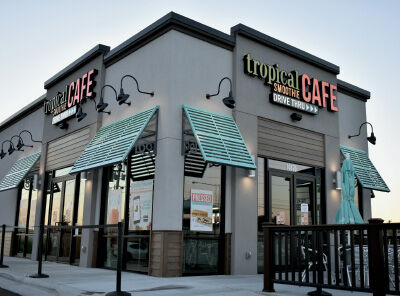
Edward Joubran and Hani Halloun, two Tropical Smoothie Café franchisees with their own operations that are partnering to expand into Illinois, have been signing leases. They said the business plan to open three to five locations hasn’t changed, despite the pandemic. The two leases they recently signed, along with four more that are in the letter-of-intent phase, have some extra protections.
"Certain things are in place now, a deferral program and an abatement consideration. The lawyers have taken more considerations to protect us in the future if there’s another pandemic," said Joubran. "We did a couple things: one was we wanted to make sure if there was a pandemic, we had the opportunity for the next three months deferred, as an example. You can’t put concrete language, but it was asking the landlord to work with the tenant on a deferral program for a year. The other thing was some parking for deliveries, so we asked for two to three exclusive parking spots to help with delivery and curbside pickup."
Those are nice considerations, but as Halloun said, "I don’t think anything has changed with leases financially."
Tommy and Meredith Wiggins, who just signed their first lease for a Cheba Hut in Baton Rouge, Louisiana, said the timing of the coronavirus pandemic meant competition for space dropped off, allowing them to find a great spot between Louisiana State University and dense residential.
"We found the best spot, it was a mile or two south of campus. It was already a restaurant so the buildout wasn’t a huge burden. Then on top of that, our landlord was a local guy who started a franchise in Baton Rouge. So, he understood where we were and he gave us a good deal," said Tommy Wiggins.
Because the local landlord was willing to help out, Wiggins did get some protections if they’re forced to shut down and an extended rent abatement period at the onset of the lease.
"We’re really happy, I can sleep better at night," said Wiggins.
They also negotiated for a few parking spots for curbside and delivery, and an expanded patio.
"I think because he was a franchise owner, he’s been very supportive," said Meredith Wiggins. "And we have curbside and a big patio, so with those, we are going in prepared."