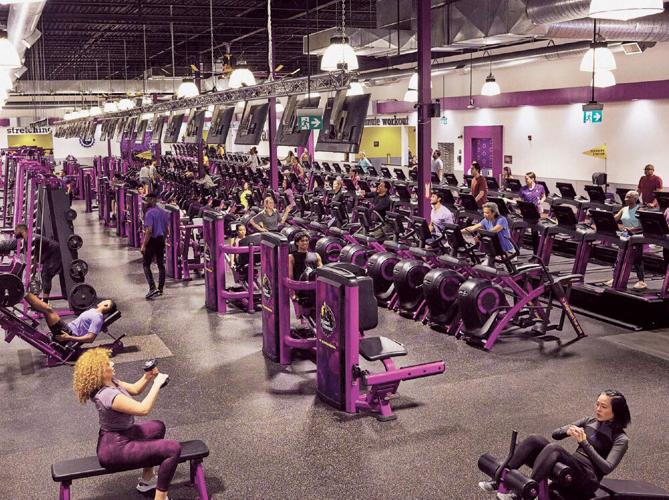




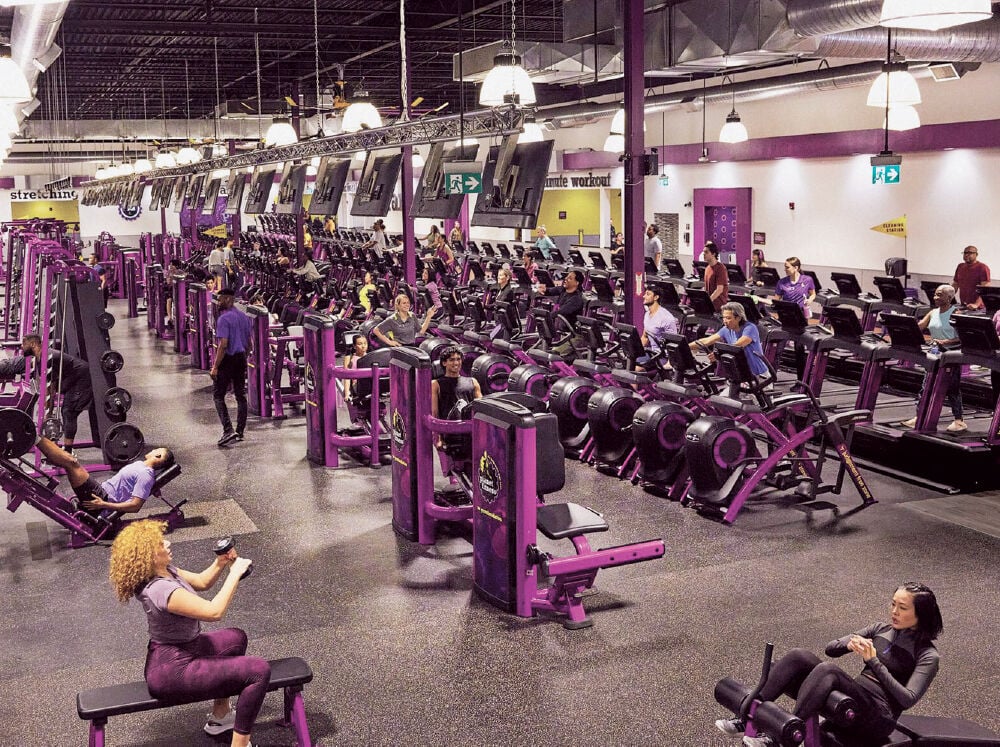
Planet Fitness reported that revenue increased by 13.3 percent to $340.9 million and systemwide sales jumped to $1.4 billion in the second quarter of 2025. Same-club sales increased 8.2 percent, the company said in this week’s earning’s call.
In 2023, membership at fitness centers in the country reached an all-time high of 72.9 million, according to the U.S. Health & Fitness Consumer Report of 2024. Fortune Business Insights, meanwhile, valued the global market for health and fitness clubs at $112.7 billion in 2023 and estimated it will reach $202.78 billion by 2030.
The good news for the industry has resulted in ongoing development since the end of the coronavirus pandemic. Matthews Real Estate Investment Services found transactions for fitness centers for 2022 more than doubled that of 2020. Real estate services company CBRE reported the market value of gyms increased 11.5 percent in the 12 months up to March 2023, the largest increase in a 12-month period.
Paul Sill, head of the Visionary Insights Group at JLL, which specializes in real estate and investment management, said his team crunches membership data for several brands. The results, Sill said, have shown a favorable market for real estate.
“We’re engaging with fitness brands as many want analytics to support their business growth,” Sill said. “As a sector, it seems pretty recession-proof. We’ve worked with startups in the sector that are expanding rapidly, as well as mature brands, from yoga studios to broader concepts doing well. The market is accepting more of these doors.”

John D’Anna is the chief development officer at Crunch Fitness.
In 2024, Crunch Fitness opened 61 locations to reach more than 420 units by year’s end. In 2025, the brand’s aspiration is to develop 100-plus, with a goal of opening two per week. So far, Crunch Chief Development Officer John D’Anna is on track to do so.
Leonard Green & Partners acquired Crunch from TPG Growth earlier this year.
D’Anna said the time it takes with the foundational steps to opening new centers has remained largely consistent over the last few years, though other factors are lengthening the development schedule.
Related: Lenders, Private Equity Lean Further Into Fitness Franchises
“The complexity of designing and equipping a fitness facility that meets the current needs and expectations of our members, along with increased municipal scrutiny, has extended the time required to open,” D’Anna said. “Additionally, we have integrated some technological advancements, in a need to cater to diverse wellness demands. That also contributes to the overall duration needed to launch a location.”
To keep development of new locations smooth and steady, Sill said statistics from existing locations have become critical.
“With their sales performance data and knowing who their members are, we can build some profile models,” Sill said. “We can find a higher concentration of new members, evaluate competition and analyze the demand. If there are a lot of high-potential prospects out there, and people are engaged with pre-existing fitness opportunities, there might not be a great opportunity there.”
For site selection at Planet Fitness, which has an average square footage of 20,000 square feet, Chief Development Officer Chip Ohlsson said the brand looks at three tranches: workout habits of members, drive radius and parking availability.
“The site geographics are also important, and who co-tenants are during the club site selection process,” Ohlsson said. “We also consider the cost of going into a space, including the scope of renovation work, and whether it is a complete remodel or refit with any usable pieces.”
Remodels of existing spaces have become a popular way for many franchises to increase their level of development, and the availability of former big box stores is helping the process. According to JLL’s research, retail closures over the last year freed up almost 140 million square feet.
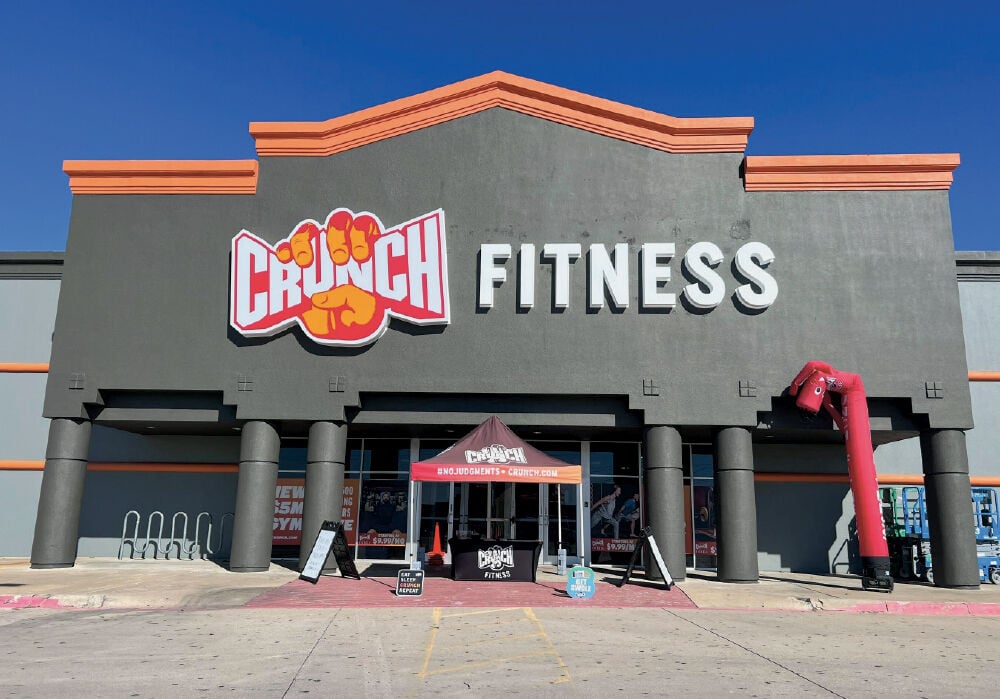
Crunch Fitness has more than 500 gyms in 41 states, the District of Columbia and eight countries.
“Second or third generation locations are a real opportunity for us,” D’Anna said. “The concept of adaptive reuse is a common strategy that’s been increasing with our franchisees. Many of these older retail spaces possess locational superiority, whether it’s by virtue of how long they’ve been there or how they’re built along high traffic corridors and placed among established co-tenants.”
D’Anna said franchisees have had success in transitioning former big box retailers, but have gotten creative with other open spaces, including grocery stores and movie theaters. Additionally, Crunch Fitness allows flexibility in its development by offering three store models for development, ranging from 10,000 to 60,000 square feet.
“Generally, converting an existing building is less expensive than constructing a new unit,” D’Anna said. “Especially considering structural components like the foundation, roofing and basic utilities. Speed-to-market is another benefit with the strategy. The preexisting shell characteristics have to fit the needs, though. We’re talking about size, ceiling height and those things. Layout and column placement as well as floor loads can also be issues.”
For Planet Fitness, meanwhile, Ohlsson said, both new builds and remodels have their own merits.
“Real estate is something we constantly look at, as it is unique in each market,” Ohlsson said. “Selecting existing spaces opens up more opportunities for our franchisees and is good for Planet Fitness and the landlords. As a company, we always want the best location possible while keeping our member experience top of mind.

Chip Ohlsson is the chief development officer at Planet Fitness.
“So, if that means we need to remodel a club or relocate a club, we will,” said Ohlsson. “We take advantage of big box spaces when they become available, in close partnership with our franchisees, especially as it may be challenging for landlords to find other tenants who need that much space.”
During Planet Fitness’ first quarter earnings call, the brand projected the opening of between 160 and 170 clubs by the end of 2025, adding to its 2024 year-end total of 2,722. That process, Ohlsson said, continues to be one with heavy franchisee involvement.
“We want our franchise partners to maximize their return on investment and be efficient with the space they have,” Ohlsson said. “We assess the space and invest in what we know is important to members. We’re always keeping the member experience front and center while being mindful of costs.”
At Crunch, D’Anna said the four-year plan for the concept is to quadruple its unit count.
“In order to do that, we’re making certain that our franchisees are well equipped,” D’Anna said. “We have the right resources in order to do that. Now, box availability and overall profitability is always going to pose challenges, but we’re acutely aware of what it looks like in terms of rent and market availability.”
“I think fitness as a category is one proving to be resilient,” Sill said. “People want to spend money on taking care of themselves and get out of the house. It’s something people were starving for during the pandemic. They’re done working out in their basements and want to get back to being social. I’m very bullish on how it’s going to perform.”

