
Plenty of grousing has come from franchisees and franchisors in many industries over the effect the Affordable Care Act (ACA) might have on their businesses. But much less complaining is heard from certain corners of the healthcare industry.
At least some franchised providers of home healthcare and medical equipment see Obamacare as a chance to get ahead. The optimism at Vancouver-based Nurse Next Door stems from a provision in the Affordable Care Act that penalizes hospitals when too many of their patients are readmitted within 30 days of being discharged. The incentive is higher now for those hospitals to seek home healthcare partners to help ensure their patients don’t end up as readmissions within a month.
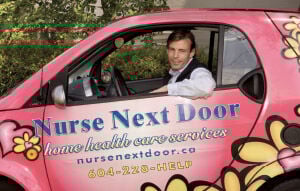
New rules under the Affordable Care Act have "really elevated our industry and the role we play," says John DeHart, president and CEO of Nurse Next Door and pictured above.
"That’s really elevated our industry and the role we play," says John DeHart, president and CEO of Nurse Next Door. "This whole legislation is around reducing hospitalization rates. It potentially is a real boon for our industry."
Just the basics
While headquartered in Canada, Nurse Next Door’s website lists some of its fastest growth cities as San Francisco, Chicago, Boston, Los Angeles and Atlanta. The company’s services are aimed at keeping seniors healthy and in their homes. Its caregivers ensure clients eat healthy meals, get bathed and dressed and take their medication. Those patients’ inability to follow doctor’s orders and follow through with meds, DeHart says, is a common reason they end up getting readmitted.
"It’s the basics that are really important when it comes to keeping someone in the home," he says.
Nurse Next Door is not covered by Medicare. The company is hired by the patient or a family member. DeHart says under the new healthcare legislation, hospitals have an incentive to recommend companies like his. Readmission rates typically run at around 20 percent, but DeHart says patients who use his company’s services are only readmitted about 6 percent of the time.
"It’s starting to raise the awareness of the private-duty industry," he says. "It is in a hospital’s best interest to refer patients to a provider like us because it helps them."
Nurse Next Door is growing at about two new franchisees per month and now has 70 operational across North America. The franchisee hires care providers, generally starting at just one or two employees, and then adds more as more patients are added. As the franchisor, Nurse Next Door does all the scheduling and logistics, such as finding cooks to meet the needs of patients with specialized diets. Using demographic data, DeHart says, the company can "accurately predict what kind of team we are going to need."
‘This is what we do’
Leann Reynolds, president of Greenwood Village, Colorado-based Homewatch CareGivers, notes many of the same opportunities for her company, which has more than three decades of home care experience and a reputation for specialized dementia care.
"There are challenges associated with the Affordable Care Act, but also tremendous opportunities for home care companies," she says.
There are, she says, three primary goals associated with Obamacare: Improved outcomes, improved health management for people suffering from chronic conditions and reduced costs. The home care industry, she says, is positioned to help companies improve those outcomes.
Many of the problems that prevent achieving those goals include falls, failure to follow up with doctors or take medications and lack of exercise or poor diet.
"This is what we do, help people maintain and sustain a good quality of life," Reynolds says. "We have been doing this for a number of years. We’re in the home helping individuals."
The company has more than 200 locations spread across about 35 states and several foreign countries. Most of the company’s franchisees recognize the opportunities for growth and are pretty excited, she says, adding she is challenging them to find ways to take operational practices to the next level. Homewatch CareGivers provides in-depth training to caregivers in treating various conditions and keeps detailed data on outcomes that can help referral companies understand how important the home-care services can be.
"We have several strategic partners who are clamoring to work with us because they know we can solve this problem for them," she says.
Andrew Horton, formerly vice president of business development for FranChoice, says these examples are part of a larger trend. Whether it’s the aging population, people living longer or more seniors wanting to stay in their own homes, these medical businesses are growing quickly.
"We’re still seeing a ton of interest in the medical and senior care- based industries, so the ACA hasn’t seemed to slow down that at all," he says, adding that whether the franchisors are larger systems or start-ups, "I also have not seen any slowdown in franchisors contacting me for help in finding franchisees for their systems in these areas."
This is also true for some franchised medical supply companies, such as 101 Mobility, which sells, installs and repairs accessibility equipment, such as stair lifts and wheelchair ramps, both for private individuals and commercially.
The company has been franchising since 2010. It has 24 franchisees right now, with 70 territories awarded, says CEO Dave Pazgan. The ACA’s hospital readmission rules provide Wilmington, North Carolina-based 101 Mobility with an opportunity because products like barrier-free showers and grab bars can make bathrooms safer, as can stair lifts for someone not stable on stairs.
"There may be opportunities that come out of this where insurance companies say ‘we’d rather outfit the home for safety than risk readmission,’" he says. "One thing that can assist in reducing readmission rates is safety equipment in homes."
More clarity desired
There are still some concerns over Obamacare. DeHart would like more clarity on some definitions regarding employee categories. Nurse Next Door employees are not hired full-time or part-time, but on a casual basis to meet specific client needs. The ACA does not specify how casual employees will be factored, which is important because as some of his larger franchisees grow, they could approach the 50-employee threshold requiring businesses to provide healthcare coverage for their workers or pay fines.

Medical supply companies including 101 Mobility are seeing opportunities for outfitting homes with safety equipment.
"That definition is really important to us," he says.
At 101 Mobility, a minor challenge comes from a new excise tax added to certain medical equipment. Pazgan says some manufacturers pass that cost on to companies like his, but adds "it’s not a game changer or earth shattering for us."
For Reynolds, communicating the specifics of the ACA’s rules to her team of franchisees can be a challenge, but it’s nowhere near the biggest one her company faces. That remains raising public awareness around the existence of home care options.
"A lot of people aren’t aware that home care exists," she says. "People just continue to struggle with ‘how am I going to afford these services’ and ‘who actually pays for them.’ There is just so much confusion," not so much with the ACA itself, but "just in general some of the struggles with home care."

