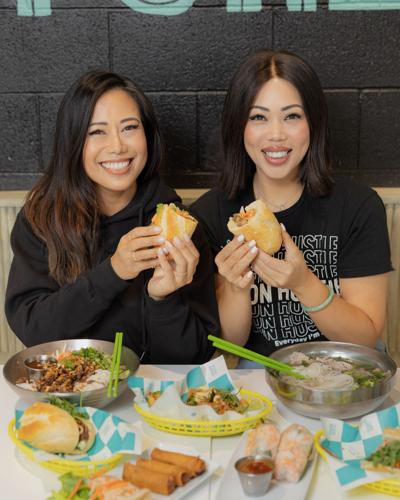
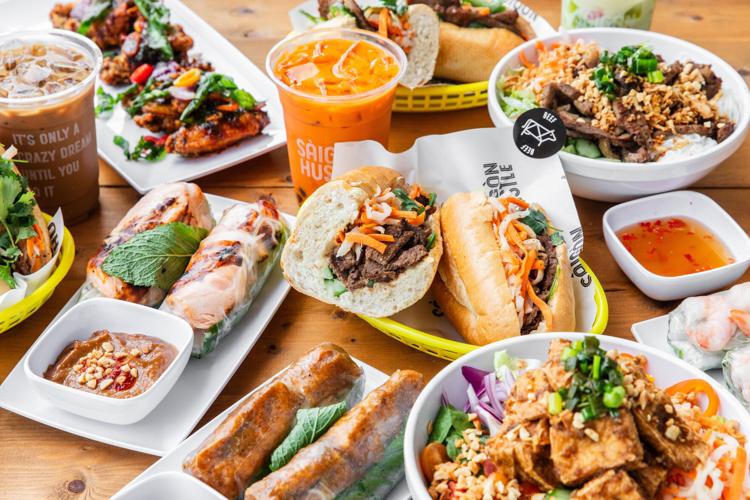


Saigon Hustle is a two-unit Vietnamese fast-casual concept based in Texas.
A franchisee made a rare move by signing a multi-unit deal with Saigon Hustle and investing in the brand itself.
Virentes Hospitality, led by Jim D’Aquila, signed a deal with the Vietnamese fast-casual franchise to open 24 units in the Southeast United States. Private equity firms Virentes Partners and Savory Fund financed the deal. Virentes also invested in the corporate side, though terms of that deal weren’t disclosed.
“It was important to us in this transaction—and I think it’s good in general—to align the franchisor’s interest and the franchisee’s interest by making a significant investment in the franchisor as a statement of our faith,” D’Aquila said.
The franchisee operates Shipley Do-Nuts and Sweet Paris Creperie locations in Florida and Nashville, Tennessee, with more in the works. Sweet Paris is a higher-end quick-service restaurant brand and Shipley’s sales are concentrated in the morning hours.
“We were looking for a more lunch and evening concept and, specifically, we were looking for the right Asian brand,” D’Aquila said. While Chinese, Japanese and Korean brands are popular, there aren’t as many Vietnamese options for consumers, he said.
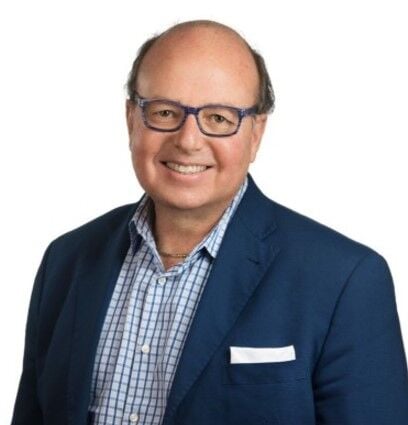
Jim D'Aquila is a managing member of Virentes Hospitality.
Related: Virentes Hospitality Ready for Rapid Growth With Shipley, Sweet Paris
Finding a unique concept was also important to D’Aquila. Most markets don’t need more options for pizza, tacos, burgers or chicken, he said.
D’Aquila’s interests aligned with Saigon Hustle’s co-founders Cassie Ghaffar and Sandy Nguyen, whose passion for the brand is “unbelievable,” he said. He compared meeting Ghaffar and Nguyen to when he met Jimmy John Liautaud, the founder of Jimmy John’s.
“He was just this bundle of energy and he just cared so deeply about his employees and his franchisees,” said D’Aquila, who was in the Jimmy John’s system for “a long, long time.” Referring to the co-founders of Saigon Hustle, he said their energy and vision for the franchise are comparable to Liautaud’s.
The flavors across the menu made the decision to go with Saigon Hustle even easier. The brand offers egg rolls, spring rolls, bahn mi sandwiches, plus noodle or rice bowls.
Savory Fund invested in Saigon Hustle in 2022. The franchise has two stores operating in Texas. The firm’s backing was another contributing factor for Virentes’ investment, D’Aquila said.
“You look at what they did with Swig and what they did with Mo’Bettah’s—we’ve been fans of Savory for a very long time,” he said.
How it started
Saigon Hustle is Nguyen’s second Vietnamese restaurant endeavor. She opened a sit-down restaurant when she was 23, but it ended up being more than she could handle at the time. “It was way too early on. There’s a lot of moving parts,” Nguyen said. “The menu was big, it had a bar. So I ended up selling that.”
But that ambition followed her for years after. In 2019, she approached Ghaffar, a friend since college, about opening a Vietnamese restaurant. The two have Vietnamese heritage.
“I knew that people needed healthier food on the go,” Nguyen said. “I wanted to create a concept that was simple—a really simple menu, easy to read, anyone could come and not be intimidated.”

Saigon Hustle co-founders Sandy Nguyen and Cassie Ghaffer
Ghaffar was interested only if the concept would be scalable and Nguyen had the same thought. Nguyen’s food and beverage background mixed with Ghaffar’s financial expertise felt like a perfect match, they said.
“There’s a flavor profile that a lot of people don’t get on a daily basis,” Ghaffar said. “Our flavors are bold, salty, sweet, sour. Freshly chargrilled meat, things that you’re not getting in a drive-thru, fast-casual setting.”
With two units, Saigon Hustle’s average unit volume is about $2.2 million. When Savory initially acquired the brand, the parties planned to open 40 stores together and potentially explore franchising later on. Virentes inquired about franchising and Nguyen and Ghaffar explored that opportunity.
“We are now partnered with two operating equity partners that understand the industry,” Ghaffar said. “It’s not just people with money saying, ‘Hey, do this, and I want a return.’ … Now we get to see this brand move from what was supposed to be 40 in the next five years to possibly 150.”
