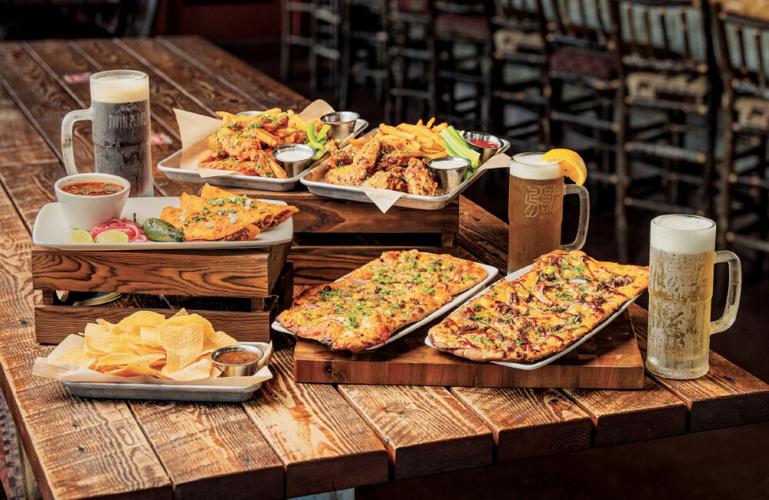


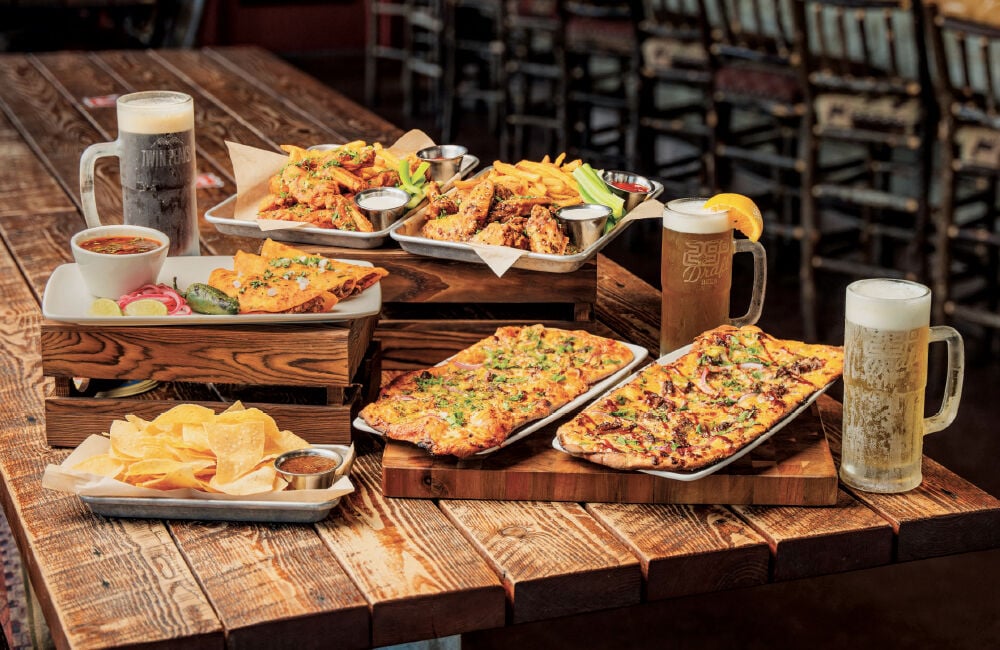
Twin Peaks is preparing for an initial public offering to enable the sports bar chain to raise growth capital.
Reaching 100 units is an important achievement for a growing brand, and Twin Peaks CEO Joe Hummel made sure the sports bar concept reached the mark.
The next milestone? Hitting $1 billion in systemwide sales. That means nearly doubling total revenue, as Twin Peaks finished 2023 with $548 million. But Hummel, who’s been both franchisee and franchisor, is confident it’s possible.
His belief in the brand goes back to 2011, when he became a Twin Peaks franchisee and signed to develop 43 stores across six states. The move followed his time at another sports bar concept, Hooters, where he held several roles including executive vice president.
In 2016, Twin Peaks founder Randy DeWitt, impressed by Hummel’s success as a franchisee, asked him to take over as CEO. Hummel did just that in 2017.
Two years later, Garnett Station Partners backed Hummel in a management buyout and invested $130 million for a majority stake. From there, Hummel navigated the pandemic and came out the other side in 2021, when systemwide sales hit $388 million.
The progress helped Garnett sell Twin Peaks to FAT Brands that same year for $300 million. Total sales continued to increase, reaching $481 million in 2022 and nearly $550 million the next year. The unit count rose, too, from 87 in 2021 to 109 to end 2023. The unit development, though, is secondary to the sales climb in Hummel’s view.
“We’re now setting our sights on a billion dollars in sales,” Hummel said. “The unit growth will of course continue, and we’re going to grow to 150 and then 200 locations as we fill out those domestic counts. But we have our mind on that billion dollars in sales as being the next hurdle.”
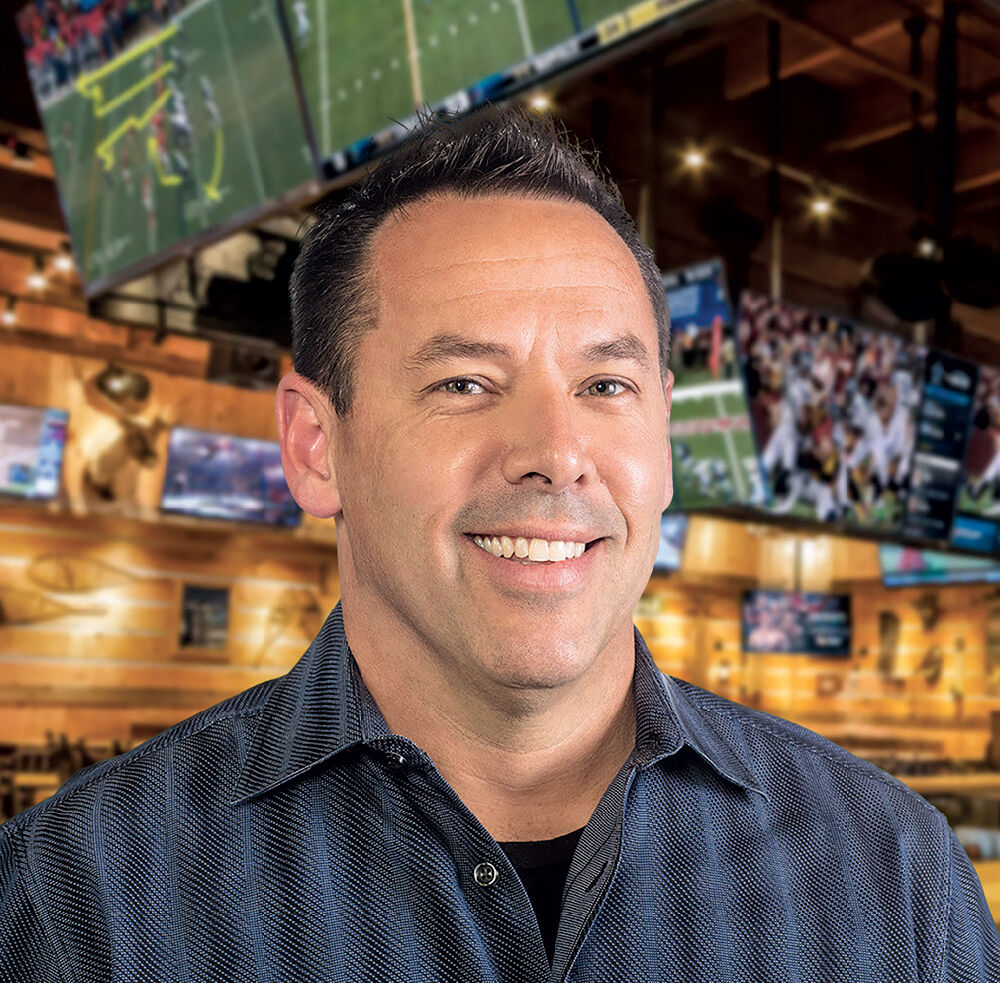
Twin Peaks CEO Joe Hummel was a franchisee first.
Tapping the public markets
The brand will work to clear that hurdle as a separate company. In November, FAT Brands submitted filings to the U.S. Securities and Exchange Commission to distribute Twin Peaks shares and take the company public in a combined entity with Smokey Bones. FAT Brands would retain a significant controlling interest.
The move, said Hummel, reinforces how Twin Peaks already operates. “It spins us off as a standalone, which we’ve already been functioning as,” Hummel said. “With other brands, they merge synergies away, but when they bought us, we really stayed siloed.” FAT Brands founder Andy Wiederhorn “probably had that vision for us, because this brand is growing and has so much white space and popularity. He said, ‘let’s not mess with that silo.’”
Hummel added the intention with Smokey Bones is to leverage the real estate of existing locations and convert many of them to Twin Peaks restaurants.
“We’ve just converted one in Lakeland, Florida, and we’re going to convert about half of the 60 units to Twin Peaks,” Hummel said. “It gives us about 30 pieces of existing real estate out there in our name which we can convert. We’ve already earmarked some, and those we haven’t may not be great real estate spots or too close to an existing Twin Peaks to be converted.”
The public offering, he noted, gives Twin Peaks the ability to raise capital for its own growth efforts.
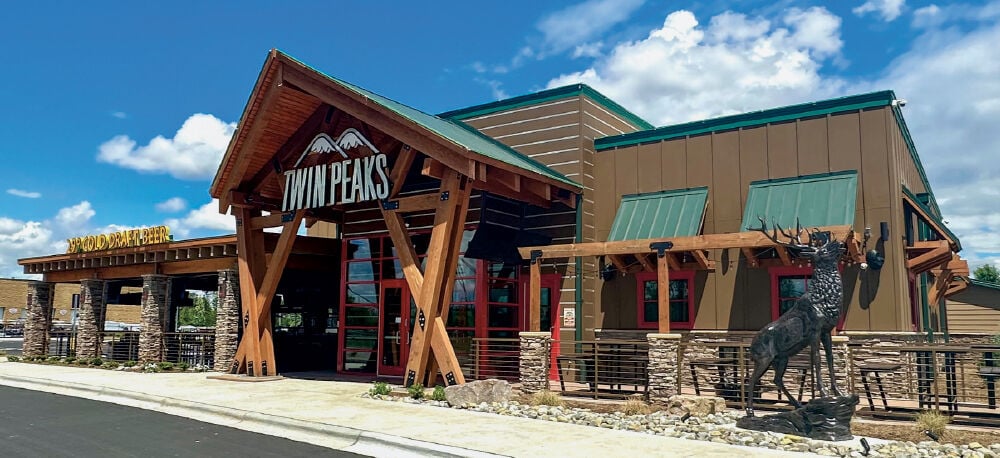
Twin Peaks is converting second generation spaces to new units as part of its real estate strategy.
Maintaining a competitive edge
Through all of these changes, Hummel said the Twin Peaks team, from executives to in-store staff, has always been the difference maker.
“With every opening, we focus on the manpower,” he said. “The development of our manpower is what we call ‘marination.’ It’s one thing to train them, it’s another for them to marinate. We really concentrate on marinating our managers, because they get out of training, but really haven’t played the game. So, we make sure we get them that ‘game time’ in stores, which we call marination.”
Hummel said he puts the executive team on the restaurant floor, too, ensuring a hands-on connection remains.
“They travel to the stores and remain involved in the nuts and bolts of the brand,” Hummel said. “That really makes us connected to the growth. We know we can stand with our franchisees and work with our corporate unit development. They can ask directly how the team is doing, how the real estate is doing and how construction is coming.”
Beyond just the training and open communication, Hummel said creating a strong team at all levels goes back to a good culture, one that establishes longevity.
“The brand is a lifestyle, not just a job, and our teams feel that way,” Hummel said. “I think that transcends to leadership throughout the brand, with a goal of building that cultural presence. Is every day going to be glorious? No. But we want our team to wake up and have that excitement. To look at their store sales, shift notes and all that happened the day before with anticipation.”
Part of that type of culture, Hummel said, comes from a competitive edge, which he said is natural considering the brand’s affiliation with sports. Hummel is no stranger in that department either, as the St. Louis native went to Clemson University as a scholarship soccer player. His school gave him highlights as a fan, too, with Clemson’s football team winning two national championships in the last decade.
It’s why in each restaurant, TV management is an integral part of the employee training. When a new unit is designed, Hummel said there’s a commitment to make sure every seat has a view of four to five televisions. It’s another enticement to get sports fans in to catch the big games.
“You can have a TV at home, but there’s probably not that many,” Hummel said. “We load up with 12 satellites. You probably don’t have that at home either. We are focused on that, providing every sports package to guests as possible. And those are just as critical. You can have a lot of TVs, but if you don’t have the package, the people won’t show up.”
To Hummel, the culture, training and dedication to sports will help the brand build toward its $1 billion sales goal. Improving economic conditions won’t hurt either, he said.
“We’re excited about where interest rates are going,” Hummel said. “The fact that we’ve been growing under tougher inflation times, and the conditions are now improving, just makes it better for us. Now all of a sudden, peoples’ wallets are loosening up, interest rates are loosening up and construction is getting quicker. It will be an exciting time.”