

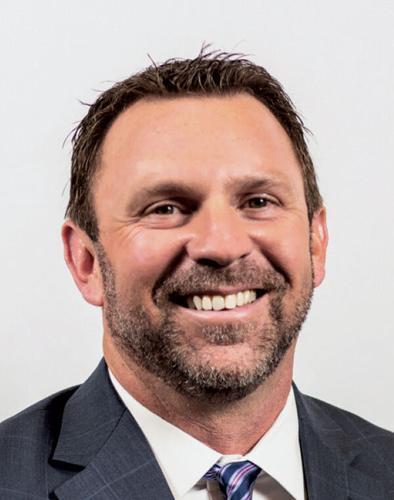


“People don’t want to go into a hospital for treatment anymore. If people can do it at home, they will.”
— Steve Foreman, CEO, Vital Care Infusion Services

Vital Care Infusion provides physician-prescribed infusions to patients at their homes or in treatment rooms at one of the brand’s nearly 70 locations.
It’s no wonder Vital Care Infusion is the target of numerous franchise inquiries once hopeful candidates get a look at the brand’s eye-popping average unit volume. The brand’s infusion pharmacies do $11.1 million in gross revenue on average, with top-performing centers cresting the $27 million mark.
“We have no problem getting people who want to buy a Vital Care franchise,” said CEO Steve Foreman. “And we have no problem turning people away.”
In its treatment rooms and through at-home services, Vital Care provides physician-prescribed infusion therapies to patients with a range of needs, be it nutrition support or treatment of a chronic disease.
While franchises such as DripBar and Liquivida Lounge tout their IV cocktails with names such as “Soother” and “Time Machine,” aimed at those looking for an aesthetic result or perhaps a hangover cure, Vital Care operates firmly in the medical segment as a pharmaceutical franchise. As such, Vital Care has exacting standards used in its franchisee selection, with owners typically falling into one of three buckets: pharmacists, healthcare executives and experienced business owners.
“There’s probably no other franchise like Vital Care,” said Foreman. “This is direct patient care.”

Hemophilia, pulmonology and pain and palliative care therapies are among the treatments provided by Vital Care, which climbs to No. 149 on the Franchise Times Top 400.
While committed to what Foreman called “controlled growth”—it opened 18 locations in 2022 and doesn’t expect that number to surge—the brand saw a major increase in systemwide sales last year as an aging population and people’s desire for flexibility in care helped drive the top line.
Vital Care hit $528 million in total sales from its 66 centers last year, up 51 percent. The company shot up the Franchise Times Top 400 ranking, to No. 149, a move of 53 spots on the list of largest U.S.-based franchise systems.
“The majority of our patients are over 65, so that’s giving us some tailwinds,” said Foreman, as every day in the United States about 10,000 people turn 65. “And honestly, people don’t want to go into a hospital for treatment anymore. If people can do it at home, they will.”
The National Home Infusion Association reports there are some 3.2 million patients needing infusion therapy and fewer than 1,000 infusion providers.
Vital Care Infusion is focused on entering and expanding in secondary and tertiary markets, with locations in cities such as Mobile, Alabama, Tupelo, Mississippi, and Clarksville, Tennessee. Foreman called those cities and others like them the brand’s “sweet spot.”
“When you get into big cities, access to care is there,” he continued. “We’re trying to provide access to care for people who need it.”

John King
Evolution underway
Founded in 1986 by Johnny Bell, who started out owning two drug stores in Alabama, Vital Care today is based in Meridian, Mississippi, and most of its locations are in the Southeast and Midwest. Healthcare-focused private equity firm Linden Capital Partners acquired Vital Care from its founder in October 2020 and installed new leadership, including Foreman, who is a two-time CEO of other Linden-owned companies. Based in Chicago, Linden’s portfolio includes medical device, healthcare IT, pharmaceutical and consumer healthcare companies.
John King, who joined Vital Care as executive vice president of sales and operations in August 2021, said Bell “did a phenomenal job of building this company up,” and the goal now is keep that foundation intact while growing and evolving the model. Last year, corporate acquired two locations from franchisees, which it will operate and also use to test new technology and pilot other initiatives before rolling them out to the whole system.
A complete brand reimaging project yielded a new logo, color scheme and other updates, while a new computer operating system, Vital Books, gives franchisees more tools to manage their business with increased visibility into key performance indicators. All marketing functions were centralized and now run through corporate, said King, and an online store provides franchisees with branded items and swag as they and their sales teams aim to build relationships with healthcare providers and pharmaceutical companies.

Steve Foreman
“We’re an extension of that doctor’s office,” said King, who before joining Vital Care worked for Kroger Specialty Pharmacy as senior vice president of sales and business development. It’s important, then, for franchisees to develop connections to the providers in their areas and be able to articulate the benefits of Vital Care, such as individualized therapy management for patients, in order to get referrals.
“We could sell, in a year, two to three times as many franchises as we do,” he said. “The reason we don’t is we want franchisees to really understand their local markets and what the needs are.”
Each Vital Care location must have a PIC, or pharmacist in charge, and most franchisees have multiple nurses on staff. The company also has national staffing contracts that franchisees can tap into to help cover their nursing needs.
Patient care first
A licensed pharmacist who worked in the CVS Health system and in hospitals, Ryan McFerrin said he was drawn to Vital Care because the model gives him the ability to control his own fate and drive outcomes for his business.

Kent Wheeler
“Look, I’m a pharmacist. It’s not the most dynamic job in the world. It’s all about quality control, really, and a lot of times you’re working in a basement, in a windowless room,” he said. “Vital Care is a place where for me, personally, I can be that dynamic person. I wanted somewhere where I could control my future and build my team of like-minded people.”
Since opening his first Vital Care infusion pharmacy in 2014, in Northport, Alabama, McFerrin has developed seven more and now also has locations in Mississippi, South Carolina, Tennessee, Colorado, New Mexico and Arkansas.
“It’s a really hard, niche area to get into,” he said, and franchisees need to understand payor networks, the role of drug suppliers and state-specific regulations. Vital Care provides support in all these areas, he noted, and with its scale and patient volume, franchisees are able to negotiate with the likes of United Healthcare and other insurance providers to offer services.
His approach to expansion has been, “find an underserved area, establish a community presence and bring that local feel,” while tapping into the resources of a national brand. His locations are all “on the higher side” of the financial performance spectrum thanks to patient-focused teams that “also love to succeed in the sales arena.” Prospective franchisees considering Vital Care should have those same characteristics, he said.

Ryan McFerrin
“To me, it all comes down to patient care. And then people who are aggressive and want to invest in their business. They have to want to grow,” he said.
Kent Wheeler shares that mentality. A franchisee with locations in Topeka and Kansas City, Kansas, he’s developing a third Vital Care in the St. Louis area and said the human element is especially important.
“This is not a drug business, this is a customer service business,” he said of what differentiates Vital Care from other infusion providers, both on the patient side and in its dealings with providers. “The culture is what drew me in.”
Wheeler said 20 years in the pharmaceutical industry, in frontline sales and later in management, prepared him to operate Vital Care franchises. While the financial barrier to entry might not be high—Vital Care’s initial investment range is $535,850 to $995,385—it’s a complex business, he said, and not inexpensive to operate.
“One of the key philosophies from the get-go is to not be undercapitalized,” he said. “The largest single expense is drug inventory. Then the second major cost is the people cost. And we tend to overspend on people.”
King said he makes a point to tell every prospective franchisee that it’s not an easy business to be in or one for absentee owners. “You have to be dedicated and engaged. The No. 1 reason a franchisee could fail is lack of engagement,” he said. “The second is undercapitalization. This isn’t a business you can bootstrap together.”
It is, however a rewarding business, added King, and one serving a need that isn’t going away.
“People have to take care of themselves, they have to get their infusion,” said Foreman, the CEO. And when they do, Vital Care wants to be there.
