
A bipartisan bill with language cementing joint employer rules was introduced in the United States House of Representatives. The legislation, titled the American Franchise Act, received support from the International Franchise Association as it goes to committee.
More than a dozen bipartisan lawmakers on Capitol Hill teamed up to bring permanency to the nation’s joint employer rules.

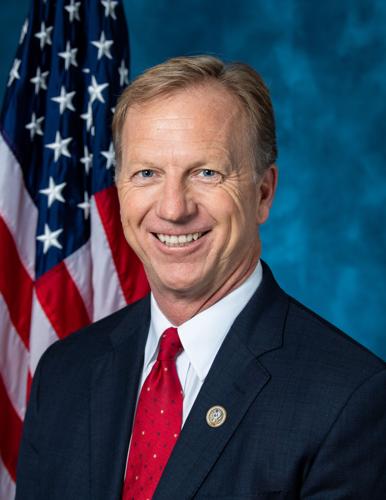
Rep. Kevin Hern, R-OK, is a former McDonald's franchisee
On Wednesday, Rep. Kevin Hern, R-OK, introduced the American Franchise Act in the U.S. House of Representatives. He was joined by 13 other representatives, including six other Republicans and seven Democrats.
If signed into law, the legislation would establish clarity on how responsibility is shared by franchisors and franchisees in regards to the National Labor Relations Act and the Fair Labor Standards Act. The bill states, “a franchisor may be considered a joint employer of the employee of a franchisee only if the franchisor possesses and exercises substantial direct and immediate control over one or more essential terms or conditions of the employees of the franchisee.”
Rep. Hern, a former McDonald’s franchisee, said in a statement he was driven to introduce the law after several changes to the joint employer rules during previous administrations.
“As one of the few franchisees in Congress, I understand how damaging an ever-changing joint-employer rule is to the franchise business model,” Hern said. “I’m pleased that we were able to come together in a bipartisan effort to create legislation that safeguards small businesses and individuals to achieve the American dream across the country.”
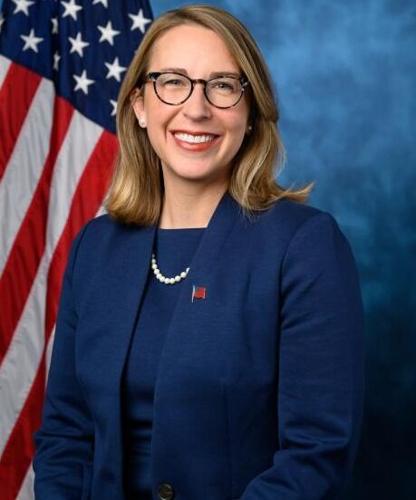
Following its introduction, the bill was referred to the House Committee on Education and Workforce. U.S. Rep. Hillary Scholten, D-MI, one of the co-sponsors, said the bill will help the franchise model, which she called an “economic powerhouse” for entrepreneurs.
“This bill will bring the clarity small business owners need to continue creating jobs and building up our communities,” Scholten said in a statement. “The franchising model is unique. It requires a tailored approach that properly recognizes the relationship between franchisors and franchisees.”

Democrat Hillary Scholten represents Michigan's 3rd congressional district
She noted the uncertainty with shifting regulations “is costly to our entrepreneurs,” and the AFA “provides a clear path forward so they can focus on running their businesses.”
The clarity referenced by lawmakers refers to the numerous times the National Labor Relations Board changed the joint employer standard. The shifts in the standard have depended on which party is in the White House, with the latest attempt for a different rule coming in October 2023.
At the time, the NLRB’s standard stating a franchisor could be considered a joint employer with the franchisee for a group of employees. If applied, the franchisors could be brought into situations revolving around wages, benefits and work conditions for workers employed by franchisees.
Additionally, companies designated as joint employers would share liability with franchisees on subjects such as labor law violations. They would also have a legal obligation to negotiate with unions.
The 2023 rule was similar to one in place during President Barack Obama’s second term. In 2020, during President Donald Trump’s first term, the NLRB went in a different direction, establishing a rule with language similar to what’s described in the recently introduced bill. The rule from 2020 remained in place despite the NLRB’s 2023 action in federal court.
After a legal challenge by the International Franchise Association, the U.S. Chamber of Commerce and other groups, a court struck down the 2023 rule in March 2024. In July 2024, the NLRB ended its effort to reinstate its 2023 standard.
The action from the bench coincided with an unsuccessful congressional move to rescind the 2023 standard. In January 2024, U.S. House of Representatives voted 206-177 to reverse the NLRB’s decision, utilizing the Congressional Review Act. The U.S. Senate then passed its own version in April 2024, 50-48. The legislative package was vetoed by President Joe Biden, though, in May 2024.
For the IFA, the new legislation is a victory, as the joint employer standard was named the organization’s top priority.
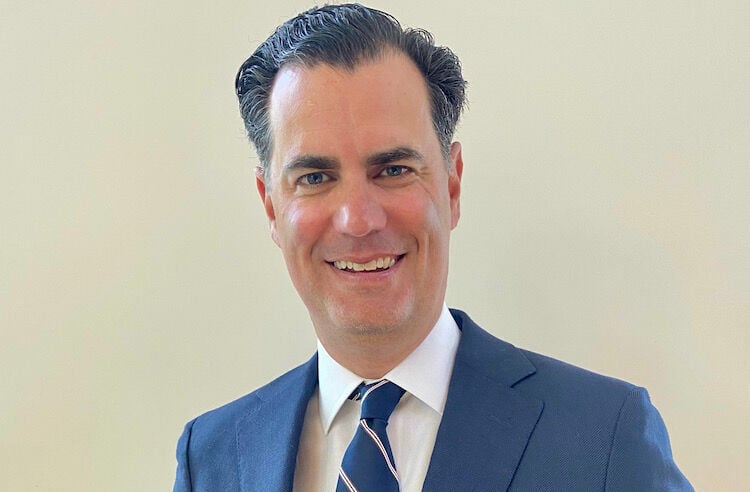
IFA President and CEO Matt Haller
“The legislation recognizes that franchisees are small businesses, and their independence must be protected by federal law,” IFA President Matt Haller said in a statement. “The American Franchise Act allows franchisors to properly support their franchisees—who are often first-time business owners from all walks of life—without the fear of an overly broad joint employer standard undermining the unique benefits of the franchise relationship.”
The American Franchise Act is the second bill introduced in Congress related to the business model in the last three months. In July, U.S. Reps. Jan Schakowsky, D-IL, Jared Huffman, D-CA, and Hank Johnson, D-GA, brought forth the Franchisee Freedom Act.
That legislation would give franchise owners private right of action on violations of the Federal Trade Commission’s Franchise Rule. The rule requires brands to provide sufficient information to franchisees before an agreement is signed. However, no private right of action exists for operators when there is a violation of this rule.
The legislation is similar to another bill introduced in December 2024, also by Schakowsky. The new version of the bill adds a new provision providing franchisees with the right to association without interference or retaliation.
That bill received endorsements from the American Association of Franchisees and Dealers, as well as the Coalition of Franchisee Associations.