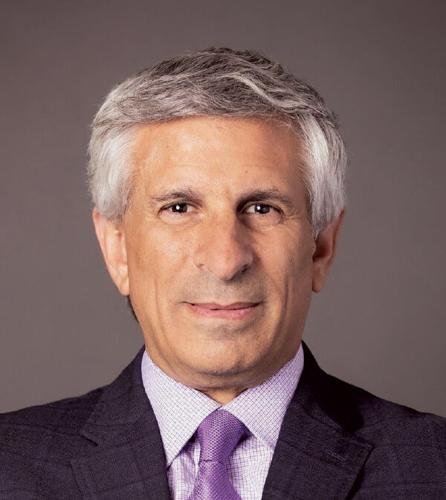


Harris Chernow of Reger Rizzo Darnall
President Donald Trump’s return to the White House and Republican control of Congress could lead to significant, but not quite sweeping, federal changes for franchising.
Potential policy adjustments are more likely to come from several different boards, though, rather than via executive orders or legislation. The main cause is the pendulum swinging to the conservative side at the National Labor Relations Board and the Federal Trade Commission, with probable course changes at both.
On the NLRB front, the most anticipated measure to receive action is the joint employer rule, something that has kept the franchise community on notice over the last few years. In October 2023, the NLRB put a new joint employer rule in place that would make a franchisor liable for labor violations with franchisees.
The new standard also set a legal obligation for franchisors to negotiate with unions alongside their franchisees. The move was opposed by franchise organizations, and by Congress, which passed a Congressional Review Act resolution to reverse the NLRB’s decision. That resolution was vetoed, though, by former President Joe Biden.
While congressional action was ineffective in stopping the rule, the NLRB’s new standard was halted in federal court, and has remained in a state of legal limbo. Attorney Harris Chernow of Reger Rizzo Darnall said moving forward, the rule will likely be removed entirely.
“When you look at the NLRB and what they were trying to initiate, almost all of those are going to be placed on hold, if not extinguished during this administration,” Chernow said. “They will likely take all the joint employer talk off the table.”
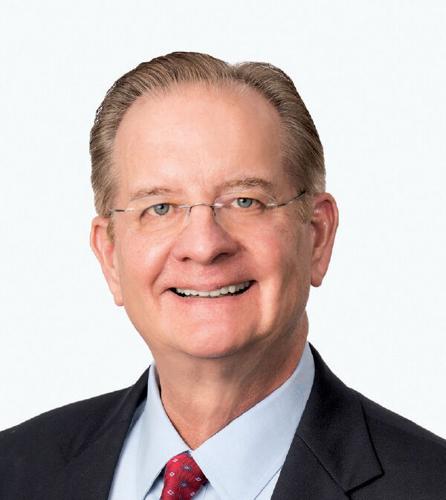
While the joint employer talk may be taken off the table at the NLRB, Warren Lee Lewis, an attorney at the firm Akerman and co-chair of its franchise and licensing sector team, said it may be put on the table in Congress.
“I think the Republicans would like to pass legislation and make it law, since they don’t want the agency to change the rule every time there’s a new administration,” Lewis said. “Right now, you have a ping pong effect.”
“I wouldn’t be surprised if Congress takes action,” Chernow said. “No one wants to keep going back and forth every four years on something, especially with joint employer. I think both sides, franchisees and franchisors want to see that clarified once and for all.”
The trick is getting a law passed with a narrow majority. Republicans hold 218 seats in the U.S. House of Representatives, the minimum needed for a majority, while the Democrats have 215. The Republicans have clearer majority in the U.S. Senate, with 53 seats, while the Democrats have 47 in their caucus.
“With Congress being so close, especially in the House, I don’t know if they’re going to be able to pass it,” Lewis said. “The NLRB will go back to how it was before the Biden administration, but as for legislation, it’s a big, hot button issue for people.”
Lewis added it’s likely the same for legislation coming from the other side of the aisle.

Warren Lee Lewis of Akerman
In December 2024, U.S. Rep. Jan Schakowsky, D-IL, reintroduced a bill to give franchisees private right of action to address violations of the FTC’s Franchise Rule, specifically when details aren’t properly disclosed.
“I think the franchisee bill is dead,” Lewis said. “I don’t think it’s something the majority will vote for, unless you’re a representative in a district with a lot of small business people who are franchisees. Maybe there would be some pressure, but I don’t think it would be likely to pass.”
The implications there are two-fold. First, a stronger relationship between the franchisor community and the federal government, and secondly, a new approach at the FTC.
“I think there’s going to be a shift toward franchisors,” Chernow said. “Under the previous administration, the initiatives favoring franchisees had a better chance, whereas now they have a have a harder time. There are those franchise relationship laws out there and with this administration, it will probably favor franchisors.”
This could be reflected in the second point regarding FTC action. Under the leadership of new Chairman Andrew Ferguson, the FTC is expected to take a lighter approach to franchise oversight, especially with any review of the Franchise Rule, in place since 1979 and last revised in 2007.
Lewis said the FTC’s rule, which largely regulates the franchise model, is reviewed about once every decade, and will likely be looked at during this administration with the franchise community at the table.
Chernow said it does represent an opportunity to bring clarification to the regulatory environment.
“I know that many are working to that,” Chernow said. “It’s all about disclosure, and what someone should have going into the franchise relationship to make an informed decision. The way it’s currently written, it lends a lot of good information, but it could be done in a better way.
“There could be things better clarified or additional information provided. There is some movement for the rule to be more streamlined.”
That’s why Lewis said some actions the FTC took while Biden was in office may stay in effect.
One of those updates was a policy statement issued in mid-2024 covering how contractual provisions that prevented franchisees from approaching the commission with complaints were unlawful. Lewis said that, and another policy statement regarding the requirement to disclose all fees, were common sense, fair approaches.
