




A pair of entrepreneurs with investment management experience are joining the effort by Goldfish Swim School to expand its California presence. Alex Wang and Jason Adler inked an agreement to open seven units in cities around Los Angeles, with the first slated for 2026.
Los Angeles may be adjacent to the Pacific Ocean, but despite the abundance of water, swim schools were in short supply.
That was what Alex Wang found when he and his family moved to the area from New Jersey, and it was among the driving factors in his decision to become a Goldfish Swim School franchisee. Already familiar with the brand as a customer—both of his children took lessons back in New Jersey—he and business partner Jason Adler signed a seven-unit agreement to open locations around Los Angeles.
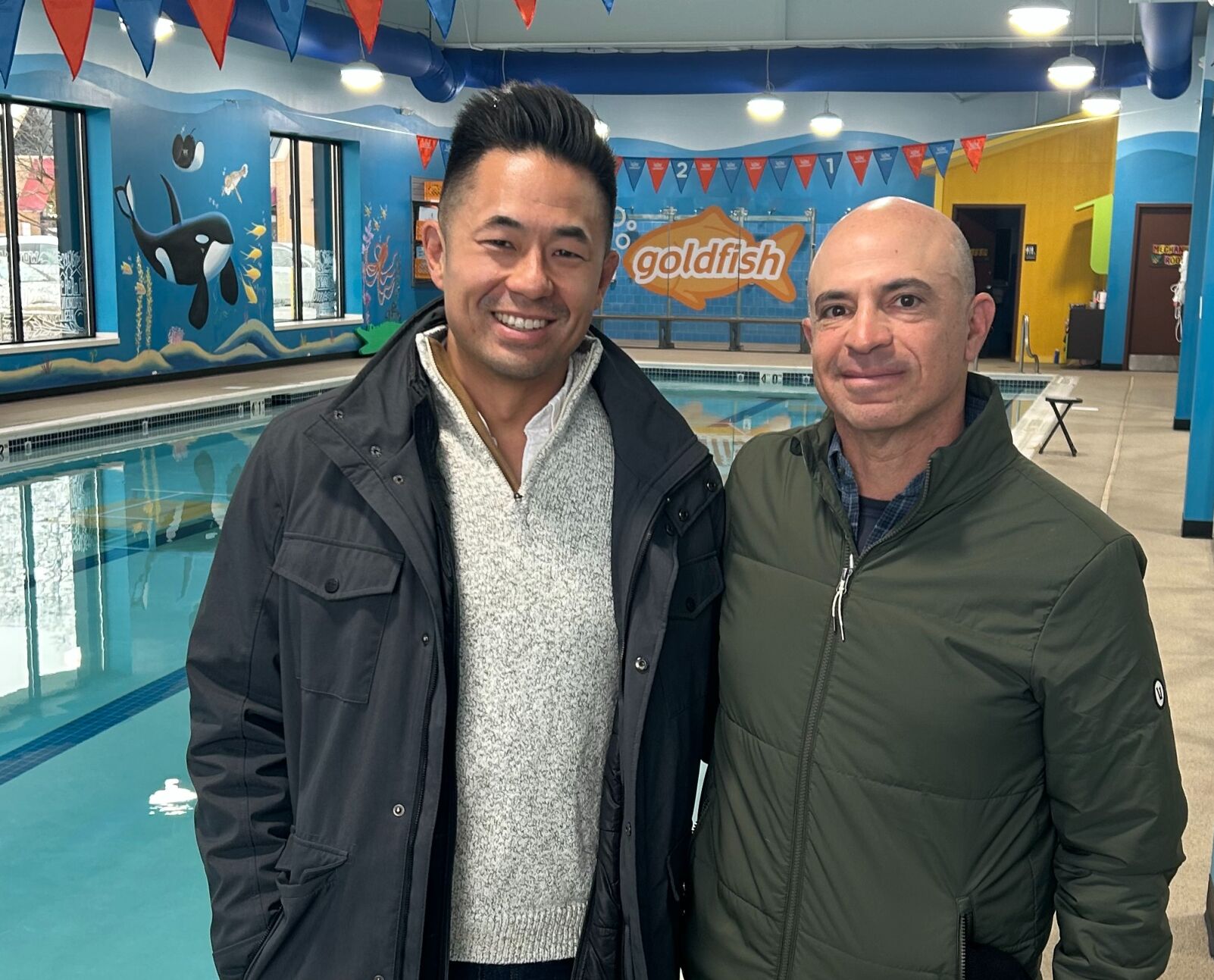
Alex Wang, left, and Jason Adler are new Goldfish Swim School franchisees in California.
For both new franchisees, it marks a transition from careers in the investing space. Wang’s career involved work with investment banking and investment management, while Adler has a background in hedge fund administration. The two partnered in 2017 and continued their investment work, including financing site development for franchises.
“I wouldn’t say we set out to be franchisees, but we had looked at it over the years since,” Wang said. “We were considering opportunities on the franchisor and franchisee side, and even things tangentially around that space. At the same time, one thing we were active in was providing financing for developers who build sites for franchise business operations. So, I spent a lot of time looking around the space.”
Founded in 2006 and franchising since 2009, Goldfish Swim School has 200 locations across 40 states and Canada. The concept has a strong presence in the Midwest, having originated in Michigan, and has developed along the East Coast. Brand leadership is now turning its attention west, with plans for filling white space in the Golden State.
Goldfish has a three-unit presence there now, in a trio of communities nearby L.A., including Aliso Viejo, Santa Ana and Ladera Ranch. As the brand is looking to open units in Sacramento, San Diego, San Francisco and San Jose, it also remains committed to the City of Angels.
“It was a bit serendipitous in a sense,” Wang said. “For us, it started at an emotional level, since there was the existing familiarity with the brand and concept as a customer. Then it went on to the operational level.”
“In that capacity, I would say you look across the brand at the strength of their enrollment numbers and some of the pre-opening enrollment numbers,” he continued. “As an operator, that gives you a good degree of predictability as to how to think about building out your cost structure, from a labor and rent perspective in particular.”
In addition to personal experience and strong enrollment statistics, Wang said the Goldfish corporate team and its hands-on approach was another selling point. The franchisor’s involvement has remained consistent, from initial conversations to site selection, as the brand’s head of construction accompanied the franchisees during their location search.
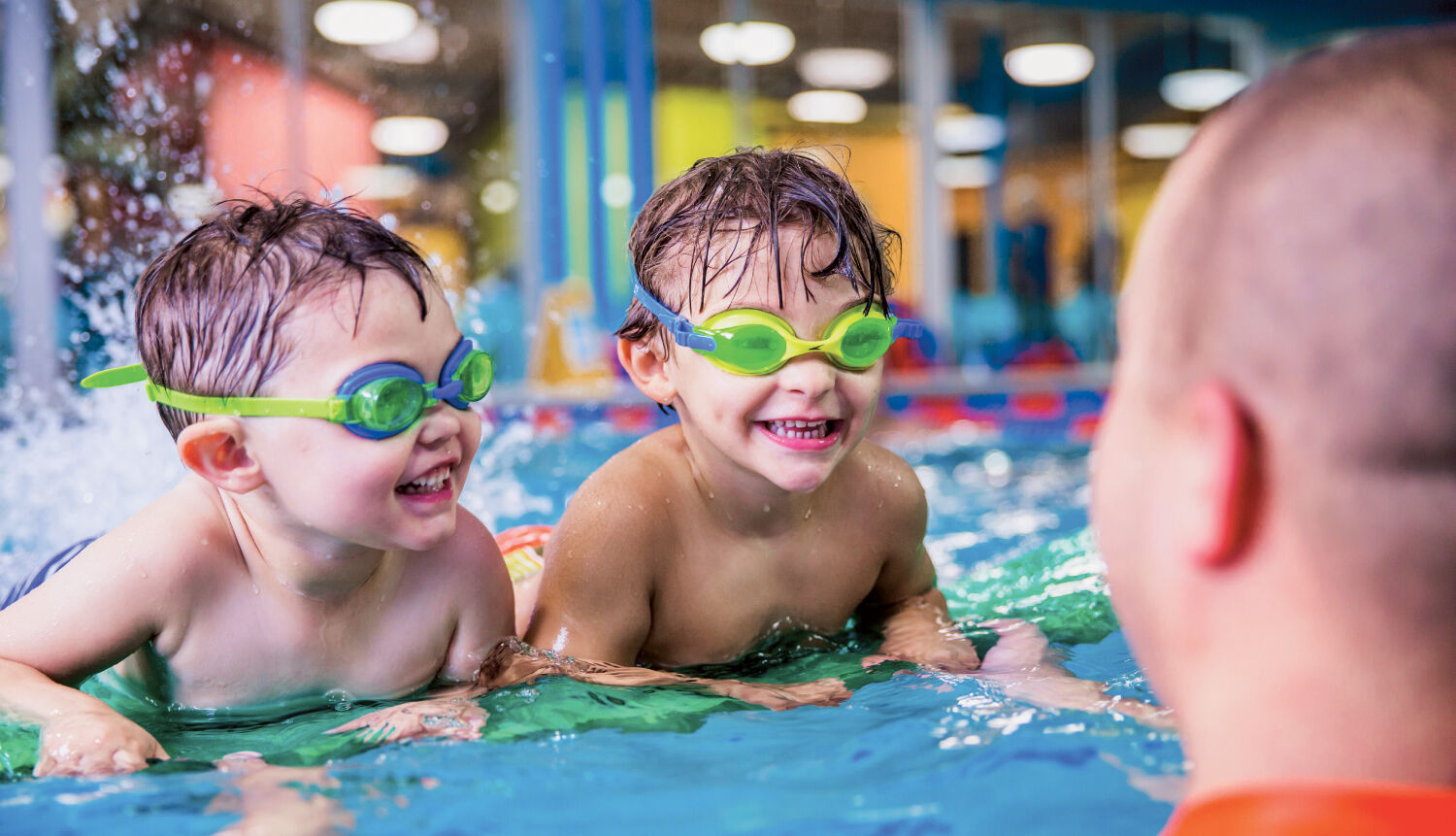
Goldfish Swim School provides swim lessons for kids ages 4 months to 12 years.
“They’ve seen so many things at this point, reaching 200 locations,” Wang said. “We get to be the beneficiary of those insights, both qualitative and quantitative. That really helped us, on a holistic basis, get very comfortable and excited to bring the concept to the market.”
Wang said the first location is set to open in the fourth quarter of 2026. On average, Goldfish Swim School locations range from 7,000 to 10,000 square feet. To open a school, franchisees are required to have a minimum net worth of $2.5 million and minimum liquid capital of $1.5 million.
The average unit volume across 155 locations in 2024 was $2.15 million.
Goldfish discloses different investment ranges for franchise registration and non-registration states. In registration states, the investment is between $2.5 million and $5.9 million. In non-registration states, the range is from $1.6 million to $3.7 million.