
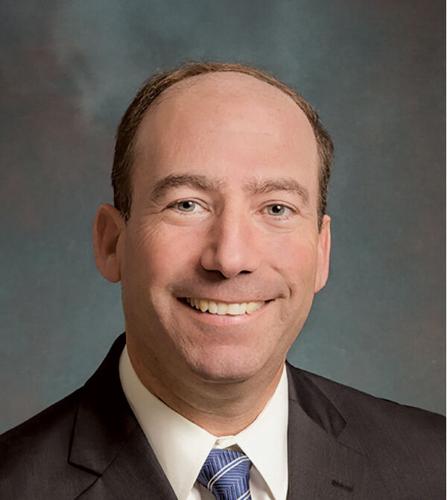


Tal Grinblat of Lewitt Hackman
A bill signed by California Gov. Gavin Newsom in 2024 addresses what Tal Grinblat called a “fairly serious problem with these brokers doing everything they can just to close the deal, and then they disappear.”
The franchisor, continued Grinblat, who represents franchisors and franchisees at California law firm Lewitt Hackman, “ends up holding the bag with all kinds of promises and misrepresentations.”
Changing that scenario is the aim of legislation that amended California’s Franchise Investment Law to regulate franchise brokers and franchise sales organizations. It requires them to register annually with the state’s Department of Financial Protection and Innovation and provide prospective franchisees with a Uniform Franchise Broker Disclosure Document.
Franchisors routinely use broker networks and franchise sales organizations to build their lead and development pipelines, and aggressive tactics are not uncommon.
While requirements for the broker disclosure are still in the works, it’s expected that third-party sellers will need to provide details such as litigation history, their compensation or incentive structure, and the brands they’ve sold for in the previous year. Brokers who violate the law may be liable for damages to the franchisee or franchisor.
“It really makes the brokers on the hook,” said Grinblat, and will help ensure prospective franchisees have more information up front so they understand if a third-party seller has a financial incentive to steer them to a specific franchise. Washington and New York have similar laws.
Franchisors need to carefully vet their broker networks, Grinblat said, and he encouraged brands to handle the sales process themselves. “That way you have much more control over what is said to prospective franchisees,” he continued. “It’s better to have control over that than use a third party who, the concern is they will say anything to get the sale done and then the franchisor is the one who gets in trouble afterwards.”
Of note, the law hasn’t taken effect. It will either one year after the California legislature authorizes funding for the bill or July 1, 2026, whichever date is later.

David Cahn of Offit Kurman
Franchise reform in Maryland
Significant changes to franchising in Maryland are on deck if the state’s legislature passes the Franchise Reform Act, introduced in January by Delegate Marc Korman. Expedited franchise renewals, prohibition of interference in franchisee associations and an extension of the time period for franchisees who were misled in the sales process to bring a violation claim are all part of the proposed bill.
David Cahn, a principal attorney at Offit Kurman in Baltimore who represents franchisees and franchisors, said the updates to the Maryland Franchise Registration & Disclosure Law could improve the renewal process—the state’s franchise registration delays are known to frustrate franchisors—and provide needed protections on both sides that could spur more franchise activity.
Included in the bill is a pilot program aimed at accelerating franchise registration renewals by easing the amendment process. The intent, said Cahn, is to have more franchisors file their renewals in the fall versus during the spring rush. (Most registration states have an April 30 renewal deadline.)
“Therefore, there won’t be as many complaints about Maryland being a black hole where you can’t get registration renewals completed,” he said.
Another change would eliminate the ability of out-of-state franchisees to use the Maryland Franchise Law in disputes with franchisors that are or were headquartered in Maryland, something Cahn said is now a deterrent to franchising in Maryland compared to nearby states. Instead, only Maryland franchisees could sue a franchisor for violating the law.
“My position is that other states can protect their franchisees,” said Cahn, giving the example of if someone in Arizona buys a franchise from a Maryland-based franchisor and thinks they were misled, Arizona law should allow them to pursue a claim. “It’s not really Maryland’s business to protect franchisees around the country and around the world that do business with Maryland-based franchisors. The concern of the state … is to protect Maryland residents and people that operate businesses in Maryland.”
A notable change for franchisees under the bill: It would, for the first time, prohibit franchisors from restricting or inhibiting the right of franchisees to join or form a franchisee association. The proposed right of association is similar to franchise laws in California and Illinois.
“It would have some pretty strong remedies if a franchisor tries to intimidate a franchisee or retaliate against a franchisee who wants to participate in or lead a franchisee association,” said Cahn.
Additional elements of the bill include the extension of the time period in which a franchisee may bring a private claim for violation of the franchise law. Franchisees could sue up to the later of three years from buying the franchise rights or two years after beginning operations. Maryland’s securities division would have five years from the time of a violation to bring claims against a franchisor.
One to watch in Minnesota
A Minnesota Supreme Court opinion issued last year in Cambria Company, LLC v. M&M Creative Laminants, Inc. concluded the Minnesota Franchise Act can apply to franchisees that do not operate in Minnesota. But that doesn’t mean the MFA is enforceable by every out-of-state franchisee.
Franchisors, wrote Faegre Drinker attorneys Brian Schnell and Hannah Leiendecker, “should consult with a franchise attorney to understand whether and how the Minnesota Supreme Court’s decision may impact relations with franchisees that operate entirely outside of Minnesota.”
