



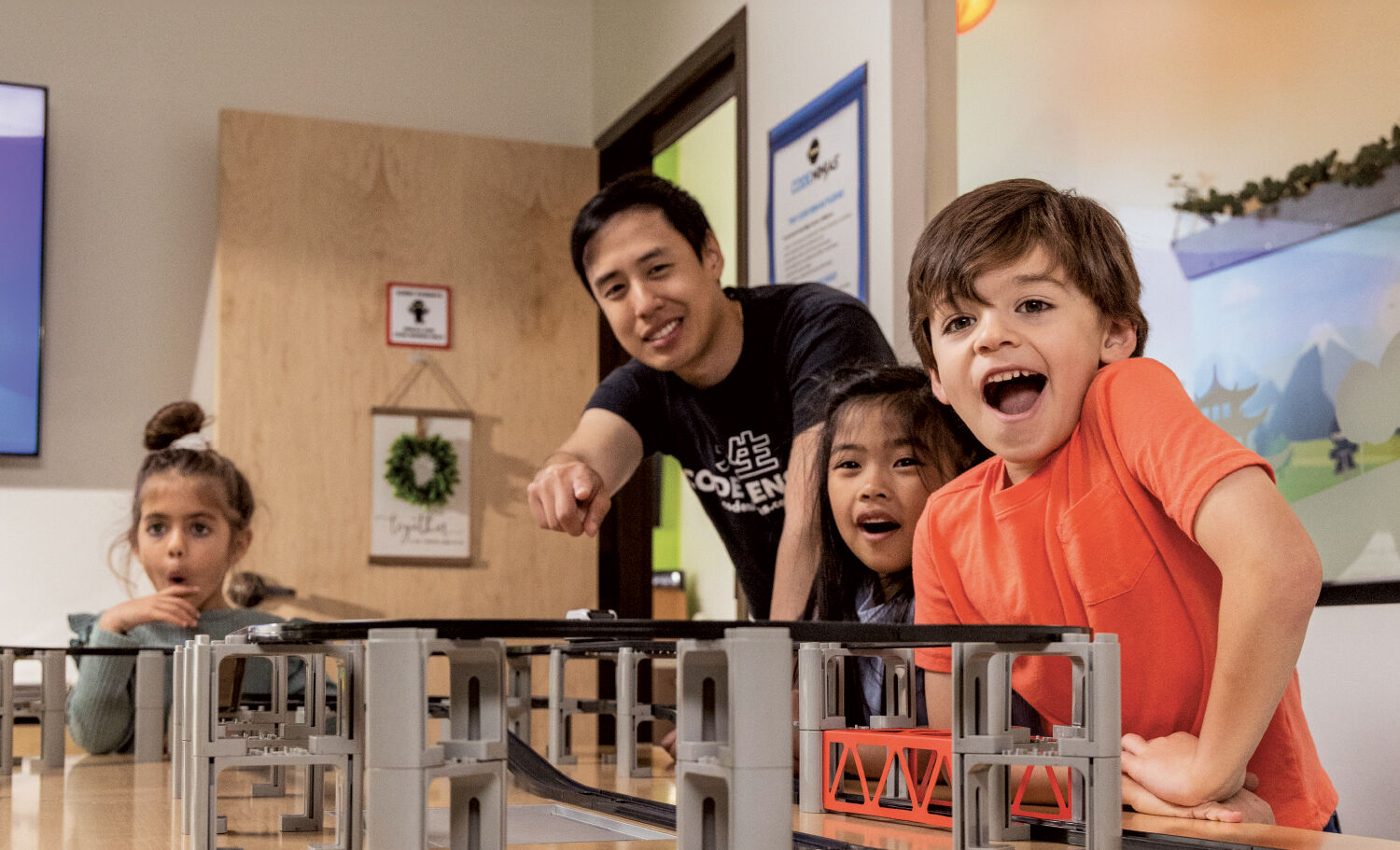
Code Ninjas teaches coding to kids through video game creation.
Children require variety and creativity to keep them engaged in school curriculum. That's where activity-based education franchises such as Snapology, The Little Gym and Code Ninjas come in.
Even in adulthood, there’s a special feeling of satisfaction when you build something.
When Snapology brings in new franchisees for training, they start off by creating something similar to what a child in a class would do. “We’re adults and we still giggle like, ‘Oh my gosh, you know what I built?’,” said Nancy Bigley, multi-group president at Unleashed Brands, which owns Snapology. “You never lose that excitement of creating and completing and seeing something that you’ve built. It’s pretty fun.”
That feeling translates for kids attending one of Snapology’s science, technology, engineering and math, or STEM, and robotics classes, too. The franchise offers classes that incorporate Legos, K’Nex and other building materials to make learning fun and entertaining. Students can even test out toy cars they’ve made on racetracks. Bigley noted a class where three boys were building a piano out of Legos.
“They got to the end and they coded it properly and it worked. It started playing music because they did it right,” Bigley said. “They were jumping around and dancing to it. It was just so cute to see.”

Nancy Bigley is the multi-brand group president at Unleashed.
The cost to open a Snapology franchise ranges from $75,250 to $105,800. Since 2022, the brand opened 50 stores, ending 2024 with 121 units. Average unit volume for 27 full-time mobile businesses last year was $157,035, according to its franchise disclosure document.
Bigley joined Unleashed in 2021, initially leading The Little Gym and then Snapology. As the multi-group brand president, she oversees six of the platform company’s eight brands.
“Now that we have a lot more parents that are engaging with multiple brands under our portfolio, we’re really looking for opportunities to share best practices and also just get operations more aligned to make it easier for our parents as they engage with multiple brands,” she said.
Curriculum is a huge part of Snapology and The Little Gym, Bigley said, but it’s the other cognitive and social skills that kids learn that impress parents.
“They definitely love the hard skill learning that we have in both of those disciplines. But they also were very excited and maybe surprised that we had so much of the cognitive and the social,” Bigley said.
Following the pandemic, parents have been eager to get their kids to interact socially with their peers, she said. “We heard it from so many parents: My child has regressed. They have gone backwards” in terms of social development, Bigley said.
The Little Gym serves kids ages 4 months to 12 years old. Students learn dance and gymnastics techniques with a “three-dimensional learning” approach.

Mike Rodrigues is the vice president of franchise development at Code Ninjas.
“We certainly always make sure that we make it fun,” Bigley said. The Little Gym gives children a space to show their creativity and imagination while using the different equipment in each class. ”We have very specific things that we are having them do to build certain motor skills, but we also know that we gotta make it fun, we gotta keep it playful.”
Keeping kids engaged in the curriculum is important, but teachers don’t force it. If a child is shy or uncomfortable, they can join in once they feel ready. “They come around pretty quickly when they see other kids laughing and having fun,” Bigley said. “They want to run in there and be a part of it.”
At The Little Gym, franchisees must sign at least a two-unit agreement. To open one center under a two-unit deal, the initial investment ranges from $519,265 to $756,995. The Delaware-based company ended 2024 with 219 locations, up from 174 at the conclusion of 2022. The Little Gym’s unit-level sales in 2024 ranged from $110,708 to $1.87 million. Average sales for the top quartile of franchises were $1.09 million; average sales for the bottom quartile were $327,091.
Franchisees need to have a passion for their brands. “It’s not just about money,” Bigley said.
“Youth enrichment businesses are always a really good investment, because there’s things that, as adults, we invest in. … It’s our children and our pets,” she said. “We will always pick those two categories before we do anything for ourselves. So, it’s a pretty safe opportunity.”
At Code Ninjas, kids use coding to create video games and other projects. Kids can learn problem-solving, critical thinking and creative skills from these activity-based learning projects.
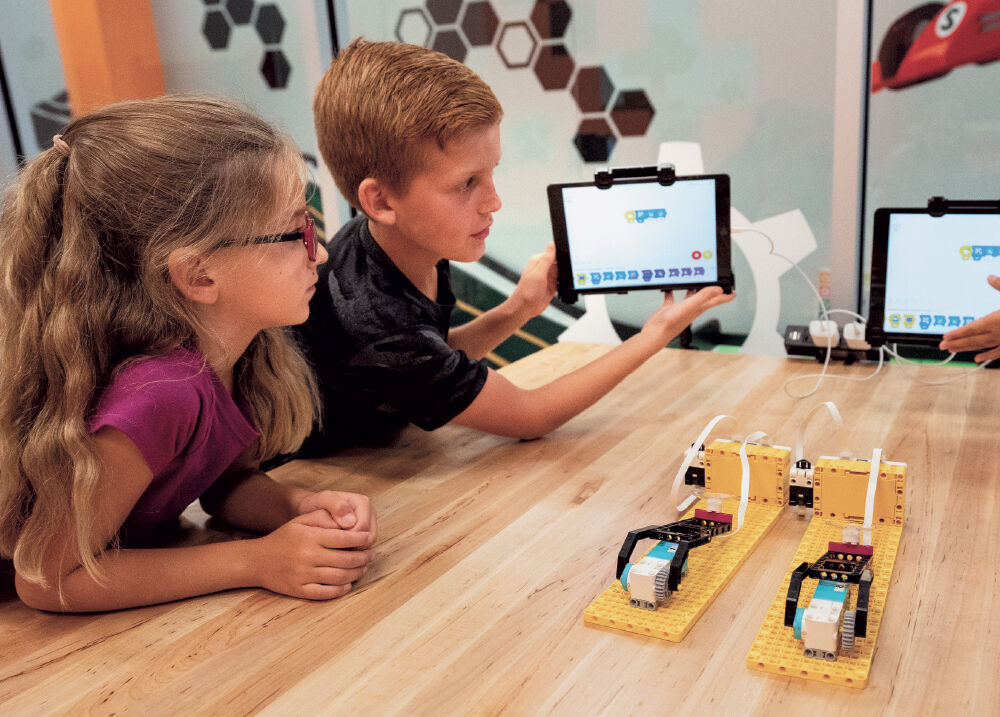
Snapology uses Legos, K’Nex and other building materials to teach children about science, engineering, robotics and more.
“We like to focus on the fun side of education,” said Mike Rodrigues, vice president of franchise development at Code Ninjas. “We’re using a medium that will attract kids to understand concepts, not just memorize them, giving them confidence in their abilities when it comes to technology, because it does play a huge role in their life and will continue to do so, likely, for the rest of it.”
Code Ninjas ended last year with 244 locations in the United States. Including international units, Rodrigues said Code Ninjas has 369 units as of April. The brand has locations in Canada and the United Kingdom, with plans to enter three more countries this summer.
The upfront investment to operate a Code Ninjas unit ranges from $68,500 to $298,250, depending on the style of location opened. Average unit volume last year was $238,184 among 227 locations. The average number of active students each month for those locations was 86.
Edward Kim, the brand’s vice president of education and training, recalled his experience learning how to code when he was in school. “It was a lot more rigid and tougher to chew on,” he said. “There’s coursework you took, typically in college, that required hours and hours of just sitting there and programming just to learn and test out different things.”
Those days are gone with programs like Code Ninjas, Kim said. “We like to think of ourselves as a company that teaches critical thinking skills, resilience, presentation skills—those key skills you want every student to learn,” he said, “but we happen to use coding as a medium.”