



New leaders at the United States Small Business Administration are implementing a number of lending rule changes, reversing decisions made during President Joe Biden’s term. Notably, the SBA will reinstate its Franchise Directory, after the agency discontinued it in 2023.
Two years after it published a new rule eliminating the Franchise Directory, the United States Small Business Administration is reversing course.
The decision to eliminate the Franchise Directory took effect in May 2023, while the SBA was under the leadership of previous Administrator Isabel Guzman. Since assuming the administrator role in February, President Donald Trump selection, Kelly Loeffler, has been reversing decisions from the previous four years.
The SBA implemented the directory in 2018 during President Trump’s first term. The index was a running list of brands and franchised business models that met eligibility standards for loans and financing. Once on the list, banks and lenders were able to simply check if a franchise was on the directory, rather than go through a longer vetting process.

Sarah Davies is general counsel at the International Franchise Association.
In addition to reinstating the directory, a move that takes effect June 1, the SBA also replaced a requirement for addendums with a new franchisor certificate. Previously, the addendum was required on franchise agreements with a signature from the franchisor. The International Franchise Association, which worked with the SBA on the new rules, sees it as an improvement.
“The SBA addendum was fairly time consuming,” IFA General Counsel Sarah Davies said. “The previous rule meant if you were listed on the directory, all of the franchisees who were looking to get SBA funding would have to get that addendum as part of their franchise agreement. For a lot of franchisors, in addition to the standard addendum, the SBA required them to have a special addendum as well.”
Those special addendums would confirm that certain terms in the franchise agreement would be unenforceable if they were inconsistent with SBA loan requirements.
“The process of negotiating those addendums could be quite lengthy sometimes,” Davies said. “The certification, meanwhile, is just an acknowledgment by the franchisor that they understand all of the eligibility criteria for being listed on the directory. That they understand which provisions are not enforceable against franchisees who get SBA loans.”
The new certificate will be a one-time matter, meaning a new addendum won’t be needed for every loan. For franchise concepts listed on the directory when it ceased updating in May 2023, those companies will have until July 31 to submit the new certificate. If they fail to do so, the franchisor will be removed from the registry.
Related: Frandata Touts Registry as Consistent Source Amid Possible Changes at SBA
According to franchising research firm Frandata, an estimated 8,000 franchisors will be expected to submit new certifications. Until July 31, temporary procedures will be in place, allowing lenders to continue relying on existing addendums valid before the directory was discontinued in 2023. For new brands, the certification must be signed at the time of submitting an franchise disclosure document to the SBA.
“We’re very supportive of the direction the SBA took in bringing the directory back,” Davies said. “The efficiency it creates in the loan process when franchisees go to lenders is important. Lenders can quickly see whether the franchisor has met the minimum eligibility criteria. It’s not an automatic qualification, but it expedites that review process.”
Also supporting the move is Eric Larson, a business development officer and senior vice president of SBA lending at Paragon Bank.
“We’re excited, because essentially, when the registry stopped in 2023, they were leaving the onus on the lender to determine a franchise’s eligibility,” Larson said. “For the most part, at Paragon, we kept using the registry as it existed in 2023, and if your franchise wasn’t on the list at the time, we weren’t doing loans to you.
“We heard from other lenders that there was just kind of confusion in the marketplace, and some lenders stopped doing franchise loans altogether, because they weren’t sure if a brand was eligible,” said Larson.
Along with the reinstating of the directory, the SBA made a host of other reversals on policies set during former President Joe Biden’s term. In March, the administration restored upfront fees that it had charged to lenders, which were halted under the previous administration.
In a press release, the SBA estimated that it failed to collect $460 million in fees, and the loan program saw negative cash flow in 2024 of about $397 million.
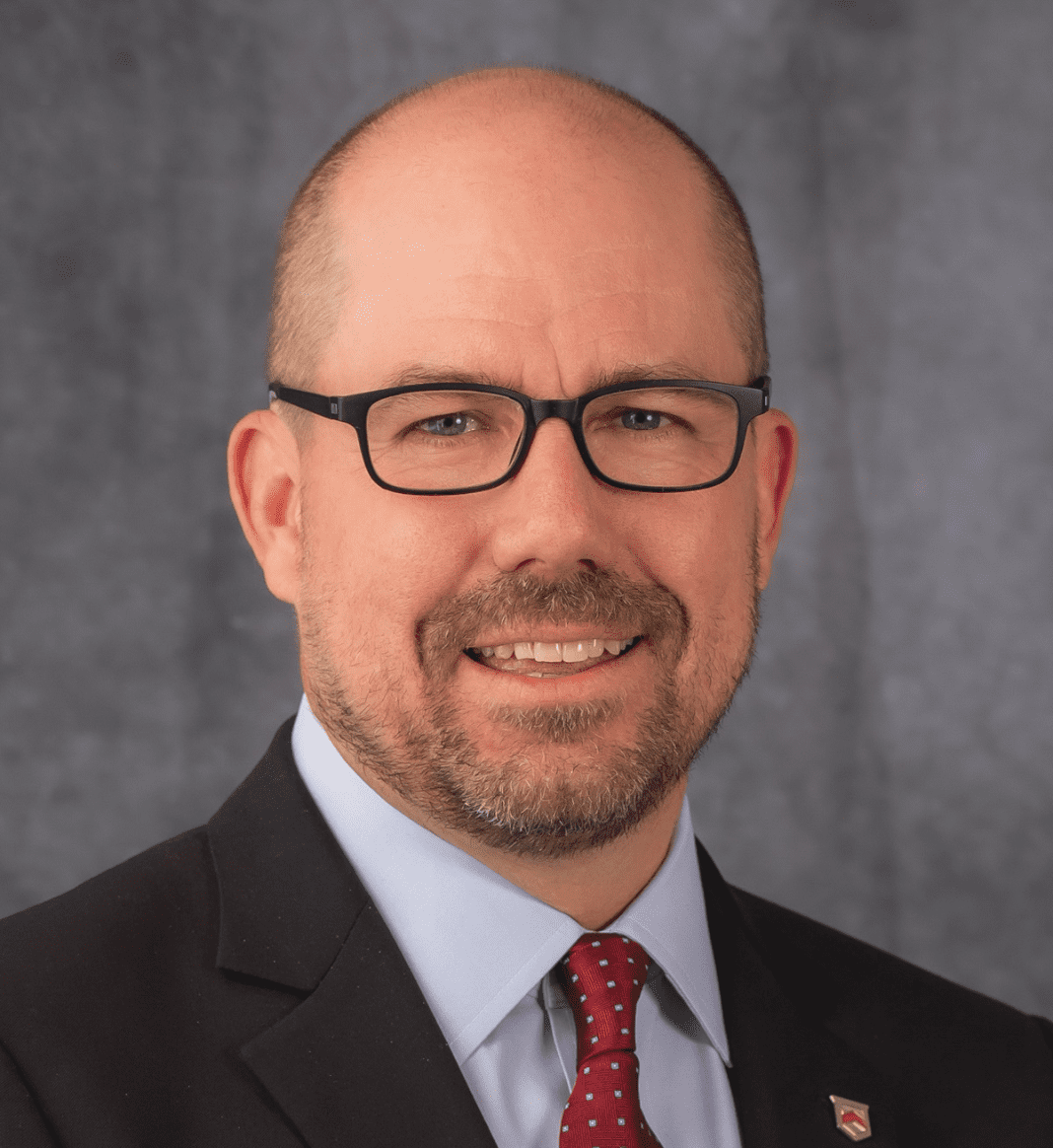
Eric Larson is the senior vice president of SBA lending at Paragon Bank.
A 10 percent equity injection for loans was also restored. Small businesses less than two years old will again need to provide a 10 percent equity injection when applying for a loan through the SBA’s 7(a) program. Larson said this is a positive change, though it may not impact all lenders the same way.
“It doesn’t change for us, as we were still requiring an equity injection for all businesses,” Larson said. “But it levels the playing field a little bit, because there were lenders out there that were taking advantage of the equity injection rule being loosened. So, we’re glad that it may tighten financing a little bit.”
Larson said franchisees applying for financing should also be aware of the SBA requiring businesses to verify the citizenship and residency status of their owners. In the past, lenders needed to verify that 51 percent of a company’s owners were U.S. citizens, but under the new rule, that standard has been set at 100 percent.
“We’re going to have to document that and it’s adding a bit more paperwork,” Larson said. “For the most part, there are still workarounds. If you had five owners and one of them wasn’t a U.S. citizen or permanent resident, they could divest their ownership and you can proceed, so it’s not that much of a hindrance.”
In addition to the aforementioned adjustments, the SBA also set the definition of a small-dollar loan at $350,000, decreasing it from the $500,000 amount under the previous administration. That could result in some lenders backing off on loans for first-time operators in emerging franchises who need financing between $350,000 and $500,000.
The SBA also brought back collateral requirements, which had been waived during President Biden’s term.