
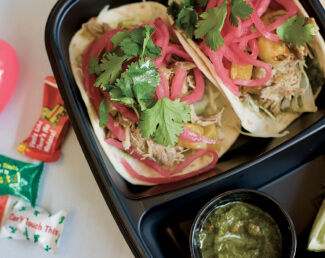
Tacos made to go out of a Local Culinary host kitchen.
The explosion of virtual brands in the last year has been nothing short of amazing to watch. Whether it was out of desperation or innovation that restaurant operators looked to add more food items out of the kitchen, the trend is not likely to go away completely when customers can return to dine-in routines.
While coming up with a brand might sound fun, building a virtual concept is not a simple task, and creating a successful one with strong branding, crave-worthy food and synergies with the core business is even harder. That’s where two franchise-focused concepts seek to help.
Franklin Junction
Born of franchise heritage, but not an official franchise, Franklin Junction has grown explosively since it launched in April 2020. It’s built on what it calls the “host-kitchen” model. Essentially, the company helps restaurants with excess kitchen capacity sell more food.
Aziz Hashim, CEO of the company and founder of former Ruby Tuesday owner NRD Capital, said it’s all the excitement of a virtual kitchen without another facility.

Aziz Hashim, CEO of NRD Capital and Franklin Junction, is one of many jumping into virtual operations for franchised restaurants.
“A host kitchen is a fully functioning restaurant that has a day job, and this is totally incremental,” Hashim said. “A virtual restaurant still requires a facility to be rented or built, and it still requires a set of employees to be hired specifically for that venture.”
Instead of coming up with novel brands to hit trendy foods, or yet another chicken-wing concept, Franklin Junction partners with well-known brands and deploys them across the network of host kitchens.
It started with another NRD-owned company, Frisch’s Big Boy, but now has more than 30 partner brands. Nathan’s Famous helps them cater to hot dog cravings. Fuzzy’s Taco Shop, an NRD-owned brand, is a way for hosts to sell tacos.
At the core of all the brands are favorable delivery and off-premises channels, but the promise is incremental revenue. Hashim said host kitchens have been able to add 10 to 20 percent in additional sales. In return, host kitchens pay a flat service fee to license the partner brands and get access to their supply chains.
Local Culinary
Billed as the first virtual kitchen franchise (with an FDD), Local Culinary seeks host kitchens but also shared kitchen spaces or other virtual-only operations. Founder Alp Franko, a former restaurant owner with a penchant for systematizing operations, says having a restaurateur mindset is especially important when running a number of virtual brands out of one facility.
“We are all restaurant operators so we talk chef-to-chef, that’s very important,” said Franko. “That’s our know-how and why people are paying us for a franchise and a territory. It’s to have this knowledge around how do you handle 25 different kinds of cuisines in the same kitchen with the same prep.”
It’s quite a puzzle, not just for managing the food prep early in the day but also rationalizing the costs. Franko said Local Culinary’s various menus all utilize the same products across brands, like a crispy chicken cutlet that goes on a chicken sandwich but also on a sister brand’s crispy chicken barbecue pizza. That’s a big part of the support structure.
“Unfortunately, in the franchise world, nobody is helping to optimize the costs. We have a special department that is helping our franchisees to optimize the cost of the operation, and that’s mainly the food costs,” said Franko.
The other key support is picking the right concepts out of the company’s 30 brands. Franko said the onboarding team helps think that through. There are obvious tweaks like removing soup from the Miami market, but he said it’s also looking at search and sales data by ZIP code to zero in on the local trends.
The company reported incredible growth so far. Since finalizing the franchise disclosure document in November 2020, the company has grown to more than 50 locations across the U.S. Franko said a location can get going for about $100,000, including the franchise fee. Many franchisees have been taking over leases from operators who don’t want to muddle through the pandemic.