Mississippi-based McAlister's faced down not one but two hurricanes that hit its core area. Staff helped employees get food and supplies, and delivered food to relief workers.
A hurricane is like a train coming down the track. You can see it coming -large, lumbering and dangerous. With a hurricane, the only advantage you may have is a limited time to move out of the way. Not much, when you consider what there is to do before you leave town.
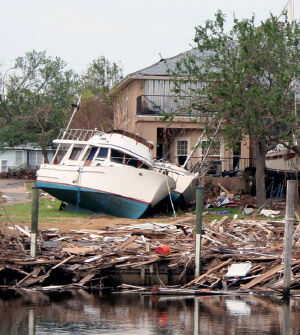
Dual hurricanes could have run many McAlister’s Deli units aground ... ... but considerable planning helped the franchise prepare for the worst.
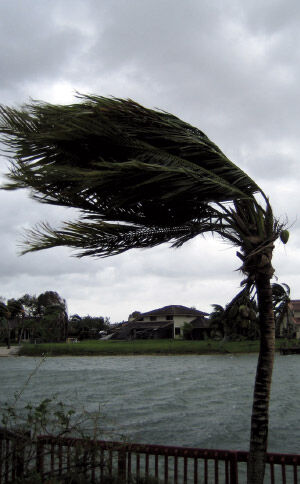
Dual hurricanes could have run many McAlister’s Deli units aground ... ... but considerable planning helped the franchise prepare for the worst.
But Mississippi-based McAlister's Deli was prepared this time, for both their corporate stores and their franchisees. "Some of it was not so hard to think about," said CEO Phil Friedman. "We had gone through (hurricane) Katrina. We were smaller then and we did a lot of reacting quickly. We worked hard on the communications with the franchisees, and none of us expected the dislocation. So many had to evacuate." The lessons learned, while difficult, helped to prepare them for 2008's bad boys: Hurricanes Gustav and Ike, which hit Louisiana and Texas, respectively.
When weather reports alerted the country that Gustav, then Ike, were on the way, McAlister's put its corporate crisis team into action. The first step, Friedman said, was to provide a communications center. Before the storms, the team contacted all general managers of corporate stores and all franchisees. It established a central number for individuals to check in after the storm passed.
The first task after the hurricanes blew through was to ensure everyone was safe, from general managers and franchisees to hourly employees.
Once that was accomplished, the next step was to deliver what was needed to get people back on their feet, both personally and in the stores.
According to Kathleen Wood, acting chief people officer for McAlister's and president of Kathleen Wood Partners, a strategic and organizational development consultancy, some situations were dire. Areas of Louisiana and the Gulf Coast of Texas were without power for days after the storms.
As part of the recovery plan, corporate employees drove vans loaded with everyday supplies - groceries, diapers, formula and bottled water - to dislocated and stranded employees. And because many ATMs were down, a $100 bill was given to each to help pay for other necessities. Employees continued to be paid even while corporate stores were closed.
Wood tells the story of one employee who was down to her last penny, and her last bit of food, when the McAlister's van drove up. The drivers of the vans told Wood the reactions from store employees made them feel like they were giving sweepstakes prizes.
When Ike was barreling up the gulf, the corporate leadership took action. Heads of human resources, operations, accounting and information technology all pitched in. "At least twice a day, we had a conference call learning what we needed to do to help," said Friedman. After the storm, some franchisees needed help processing payroll. They wanted their employees to be paid while their stores were closed. Equipment also needed to be replaced.
After reopening, one franchisee served relief workers boxed lunches and almost couldn't keep up with the demand. Friedman and his team worked with the distributor to ensure extra supplies could get through to the franchisee's store. In one instance, they used their own truck to get boxed lunch supplies through when the supplier's trucks were busy.
"I want franchisees to say, 'when I needed you, you were there,'" said Friedman of his company and team.
Communications manager Rebecca Day, who had just joined the company six months earlier, said being part of the crisis team "was one of the most incredible experiences of my life. To see how the people worked for days on this. How they didn't stop talking or working on this until the last hourly employee had some semblance of their life before the hurricane. People really are good. That's nice to know."
Putting together a crisis checklist
According to Kathleen Wood, who works with McAlister’s as a strategic consultant, McAlister’s plan was well thought out long before they ever heard of Gustav and Ike.
Here’s McAlister’s crisis team’s plan:
- People first: Immediately check in with all store managers and franchisees. Ensure everyone has the necessities, such as housing and generators.
- Property: Discover the status of each restaurant and the basics they need to be operational?
- Products: Work with suppliers to ensure products can get through to the restaurants once they open.
- Process: Update your crisis plans on a regular basis. Do you have proactive communication plans and systems, financial reserves, offsite technology support, redundant logistics of distribution, employee and community relations?
Wood has built her crisis management focus as a result of years of experience. Her most recent lesson was as COO/president of Raising Cane’s Chicken Fingers. She refined her strategy after Hurricanes Rita and Katrina hit, and added to McAlister’s plan by instituting the three "R’s."
- Risk level: Assess the crisis. What is the fact-based situation?
- Recovery: Implement plans to start moving people and restaurants back to self-sufficiency.
- Resolution: Decide beforehand when crisis management will be complete. The crisis team is not finished until they’ve reached resolution. In the case of Gustav, McAlister’s achieved resolution when every Baton Rouge employee had power in their homes.
Wood argues there is a strong business case for this. Knowing your company will be there for you in a disaster is strong motivation to stay, and invite your friends to come on board, as well. When potential franchisees do their due diligence, they’ll hear how corporate reacted swiftly in a disaster. Finally, it builds loyalty with customers and the community, who remember who was open and supported them.

