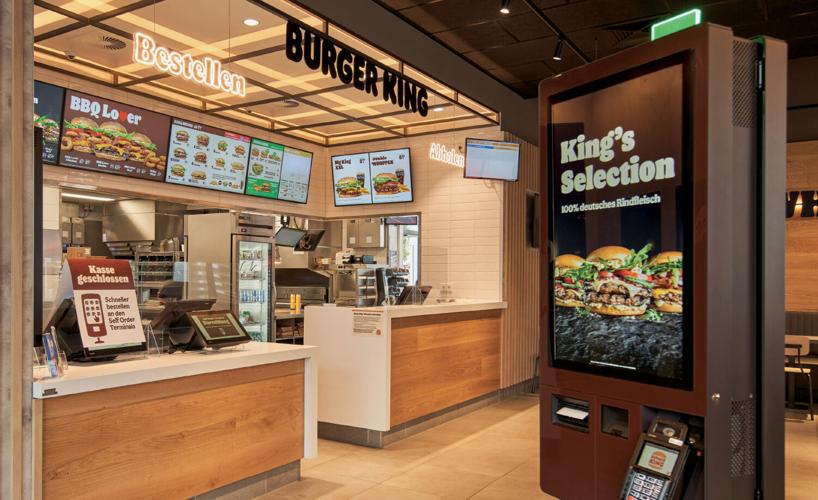


This Burger King in Gütersloh, Germany, is part of McWin Capital Partners’ portfolio. The company, through its Rex Concepts platform led by Olgierd Danielewicz, is growing BK in Central Europe.
There are roughly 42 McDonald’s restaurants per 1 million people in the United States, and in the United Kingdom, that ratio is 20 per 1 million. In Central Europe, however, it drops to 12 McDonald’s for every 1 million people, which to Olgierd Danielewicz signals immense opportunity for quick-service restaurants.
“Within QSR, burgers and chicken are very strong categories, yet still significantly underpenetrated,” said Danielewicz. “Those numbers, that shows to me a big white space.”
It’s white space he aims to color in with shades of yellow, red and orange.
Danielewicz is chairman of Rex Concepts, the newly created platform under McWin Capital Partners to develop Burger King in Czech Republic, Poland and Romania, and Popeyes in Czech Republic and Poland. The master franchise and development agreements call for some 600 restaurants to open in these countries over the next 10 years, scale that appears daunting before considering the experience of McWin’s founders and its leadership team.
Henry McGovern and Steve Winegar founded the private investment firm (its name is a surnames mash-up) in 2021 with headquarters in the Czech capital of Prague. McGovern is the founder and former CEO of AmRest Holdings, which started with a single Pizza Hut in Poland and grew to more than 2,300 Pizza Hut, Burger King, Starbucks and La Tagliatella locations in 25 countries. He sold his shares in AmRest to Mexico-based private equity fund Finaccess Capital in 2019 for $300 million. Winegar started Spanish restaurant company Restauravia Grupo Empresarial, was a senior executive of 400-plus-unit Grupo Zena and on AmRest’s board, and is a former board member of multinational chain Telepizza.

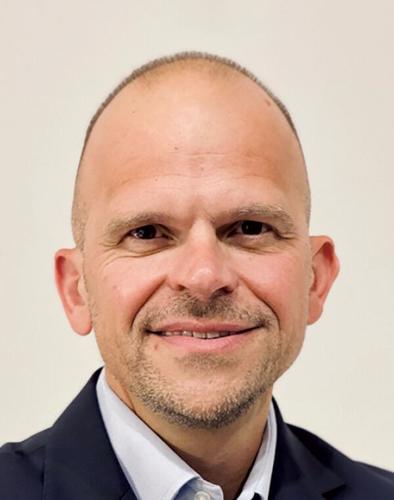
Olgierd Danielewicz
Danielewicz, likewise, has AmRest connections: he was chief operations officer and during his 21 years with the company helped grow the KFC business to 700 units in Europe and brought Burger King back to Poland in 2007.
“Henry started the fund, and it was this perfect combination,” said Danielewicz. That fund is the 525 million euros McWin Restaurant Fund, raised last August and the second for the firm. Through the fund McWin acquired BK SEE Poland S.A., a 20-unit Burger King franchisee in Poland; the latest agreements for Burger King and Popeyes are the fund’s second investments.
In detailing the fund’s formation, McGovern in an email interview said the COVID-19 pandemic “completely disrupted the restaurant space, offering an opportunity for us to use our long history across many markets and brands.”
“Many entrepreneurs and brands need help thinking through international expansion, implementing digital strategies and the overall complexities of scaling brands and teams,” he said. “Restaurants offer an excellent growth and cash flow investment profile which many investors saw McWin as uniquely qualified to lead.”
Through its first fund, the McWin Food Ecosystem Fund, McWin acquired a majority stake in Burger King Deutschland, the master franchisee in Germany with 100-plus company-owned units and more than 600 franchised restaurants. Danielewicz sees promise there and throughout the region within a QSR category he said has evolved over the last 30 years.
“QSR, especially in Central Europe, is more aspirational and more contemporary,” he said, as the category attracts consumers from all economic classes who expect a predictable, high-quality experience, have unyielding cleanliness standards and are looking for value.
“QSR is probably the most resilient in foodservice, and value is a big part of the equation,” he said.
Burger King has already achieved some scale in Poland, Czech Republic and Romania, with just over 100 locations. As Rex Concepts fuels its development, Danielewicz said the company will also aim to expand the brand into different occasions, including breakfast, and enhance the chicken platform.
“We’re definitely thinking about strengthening the core products and also thinking about new dayparts,” he said. “Twelve of the 20 BKs in Poland are drive-thru,” and the format is growing in popularity, though site selection, permitting and construction means allowing 12 to 18 months for development of a drive-thru location.
Food courts are also popular, and Danielewicz said interest is high from shopping malls and developers, particularly for Popeyes. KFC, which has about 500 restaurants across the three countries, is “pretty much the only chain serving fried chicken.”
“Popeyes, our rationale, it’s the origin, the Louisiana flavor,” he said. “It’s high quality, very appealing to customers, and Popeyes is also offering seafood, which isn’t offered by the big competitor.” The brand itself is “vibrant, cool and dynamic,” and Popeyes “plays from a challenger standpoint, like Burger King.”
Prague, along with Poland’s capital, Warsaw, are initial targets to introduce Popeyes in the region, and Danielewicz said the first 12 to 18 months will be focused on opening company stores to prove the brand in the market.
Rex Concepts is also navigating an inflationary environment that is driving higher prices for electricity, gas and food, he said. And as a country, he added, Poland is still working to address the needs of the more than 4 million people from Ukraine who have fled since Russia’s invasion last year. “It’s definitely an environment that requires a lot of work and a lot of creativity,” he said.

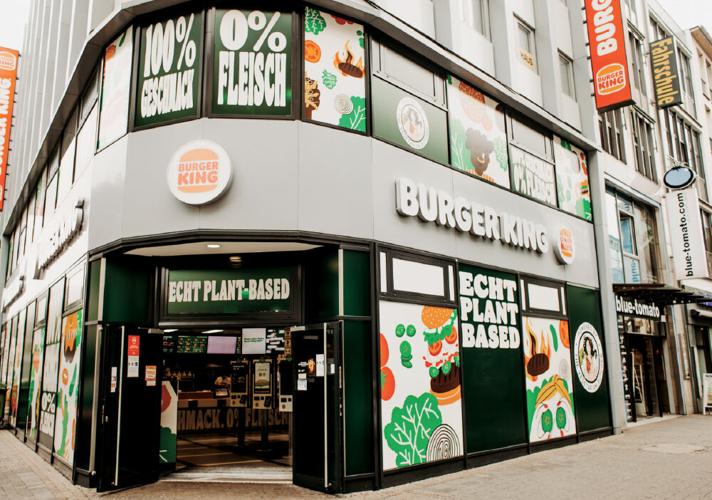
A McWin-owned Burger King in Cologne, Germany, touts its plant-based offerings.
‘Untapped potential’
Popeyes, which like Burger King (and Tim Hortons and Firehouse Subs) is part of Restaurant Brands International, has 4,091 locations, more than 70 percent of them in the United States. Its footprint outside of the U.S.—1,170 stores—is a fraction of Burger King’s, which has 19,789 restaurants total, 12,747 of them outside the country.
Lucas Muniz is senior vice president of global development for RBI, which has 30,722 units across all four brands. In written comments to Franchise Times, he said the company is “committed to leveraging the vast untapped potential for Popeyes in emerging economies, where QSR represents a key category within foodservice and other American competitors are growing mostly unchallenged in the chicken-QSR segment.”
In addition to its deal with McWin, Popeyes is preparing to enter Kazakhstan. It signed a deal with Eldar Abdrazakov and Centras Group to open dozens of restaurants in the country, marking the brand’s first agreement in Central Asia.
“We are confident in the potential of Popeyes in Kazakhstan as chicken is a fast-growing meat category in the country, with both consumption and production expected to grow rapidly in years to come,” said Muniz.
Systemwide sales from Popeyes’ international units were $271 million for the fourth quarter ending December 31; Burger King, by contrast, did $3.9 billion in sales from its locations outside the U.S.
Firehouse, acquired in December 2021 and with just 55 of its 1,242 restaurants located outside the U.S., in Canada, will likewise “benefit from the scale and capabilities of RBI, from branding to supply chain and technology” as the company identifies international opportunities. RBI is doing research across Europe, the Middle East, Africa, the Asia-Pacific and Latin America “to understand how to adapt the concept outside of the U.S.,” said Muniz.