
20 to Watch
When we first started our 20 to Watch in 2000, our goal was to add one additional profile for each year, so technically this should be 28 to Watch in 2008. But we quickly learned over the years that while 20-plus people, places or things were easy to spot, more than 20 were hard to research and write.
That said, if you don't find your name or your company on the list, that doesn't mean we won't be watching you this year -- or that you're under our radar -- it's just that we have to reserve our energy for our 10 other issues.
The candidates on this year's list are some of the trends and movers and shakers in franchising we think will have an impact on franchising this year. The International Franchise Association weighed in heavily on this year's list, so we expect to see some great things coming out of the organization's D.C. headquarters.
We've also included a look back on the 2007 list and highlighted some of the gains made by those luminaries. We just hope our candidates here don't get burned by having our laser-sharp gaze on them for the next 11 months.
01 - Greg Brenneman - Turnaround specialist
Let's get one thing straight: A company doesn't hire Greg Brenneman when things are going well. He is a turnaround artist, not a stay-the-course guy. And judging by his track record, he's pretty good at it. He is widely given credit for reversing the fortunes of Continental Airlines and Burger King.

Greg Brenneman
So when Brenneman was named CEO of Denver-based Quiznos a year ago, it could only be viewed as an acknowledgement that something at the chain needed fixing. Of course, plenty of people have offered their perspective about what was wrong.
The chain has faced numerous lawsuits from franchisees that claim a wide range of issues -- from false termination in the wake of the publication of a franchisee's suicide note to poor placement of units. More to the point, the chain's growth has stalled recently and it faces enormous competition in the sandwich market. So Brenneman the Rebuilder and his overhauled staff of executives will have work to do in the coming year to get Quiznos back on track. For more on this, see our cover story.
02-03 - History in the making - Steve Greenbaum/CEO PostNet & John Francis/PostNet Area Franchisee
PostNet is about to make IFA history. Never before have two people from the same company served on the International Franchise Association's board at the same time. At IFA's convention in February, PostNet's CEO Steve Greenbaum will take over as chairman of the education and lobbying group. At the same time, PostNet area franchisee, John Francis, becomes chair of the Franchisee Forum. And while this doesn't mean PostNet will have a voting block -- the board is expected to come to the table with a pro-franchising agenda, not a pro-company agenda -- it does speak volumes about the kind of leaders PostNet is outputting.
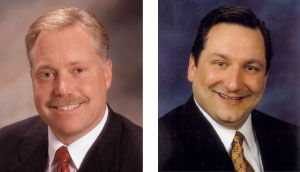
Steve Greenbaum, John Francis
Greenbaum, who has garnered an Entrepreneur of the Year award, believes in being an active member of IFA. When he was introduced to IFA in 1991, he told himself that this was an organization that could help him, but only if he made it happen.
IFA, after all, is not an association for shrinking violets -- most entrepreneurs are shrink-proof. As a founder who built his company from the ground up, Greenbaum brings vision, passion and a strong work ethic to the chairmanship. He's also fortunate to have a business partner back at PostNet's Denver headquarters, Brian Spindel, who has a similar skill set and can keep things running smoothly while Greenbaum attends to IFA affairs. The long-term business partnership works so well, in fact, that Greenbaum had a duplicate statue made of his Entrepreneur award for Spindel's office.
Francis also has a strong entrepreneurial bent. His, however, is in his DNA. As the son of Florence and Joe Francis, founders of the Barbers and longtime IFA supporters, he is franchise royalty, if there is such a thing. In addition to his history-making feat with Greenbaum, he's also the first offspring of two board members to sit on the IFA board. The Franchisee Forum is sure to benefit this year from its "recovering franchisor" leader, who is leading the charge to find new ways for franchisees to add value to the IFA. "The first issue was inclusion," he said.
"We're there. Now as franchisees we've decided to take it up a notch."
04 - Wendy's: What's the future hold?
We spent much of 2007 on a Wendy's Watch. We're still watching.
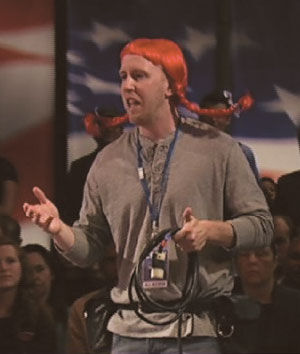
Wendy's
The venerable burger chain spent about half the year on the auction block, and several months before that fending off calls for it to be put on the auction block. Yet thanks to turmoil in the credit markets there were reports of a possible delay in the auction by year's end.One potential buyer reportedly dropped out of the bidding. Another buyer bid less than the $37 to $42 a share it originally indicated. That would be Triarc Cos., the owner of Arby's that is run by Nelson Peltz, the billionaire investor who was the loudest voice clamoring for change at Wendy's.
Even if a sale wasn't possible, our attention would be on the nation's third-largest burger chain, which has been struggling to reverse its sagging fortunes since the 2002 death of its founder and icon, Dave Thomas. It certainly is trying. In 2006 -- at the urging of Peltz -- the company spun off the successful Canadian doughnut franchise Tim Horton's and sold the struggling Mexican fast-casual chain Baja Fresh.
Wendy's has worked to improve its menu, and plans to introduce new snack and drink options. It also has a new "edgy" ad campaign featuring people wearing red Wendy wigs, pigtailed versions of a bad, bad toupee. The commercials, by the way, are not worth watching.
05 - Pinkberry: Yogurt on steroids
If you haven't heard of Pinkberry yet, you will soon, because the company, which has developed a cult-like following, is showing signs of becoming the next Starbucks. But don't take our word for it. Ask the guy who placed a Starbucks on every corner. Howard Schultz, Starbucks chairman, invested $27.5 million into Pinkberry in late 2007 and joined the company's board.

Pinkberry
Schultz is hardly the first big name to be attracted to the chain. Actress Salma Hayek and heiress Paris Hilton are known to be fans, and its groupie-like followers sometimes call the company's product "Crackberry." Now that the company is flush with cash, it's looking to spread quickly, so get ready for the second coming of the frozen yogurt phenom.The "tangy" frozen yogurt, known for its inspired toppings, was created in 2005 by Shelly Hwang, a 32-year-old Korean immigrant, along with an architect, Young Lee. By their second month, the store was profitable and the chain now has 28 units in Los Angeles and five in New York.
06 - Baby boomers: Their golden years control the gold
Baby boomers want to believe not only is 50 the new 40, so is 60. They want to stay young, and they want the world to cater to their view of "youth." And, what this verbal, well-off group wants, it often gets.
For years baby boomers have called the economic shots. They have been labeled the most experienced restaurant patrons in the history of America by the National Restaurant Association, and as such their demands for more healthy options and more flavor in their food (aging tastebuds) keep the restaurant industry dancing to their tune.
In three years, the 76 million baby boomers begin turning 65. This is enough to strike fear into the heart of many a government accountant -- think Social Security and Medicare -- but it is also having a huge impact on franchises.
Many boomers have money to spend and are buying up franchises as an investment for their golden years. Entrepreneurs also see opportunity to serve the sector, given its size and enormous buying power. As it is, businesses catering to services frequently used by the aging -- like, say, fitness centers and medical spas -- have grown anticipating a booming business from boomers.
Other franchises are emerging in anticipation of a booming senior care market. In-home care services are growing as more seniors look for ways to keep themselves out of a nursing home. Boomers, notoriously independent, can only be expected to use them en masse.
Too often, when an opportunity rolls onto the scene, everyone -- qualified or not -- jumps on the bandwagon. We think it's worth watching to see if that bandwagon develops a few squeaky wheels.
07 - Real estate: The king must die?
If we were writing a country-western song, we'd be penning a mournful tune about a good location -- like a good man -- is hard to find. Just like every franchisor wants the same franchisee, every franchisee wants the same real estate. And there's just not enough to go around.
Take, for instance, residential real estate. The credit markets are struggling, lenders are tightening their standards and, as a result, mortgages are more difficult to come by, which has turned a slowdown in the housing market into an absolute freefall.
So far, commercial real estate has been left relatively unscathed. The sector kept growing, ignoring its homey cousin. Investors now speculate the sector will take its own nose dive shortly.
The same reasons that hammered housing should impact the construction of commercial buildings -- poor lending standards during boom times being the main culprit. If commercial real estate indeed does fall, the result would undoubtedly have an impact on many franchise businesses that need real estate to exist.
08 - Buca di Beppo: Franchising in future?
Translating languages can be risky if the language from which you are translating a phrase is foreign to you. Take the name of Italian eatery "Buca di Beppo." Literally translated, it means "Hole of Joe." But that's not what the founders intended when they chose the name for the irreverent, over-the-top concept known as much for its tacky plastic flowers and enshrining the head of the Pope in a lazy Susan as for its abundant and tasty food. Their translation was "Joe's Basement," a reference to the first restaurant, located in a basement of a building. But unofficially it also could describe where the company has fallen in recent years amid a federal investigation and charges that two executives took cash from vendors and used company funds to pay for their personal vacations.
The once high-flying, family-style chain lost more than $85 million since 2003, including $73 million during a horrific three-year stretch from 2003 to 2005. It stopped opening stores, and sold an East Coast subsidiary and has closed some underperforming units.
Why do we care, given that Buca has long held that it has no plans to franchise? We believe that will change soon. The chain wants to grow again, and this year executives said the company will explore franchising as one possible strategy -- which could also help bring its finances out of the hole, so to speak.
09 - Blogging: All the news that's fit to scroll
There's a reason blogging rhymes with flogging. Blogs, short for Web logs, are a fast way to disseminate news and opinion, and sometimes the recipient of a bluntly worded post can feel poked with a sharp stick.
While some blogs aim merely to entertain, a number of blogs now discuss franchise relations, giving franchisees multiple forums to report their problems with a particular company, often anonymously. While this can lead to unsubstantiated criticism of a company or individual, it also can reveal widespread problems with a franchisor instantly. Just a year ago many of these problems may never have seen the light of day.
This is as good an incentive as any to keep a franchisor honest -- especially now that half of all franchise sales originate on the Internet.
There are other ways blogs impact franchising. They provide opportunities for communication among franchisees -- and with franchisors -- about a host of brand and business-related issues. Franchisees and prospects can get advice from consultants and lawyers through blogs, and prospects can get unfiltered information about a potential franchise. The danger, as we see it, is that anonymity cuts both ways. While it allows franchisees to criticize their franchisor without fear of retaliation, it also encourages accusations without accountability.
These sites are gaining popularity, and so we'll be reading our share of franchise blogs in the coming year.
10 - Carlson Companies: Power struggle at top
Minnesota-based Carlson Companies is one of the largest family-owned businesses in the world. Curt Carlson started the empire in 1938 and it has remained exclusively in family hands ever since. Even more amazing in this era of displaced founders, the company has had only two chief executives -- Carlson and his daughter, Marilyn Carlson Nelson.
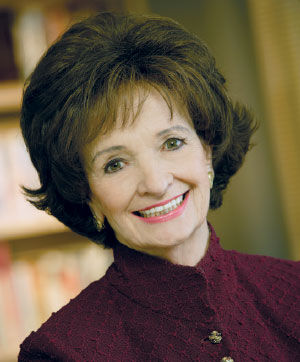
Carlson Companies
That could change for the $37 billion business, which owns several franchised brands, including Carlson Wagonlit Travel, T.G.I.Friday's, Radisson and Country Inns & Suites. Carlson Nelson's son, Curtis Nelson, who was being groomed to take over the company, is suing his mother and Carlson, claiming they are denying his rightful place in the CEO's seat. He's also suing for what he says is his share of the company. Carlson Companies, meanwhile, filed a counterclaim.
Suffice it to say, Nelson won't be CEO. Carlson's next CEO will not likely be from a branch of the Carlson family tree. While a family-filled board will make that choice, the next CEO is still a big deal for a company with so many large franchises onboard.
11 - Casual dining: What's on the menu next?
We admit we have a strong affinity for casual-dining restaurants, which gives us a personal reason to watch what's happening with this particular sector of the dining industry. But there are other reasons, beyond our ad revenues and our appreciation of someone taking orders from us while we're seated, to include the sector on this list.
Casual restaurants are in a slump. Many diners, stung by higher gas prices among other things, have cut down on eating out.
Others are patronizing the increasing number of fast-casual options where they get quicker service and don't have to leave a tip. And some just complain that there is little difference between a T.G.I.Friday's, an Applebee's, Chili's, Ruby Tuesday's or a Bennigan's.
So casual restaurants will undoubtedly spend 2008 trying to woo those customers back. Some, like Friday's, are offering less expensive, smaller food portions. Others are banking on take-out orders to boost business, especially as their fast-casual competitors usually go sans-drive-thru -- lest they be considered "fast food." Coupons are increasingly common. In the spirit of "if-you-can't-beat-them-copy-them," several casual chains are experimenting with fast-casual extensions of their brand.
And perhaps the worse news of all for this segment is a question being asked by The New York Times -- "Is the Entree heading for extinction? As a nation of snackers, are we going to continue our grazing into the dinner hour? If, so casual dining chains may want to join the "less-is-more" movement.
12 - Julia Stewart: A new 'bee in her bonnet
Julia Stewart is living the dream; assuming that the dream involves returning to buy the place where she used to work.
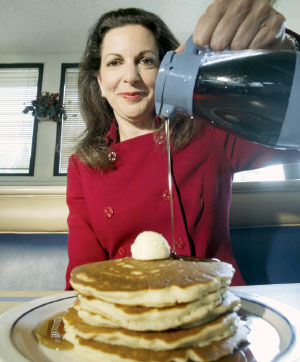
Julia Stewart
As the CEO of IHOP, Stewart orchestrated a $2.1 billion takeover of the much larger casual-dining chain, Applebee's, where she was a top executive during the company's 1990s heyday. Despite some opposition to the deal, shareholders approved the takeover and it closed along with 2007.
Now the hard part begins. Stewart's job will be to resurrect the Applebee's chain, which struggled in 2007 to boost lagging sales. Americans aren't eating out as much thanks to the shaky economy, and fast-casual restaurants are taking away business.
And, as if that's not bad enough, many customers have a tough time differentiating the Applebee's experience from its competitors.
Still, some observers believe Stewart has the ability to correct Applebee's problems, after all, she did it at IHOP, which was a struggling family-dining chain that has been made relevant again under her watch. One of Stewart's recipes for success at IHOP that she plans to replicate at Applebee's: a refranchising of most if not all company stores -- 475 out of 510, according to AP.
As a woman leading a restaurant company, Stewart is used to being visible. And she obviously can stand the heat, because she's not getting out of the kitchen -- she's adding on to it.
13 - The "Green" trend: Necessary for business?
The wise, old sage Kermit the Frog once said, "it's not easy being green." Maybe not, but that hasn't stopped a growing number of companies -- including franchises -- from trying.
Environmental concerns are at the forefront of the public consciousness, and many companies are making efforts to use less energy. We viewed one or two of these efforts as a little outlandish -- like the hosts of a "Sunday Night Football" episode on NBC in November who did their broadcast by candlelight.
Yet many of these efforts are more than noteworthy, and some businesses are even building their entire concept around the idea of environmental friendliness. Take, for example, the Florida-based pizza chain Pizza Fusion, which delivers its pizzas in recycled cardboard boxes via hybrid cars and buys renewable energy credits to power its stores.
Whether going green will mean more black ink on corporate spreadsheets remains to be seen, but if we want a green light for future generations to eat pizza and drive cars, we just might want to expend a bit of energy thinking about the environment.
And, because we like to put our coverage where our mouth is, don't miss February's "green" issue. But like most things in life that are worthwhile, being green isn't just a one month issue. It's something we should all watch all year long.
14 - Darren Kowalske, President & CEO: GE Capital Solutions, Franchise Finance
Darren Kowalske seems to have come full circle.
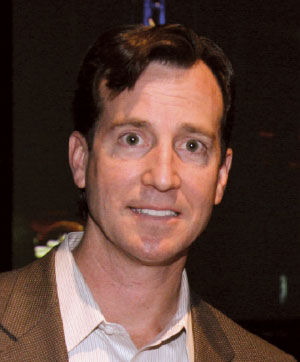
Darren Kowalske
The man who is now heading up GE's franchise finance division started his career with the company 20 years ago working on sale/leaseback financing. Today, in his new role, he is again selling sale/leasebacks -- kind of. That would really be his origination staff, but when you're the boss, the buck stops with you.
And it's a big buck. When Kowalske arrived at the division's headquarters in 2007, the dust had not yet settled around one of the most talked about transactions in franchise finance: GE's acquisition of the restaurant REIT king, Trustreet Properties, formerly CNL. The dust has indeed settled. Kowalske's challenge going forward is to continue to integrate Trustreet into the company -- and to grow. Even in a tight credit market, a commanding company such as GE will never be at a loss for deals. But others might. Could another acquisition for GE be on the horizon? Never say never.
15 - Andrew Perrin/Chair IFA's Supplier Forum
Andrew Perrin of Larkin Hoffman Daly & Lindgren will be stepping into the big shoes of Dan Martin (Dan's known as a bit of a clown, and if you've seen his sponsorship videos at the IFA convention, you'll understand why) to head the Supplier Forum and take a seat on the IFA board. The suppliers have been gaining momentum on the board as of late, establishing their place at the power table -- although their numbers will decrease when supplier trailblazer Michael Seid's second term ends next month.
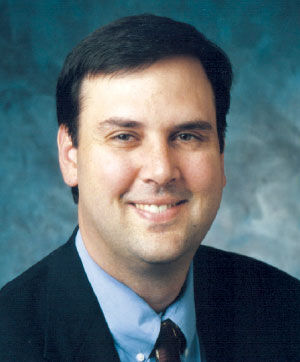
Andrew Perrin
Perrin's quiet style will be a contrast to some of the flashier supplier leaders, but we have confidence that his steady, efficient demeanor will be just as effective in getting the suppliers' voices heard. After all, he's Minnesota nice. And he has training as a lawyer. Franchise Times named him a Hot Shot Lawyer Under 40 in 2001 and he has served on the ABA Forum on Franchising committees as well.
Things have not been easy for Perrin lately. A softball collision in 2006 left him with a traumatic head injury that caused him to rethink his law career. Perrin stayed on with his firm in a variety of roles, including training and mentoring, strategic planning and client relations, along with volunteering his time and talent to the IFA. We think this is one time the nice guy finishes first, and we're watching to see where his latest path takes him.
16 - Meal replacement: Too many, too late?
More than one franchise pundit commented on the lack of meal-replacement concepts at the West Coast Franchise Expo in October. The previous year, the industry was cookin' at the show. (Of course, if the West Coast Expo is any indicator of future growth areas, we'll all be sporting a golden tan in 2008.)
Concepts like Dream Dinners, My Girlfriend's Kitchen and Let's Dish pioneered the make-ahead meals which allow customers to prepare dinners in bulk and then freeze them for home-cooked meals for weeks on end. We've seen some consolidation in the industry, along with some of the major players regrouping. The smart ones are coming up with innovative ways to attract back business, such as wine pairings and pick-up meals, which saves time making the meals yourself.
The idea behind the original concept is that "girl friends" would love to regularly get together and prepare meals in a party atmosphere. The reality may be that cooking is cooking. Some of us like to do it, and some of us don't.
A statistic working against the industry is that more moms are staying home, surprising news after years of rising numbers for women in the workplace. This may mean they'll have time to prepare the meals themselves -- if their moms weren't too busy working to teach them to cook.
How the industry shakes out in the coming year is something we'll be watching as the number of meals in our freezer continues to dwindle.
17 - Presidential election: Will it be the ticket?
Has it already been eight years? Yep, that's right, 2008 is a presidential election year. Some of us are already tired of watching the debates, and there are still a full 10 months left before the nation chooses its next batch of leaders.
While it is doubtful that Barack Obama, Hillary Clinton, Fred Thompson and Rudolph Guiliani, et al, will be debating the wisdom of franchise laws, they will be debating numerous issues that are significant to the nation's franchised companies.
Social Security will be huge, for instance, as will immigration issues.
Health care policy will be especially noteworthy, since there is mounting concern about rising health care costs for businesses and individuals, as well as the growing number of uninsured. Add in the oncoming impact of the baby boom generation aging, there is pressure to rewrite the nation's health care system. The International Franchise Association is paying close attention to those proposals.
It's possible that the current Congress and president will deal with these issues before the election, but we're not going to bet our retirement fund on it. Instead, we'll wait to see what voters say come November.
18 - IFA's MinorityFran: Adding to the numbers
Every year when we do our Women and Minorities issue in August, we're humbled by the wonderful stories about minorities who got a break and went on to secure their piece of the American dream.
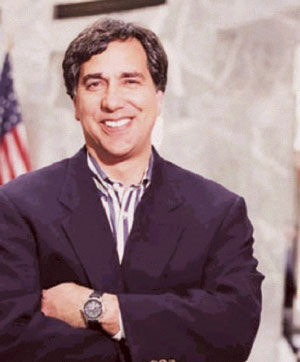
Eric McCarthey
Which is why we are interested to see how IFA's MinorityFran is shaping up since it was launched in February of 2006.
Eric McCarthey, president of the 7-Eleven global business division with the Coca-Cola Co., is the new chairman of the IFA Diversity Institute, which includes MinorityFran as one of its programs. About 220 companies had signed on to support MinorityFran as of the summer of 2007.
The mission is to increase the number of and the successes of minorities in franchising, and that includes everyone, not just franchisees. It's also a way to introduce franchising to the minority community, and a way to expand franchising's ranks with more entrepreneurs who employ even more people in their communities.
A noble goal -- now it's time for action.
19 - Pack and Ship Stores: Not getting boxed in
We're still trying to unwrap our brains around what's happening with the retail pack-and-ship industry.
Consider what occurred this summer, when San Diego-based Postal Annex, an operator of more than 300 retail and commercial pack-and-ship centers, bought the 68-unit Packaging Store, based in Denver. The sale boosted Postal Annex's unit count to more than 400. The Packaging Store's parent company, Navis Pack & Ship, sold the chain to concentrate on its warehouse-based commercial shipping franchise. Interesting that one company found the commercial side more lucrative, while the other decided to concentrate on the retail side.
Other companies are also making waves. PostNet, another Denver-based chain, has grown to more than 900 locations since it was formed in 1993 and has an impressive presence in South Africa, where one franchisee has an entire second store of just mailboxes. PostNet, like FedEx Kinkos, has diversified its customer service into becoming a business center, rather than just mailing services.
UPS Stores, meanwhile, continued to do battle with many of its current and former franchisees, some of whom are suing the chain over its management and the changeover from San Diego-based Mail Boxes, Etc. United Parcel Service bought the chain in 2001.
The industry has gained some business from eBay shipping, even though a flood of eBay packaging stores threatened to take over some of that business, and some limited competition from a push by the U.S. Postal Service to be more customer friendly.
Perhaps what we should be watching is why so many of the companies in this segment pick San Diego and Denver for their headquarters -- but that's not hard to wrap our brains around.
20 - Franchise Sales: Changing the sale
We think franchise sales is going to be a hot topic in the coming year. Why? Because so many new concepts continue to join the already burgeoning franchise landscape – about 750 in the last three years alone, according to our columnist Mark Siebert.
This need for good franchise sales people is causing the industry to look at new ways to compensate for growth. Some are divesting themselves of their in-house teams and going to a broker model, others are looking at a form of "executive recruiter" and still others are wondering about giving up a percentage of their long-term royalties in exchange for a qualified franchisee.Franchise sales is not like selling a refrigerator to a new homeowner. The stakes are much higher than asking someone to put an appliance on their revolving charge account. People who are granted franchises often put their life savings on the line, plus their home – including their refrigerator – and sometimes their children's education. So a responsible franchisor wants a responsible person selling his or her opportunity.
This may be an industry question – or a question for future conferences and legal gatherings. What we all want in franchising is win-win. We don't want anyone to lose their shirt in this business – or their children's future.

