
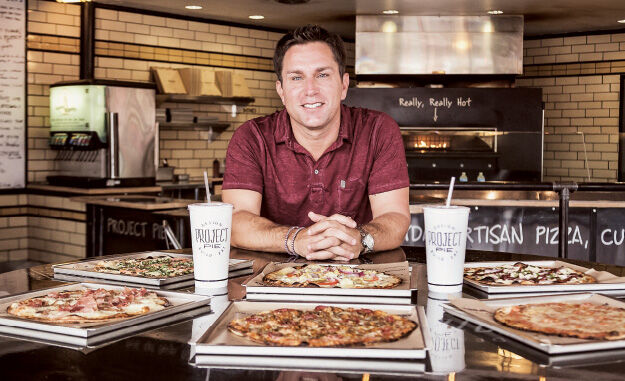
James Markham
James Markham is founder of Project Pie, his third go-around in the better pizza biz.
No one likes a copycat, but these four pioneers faced plenty of me-too competitors once they got rolling. How they fight back to keep a toehold or gain ground provides a road map for any franchise player.
Tiffini Soforenko considered herself the first to open a cupcake-only bakery when she started Yummy Cupcakes in Los Angeles way back in 2004. So imagine her anguish when one year later the founder of Sprinkles Cupcakes showed up on Oprah.
"It made me cry," she says. "It could have been anybody but it was them, and forget it—there’s books written on the Oprah effect."
Sprinkles today is cited often as the original cupcake bakery and its founder, Candace Nelson, is a celebrity judge on reality TV; Yummy has eight locations since starting franchising in 2009.
Today Soforenko is at peace with the turn of events, figuring things happen for a reason, and perhaps her company wouldn’t have been ready for the growth that comes with instant fame. She is one of four franchisors featured in this article who were pioneers in their segments back in the day, only to face stiff competition and even outright copycats later on. How they are fighting back to keep a toehold or gain ground is instructive to any player.
Spending ‘a lot’ on attorneys
Consider Cathy Deano and Renee Maloney, founders of Painting with a Twist in New Orleans. After Hurricane Katrina hit in 2005, they started what they thought was a unique concept, in which people would sip wine and paint canvases, often times while raising money for a cause.

"Nobody had heard of it," says PostNet founder Steve Greenbaum, when they first proposed the Neighborhood Business Center.
"We were looking for a way to give back to the community as fund-raising," says Deano, who is proud they have just franchised unit 103. "You have people who were in the middle ground, they weren’t getting help from FEMA, they weren’t getting help from insurance, and we thought, what about fund-raising via painting? Since we opened our doors" in 2007, "we’ve donated $675,000 to nonprofits, system-wide."
They’ve also faced brutal competition: Pinot’s Palette, Vino & Van Gogh, Bottles & Bottega, Vino & Canvas—the list goes on. And when franchisees open a location, only to face a competitor up the street, they tend to panic. "They’re going to get copycats, and they freak out," Deano says. She and her staff emphasize the systems they have, the support they offer, the 3,000 pieces of copyrighted art in their library to calm the franchisees’ fears.
Also, they spend "a lot on attorneys," Deano says, to send cease-and-desist letters to people using their trademarked or copyrighted materials. Why? "To keep us strong, because this copycat thing is in every, every industry.
"They copy us because it’s fun," Deano says about their concept. "They copy us because they come to us" for a painting session "and they want one of their own."
When they began franchising in 2010, the copycats really "got heavy," Maloney says, and she admits she didn’t take it as calmly as her business partner.
"It was really hard for me," she says. "Cathy said, ‘Renee, there’s McDonald’s and Burger King. Imitation is the finest form of flattery.’" She gets that but it still burns. "I pride ourselves on being original, and what I saw out there was a lot of direct copying, rather than take the concept and spin it. That’s been frustrating."
The pair emphasize same-store sales growth, which they track religiously, as well as superior customer service. "Competitors aren’t bad," Deano says. "What’s bad is competitors that aren’t doing it well," because then people don’t have a good time and abandon the paint-and-sip idea. "Franchisees call and say, ‘They’re popping up next to me.’ And you just have to be the best," Deano says. "Why do you choose one florist over the other?"
‘I think it’s flattering’
The better pizza business is the rising star in the fast-casual category today. But James Markham, founder and CEO of Project Pie, has been there and done that.
He opened MOD Pizza in Seattle in November 2008, which he calls the first-ever, fast-casual pizza place. He broke with his business partners, who own it today. "They changed some things about the concept fairly drastically, and we had a different way of growing what I created," Markham says.
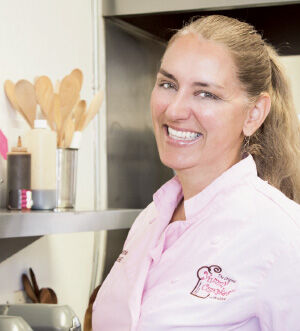
"It made me cry" when a competitor made the Oprah show, says Tiffini Soforenko of Yummy Cupcakes, but today she’s at peace
Next up was Pie-ology in Fullerton, California, and again Markham got things going and then began arguing with his partners—not an uncommon fate for a shareholder with a minority stake who is also a classic entrepreneur. "In both instances I’ll take the blame. I had a very specific idea of how this new segment was supposed to be done," he says
Now he’s trying a third time with Project Pie, launched in 2012, and he owns the controlling interest. "We’re genuine. There’s nothing about Project Pie that’s artificial or put on," Markham says. But since 2008 the me-too players are legion, he says, especially Blaze Pizza, backed by Rick and Elise Wetzel of Wetzel’s Pretzels, not to mention investors Maria Shriver, movie producer John Davis and Boston Red Sox co-owner Tom Werner.
"I think it’s flattering that people want to copy it," Markham says. "But at the same time, I just wonder how people feel OK with saying, ‘I thought this up’ when they didn’t. I just find it all to be a little disingenuous."
He scoffs at the mural on the wall at a Blaze Pizza, which says "cause a scene." "I don’t think of Elise and Rick Wetzel and think, ‘cause a scene.’ I think if it doesn’t ring true, for brand longevity, I don’t think it lasts." He believes over the long term, an authentic brand will resonate with customers.
Markham plans to open "a lot" of corporate stores, and they’ve been franchising. While he acknowledges others are gaining more notoriety, he doesn’t much care. "One thing I decided a long time ago is I’m not going to worry about what other people are doing. I don’t follow very well," he says. "Only dead fish swim with the current."
Steve Greenbaum is the founder and CEO of PostNet, which he started 30 years ago as a pack-and-ship shop geared toward consumers. In the 2000s, he began looking seriously into a new strategy, offering business and marketing communications services for small businesses.
They began by studying their franchisees who were out-performing the rest, and found success correlated with those offering a wide range of small-business services.
By 2011 they introduced a new business model called the PostNet Neighborhood Business Center. When he was first convincing franchisees and lenders, he found it tough going. "Nobody had heard of it," but now he says competitors from the UPS Store to OfficeMax are copying the idea. "Now if you go on their website they love small business. The light bulb went on for them that this was emerging and important, and we always thought it was emerging and important."
He says he doesn’t worry so much about competitors, but rather finds it more important to concentrate on the changing needs of their stores’ customers, and figure out how to anticipate those. For example, a new store in downtown Minneapolis, set to open in the first quarter of 2014, will have the brand’s first demonstration 3D printing operation, a rising trend in the space.
"We’re years ahead in our proprietary systems and processes. They don’t have that," Greenbaum claims.
"We’re not selling commodities any more. It’s about our culture and values. That’s difficult to re-create," he says. "I’m too busy looking through the windshield than the rearview mirror."

