
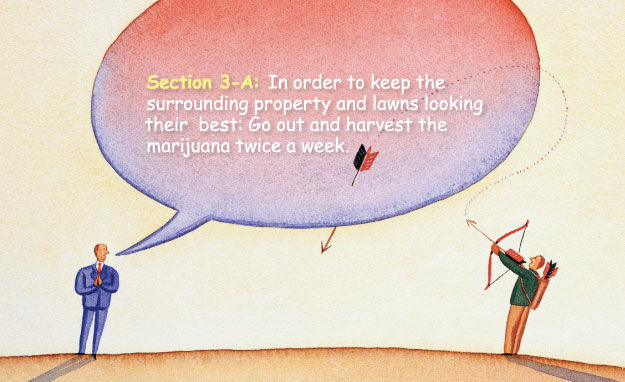
| A native speaker may have shot arrows in this hotel chain’s lame translation. |
People appreciate being spoken to in their own language. But all too often—and, yes, this is a generalization—Americans feel everyone should speak English. Or do their own translations.
Want to increase your close rate when you go overseas?
Translate your sales material and documents into the prospect’s native language.
People are more likely to bite if the offer is in their mother tongue, says Hana Laurenzo, who founded Fort Worth, Texas-based Teneo Linguistics Company in 2005 to provide the service to U.S. companies venturing into international waters. Unfortunately, it’s a service some businesses don’t realize they need.
Laurenzo started Teneo, which is a Latin word meaning "to grasp, to know, to understand," when she moved to the United States. She had run a similar company in Europe, where because of the close proximity of a number of countries with different national languages, translation services are commonplace.
As international expansion is top of mind for a majority of franchisors, should translation services be an additional expense to be considered?

Mary Ann O’Connell, top, and Hana Laurenzo paired up to service the linguistic needs of the franchise community with Teneo Linguistics Co., based in Texas.
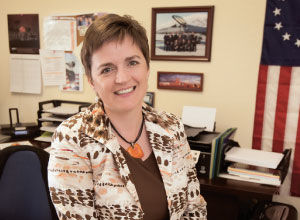
Mary Ann O’Connell, top, and Hana Laurenzo paired up to service the linguistic needs of the franchise community with Teneo Linguistics Co., based in Texas.
"Companies will spend thousands of dollars for marketing and then grab someone off the street to translate it," Laurenzo says. It takes time to translate a document, whether it’s marketing or a franchise manual. The translated version needs to have the same feel and meaning of the original. "We deliver messages," she explains. "We don’t necessarily use the same words." Which is why she would never suggest using the Google translates function on your computer. The online translator delivers a literal translation versus one that takes into account the nuances of a language: its slang, idioms and intention, Laurenzo says.
The difference between Teneo and a machine-delivered translation, says Mary Ann O’Connell, founder of FranWise and a partner in Teneo’s franchise division, is they hire native speakers to translate line by line. After years of translating franchise documents from "franchise into English," she says she knows the intent of standard phrases franchisors routinely use. Once a commonly used phrase is translated, it is stored in the client’s file, so the client isn’t paying for it to be translated over and over again in subsequent documents in the same language.
Legal documents are especially critical, since "there are grammar rules particular to legal language," O’Connell points out.
Before investing in the company, O’Connell says she asked three well-known attorneys to try to talk her out of providing a translation service to franchising. They divided along the lines of the three bears, she says: One loved the idea, one thought it would make clients liable for translation glitches and one fell right in the middle. After reviewing their concerns, O’Connell believes proactive translating is better than relying on the local licensees to do their own translations of the company’s agreements and documents.
There are a multitude of examples of when good messages go wrong. One of Laurenzo’s favorites concerns a hotel chain that had handed out a translated version of its operations manual for years before someone pointed out that the dictate stating the franchisee must mow the grass twice a week, actually was translated as: "Go out and harvest the marijuana."
It can happen to even mega-brands. Coors, the Colorado beer company, translated its ad slogan, "Get Loose with Coors," into Spanish and it came out: "Get diarrhea with Coors."
For franchisors, however, a less-than-stellar translation of their documents and contracts into the local language is no laughing matter.
When franchisors rely on their master franchisees (or country developer) to do the translations, O’Connell says, the franchisor can not ensure the contract has been translated exactly as it was written. Sometimes alterations can be intentional, such as eliminating a clause the master franchisee doesn’t want to follow, or it may be unintentional. Remember, the hotel chain really only wanted the grass mowed in a timely manner.
And to complicate matters further, there’s a different skill set needed for translating—involving written material—and interpreting—which is the spoken words.
Laurenzo grew up in Europe, where it’s common to speak two or more languages. She has a master’s in both translation and interpretation from Charles University in Prague. It’s considered a double major, she says, because the two require two different personalities.
Interpreters need to have good memory retention and like the spotlight, she says, while translators like to work at home in their pajamas, she adds, laughing. Both services are important if you want to deliver the right message. "Our eye is less forgiving than our ear," O’Connell says, which is why reading a bad translation bothers us more than hearing someone interpret a phrase awkwardly.
Obviously Teneo isn’t the only service out there that translates documents. But it is one geared toward franchising.
Chris Hardy, who brought Curves to France and is now launching an international beauty brand, BodyBrite, in the U.S., said it’s worth it to pay to have your materials translated correctly, because a "bad" or amateur-sounding translation destroys your credibility and reflects on the professionalism of your brand. He knows this firsthand, he says, because the French are protective of their language and a sloppy translation will be a faux pas that will be hard to overcome.
But not everyone is convinced there’s only one way to get translated documents into licensees’ hands.
William Edwards of Edwards Global Services in Irvine, California, says, U.S. brands want their licensees to speak English at the top level for communication back to the franchisor. For China, however, his company does translate a one-page summary of the U.S. brand and its international offering. But manuals are the responsibility of the licensee, not the franchisor, he adds.

