
One of the top legislative priorities for the International Franchise Association is getting another chance in Congress.
Last week, U.S. Rep. James Comer, R-KY, introduced the Save Local Business Act, a bill with language setting nationwide rules on the joint employer standard. The move is the latest in a years-long effort on Capitol Hill and by the IFA to codify the joint employer rule, which has varied in scope depending on who’s in the White House.
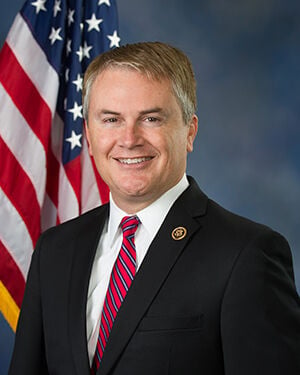
U.S. Rep. James Comer, R-KY, introduced new legislation to codify joint employer standards
“Congress must promote policies that empower small businesses and free them from stifling regulations pushed by an unchecked and unelected federal bureaucracy,” Rep. Comer said in a press release. “My bil l… will add common sense to the definition of a joint employer, protect the franchise business model, and reduce bureaucratic headaches for American job creators.”
Joint employer standards are set by the National Labor Relations Board, and can determine whether an entity can be held liable for staff-related matters with an affiliate. In the case of franchising, the standard determines what level of liability and responsibility a franchisor has for employees working for one of its franchisees.
The current standard was put in place in 2020, during President Donald Trump’s first term. The standard was nearly rescinded, though, when the NLRB under President Joe Biden’s administration published a new rule.
In October 2023, the NLRB released a standard where a franchisor could be considered a joint employer with the franchisee. Under the standard, franchisors could be liable for labor law violations, and would have a legal obligation to be involved in union negotiations.
The 2023 standard resembled a similar rule in place from 2015 to 2017. According to the IFA, that rule cost franchise businesses $33 billion per year in operational costs and resulted in a 93 percent rise in lawsuits.
In early 2024, both chambers of Congress passed a resolution to overturn the NLRB’s 2023 standard. However, President Biden vetoed the resolution in May. In federal court, though, the rule was struck down after it was challenged legally by the IFA and the U.S. Chamber of Commerce, among other groups. By July 2024, the NLRB ended its effort to reinstate its 2023 standard.
Michael Layman, IFA chief advocacy officer, said Comer’s new bill is an important step to not only to create a codified joint employer boundary, but also establish long-term certainty.
“That’s something the franchising community still doesn’t have on the perpetual looming threat of joint employment liability,” Layman said. “So, despite the regulatory certainty in the second Trump administration so far, we’ve still seen four changes to the joint employer standard over the last 10 years.”

Michael Layman is chief advocacy officer for the International Franchise Association.
Layman said there remains an inability for franchisors and franchisees alike to make long-term decisions about employment liability because a new administration may shift the standard. Additionally, Layman said the Service Employees International Union has made a renewed legal challenge to the current standard.
The SEIU in May filed a petition asking a Washington, D.C. Circuit Court to examine the rule, reviving a lawsuit it filed in 2021 that sought to stop the joint employer rule's enforcement and deem it in violation of the Administrative Procedure Act.
“It’s in that environment that we’re excited that Congress is turning their attention, post tax bill, back to this issue,” Layman said. “This has been IFA’s top legislative priority for a decade to provide long-term certainty that franchising deserves. This act would establish a clear, direct control standard for joint employer in federal labor law for all types of contractual businesses, too. It will also help hospitals, manufacturers and construction companies.”
Layman said the similar bills have circulated both chambers in previous years. In 2017, the bill advanced through committee and passed the House but didn’t go beyond. Layman added he’s aware of conversations about protecting the franchise model on both sides of the aisle and that the IFA will speak with lawmakers directly during its advocacy summit in September.