
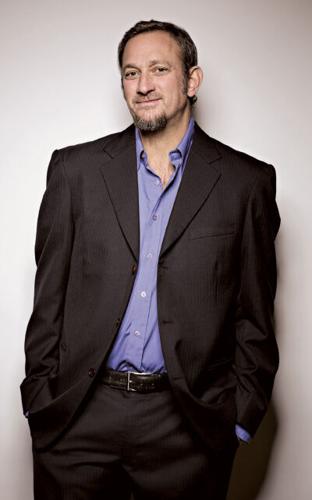
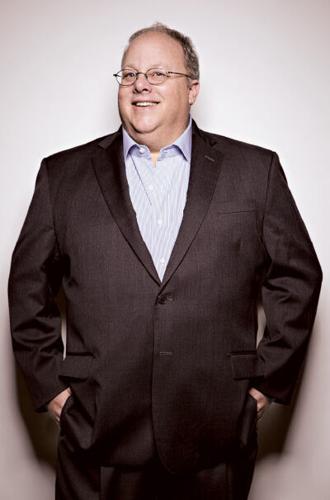

A life-sized cardboard cutout of Pat Sajak stands in the conference room at Great American Deals, the young franchise that sells "hyper-local" promotions via a website, and takes a cut of revenue from any deal sold. (It’s like Groupon, except tightly focused on a local community, with the franchisee expected to create strong local bonds.) The cutout stands in for Sajak, the long-time host of "Wheel of Fortune" who has lent his name to Great American Deals as a brand ambassador, when the man himself can’t make it to an expo or a Discovery Day.
But today Sajak is here in the flesh. He slips in the back door of Great American Deals offices in Beverly Hills without an entourage, a compact man with that familiar face that doesn’t seem to age much (he’s 68). He has toiled more than 33 years as host of the game show that’s a glitzed-up version of hangman, interacting with contestants along with sidekick Vanna White. They’ve carved a place in popular culture that’s been parodied everywhere from Sesame Street’s "Squeal of Fortune" to Saturday Night Live’s Ed Grimley, and made them both a fortune.
"I’ve known Vanna longer than I’ve known my wife," says Sajak, and he and his wife have been married for 25 years. "Vanna knows it’s been lightning in a bottle," he adds about their long run on TV, and he, like her, prefers to perform without pretension. "She’s not one of those who says, ‘Oh, I want to direct.’ She says, ‘Hey, I touch letters and they light up.’ We’ve been best pals for a long time."
Tomorrow Sajak will be in the studio with White, one of 41 days a year when they shoot shows back to back, being careful to never wear the same outfit twice. "We shoot our first show at noon and by 6 we’ve done six shows," he says, downplaying what sounds like a grueling schedule complete with quick costume changes. "Yeah, but I know how to put pants on," he says, so it’s really not so tough.
"It’s hard to get burned out on this. It’s not exactly a back-breaker." But despite the repetition his focus is on the contestants. "As corny as it sounds, for me it might be show 6,800, but for those three players it’s their one and only."
Although his on-air exchanges with contestants are constant fodder for comment—most recently Twitter lit up when it appeared he was mocking a contestant’s developmentally disabled brother—he says he respects them all. "Until you’ve been there you just don’t know what pressure they’re under. It’s easy to sit on the couch" at home "and say, ‘what a moron.’ But they’re not morons."
He started hosting the show in 1981 and people often ask him to name the funniest thing that happened, but he can never recall. "I’ll meet three people for 22 minutes, and something funny might happen. Then I go in the dressing room and do it again and again. My mind is a blender of them all," he says.
But today, his business is promoting Great American Deals, and he handles it like the no-nonsense professional he is—giving a generous hour for the interview, with no questions off limits, then hitting his marks as he poses for photos before scooting out the side door again, all without a handler.
It would be easier for him to make a buck endorsing a watch or a car, like many of his counterparts do, rather than helping to sell a franchise opportunity. "It is a long and complex slog," he says about building Great American Deals. But he likes the idea of helping individuals get into business for themselves, especially when so many lost jobs during the recession, and he likes that the franchise will boost businesses all over America, and keep revenue from the promotions local.

"We’re in the education business. Who would have thought?" says Great American Deals COO Mark Vannuki, about selling franchises.
Great American Deals is the first business endorsement for Sajak, unlike other celebrities major and minor who slap their name on just about anything. It’s not that he’s against such endorsements, he just felt uncomfortable lending his name.
"I always felt odd that people would make decisions for their life based on the words of a game-show host," he says. But about six years ago, when Groupon made its debut, Sajak’s friend Michael Silber, today the CEO of Great American Deals, told him to check it out. "He decided that it would be a good business," Sajak says, referring to Silber. "There were big players in here, and he thought we can’t compete directly with it. But he wanted to find a need that wasn’t being met." A lot of customers who use Groupon don’t become repeat customers; they travel in for the deal and never come back, Silber claims. "He wanted people who were from that area, and to treat it with that local approach," Sajak says.
He thinks his personal appeal works perfectly for Great American Deals, unlike, say, Robert DeNiro. "The Everyman nature of the show makes my association with them believable," he says. "We’re especially strong in flyover country. The whole mid-America thing fits me.
"I’m glad to be in a position where I have a certain amount of notoriety," and he’s happy to lend that and "a little seed money" to Great American Deals. "I’d like this to work because I think it’s a good idea," but this pitchman doesn’t oversell, adding quietly, "I think it’s going to work."
Earlier that morning, Mark Vannuki rolls up in his boss’s black Range Rover, with the license plates you’d find only in L.A.: DVLISHS. Devilicious is a nod to the horse Michael Silber, today CEO of Great American Deals, bet on 25 years ago, back when he was in his 20s and collecting 25 grand was a huge win.
Vannuki picks me up, and we wait in the Carl’s Jr. parking lot for other Great American Deals guests to arrive, while Vannuki tells in his deep, gravelly voice about the first time making it big with Silber. They were making trinkets, also known as "premiums" or giveaways, then came up with the idea of making fast-food toys. "McDonald’s is the second-biggest toy company in the world; Toys R Us is first," declares Vannuki, COO and director of franchising for Great American Deals and an old friend of Silber’s, and for a while the pair made toys for everybody from Dairy Queen to 7-Up to Wienerschnitzel. "Basically anything you could logo," the company manufactured, Vannuki says, but the early days for the company were rough. "The first six months, we didn’t know if we’d have a seventh month or an eighth month," until they started dealing in volume. "We thought you can make a hundred or a thousand" of anything, so why not make a thousand? The venture sent Vannuki back and forth to China constantly. International travel was a natural for him, the kid who at Harvard High School, a private all boys’ school in the Valley in L.A., spent a semester at sea, "going to ports all over the world."
On this brilliant day in Beverly Hills in January, however, everything feels as though the glory days are just out of reach. The Golden Globes were at my hotel that Sunday, but now, two days later, a crane blocks the main entrance as workers haul away the red carpet walked on by the stars. The gift shop sells replicas of an Oscar that say "Best Husband" or "Best Dad," and photos of yesterday’s film stars from Clark Gable on down line the hallways—but the rooms themselves have their doors open, with crews hauling out chairs and debris now that the celebrity parties are done.
Vannuki’s line of talk continues the feeling that greater days are either in the past or somewhere vaguely ahead. His ex-wife is a hairdresser to the stars, he says, including Cameron Diaz and Reese Witherspoon, but she’s in his past, too, and "nobody makes movies in L.A. any more," he laments. These days, the producers go to Atlanta or Toronto, or anywhere offering tax credits. With a $90 million picture and a 30 percent tax break, you’ve cut $27 million off your picture, he points out.
Pat Sajak, the celebrity spokesman for Great American Deals, does OK in L.A., but he really plays strong in smaller cities, where people aren’t so jaded by constant contact with A-list celebrities—the exact places Vannuki believes the franchise will sell best. A prospect from Memphis is scheduled for a phone call that afternoon, for example, but he’s reluctant to risk the $35,000 for the franchise fee.
Vannuki believes this is his big chance to sell 200 to 300 franchises and build a fortune of his own—but saying is easier than doing and in January they had yet to sell a unit outside of their California base, where the pair and especially Silber are very well known. Twelve units are sold, all franchised, since the first in January 2013.

"I like meeting people," says Michael Silber, CEO of Great American Deals. "It’s amazing how big your Rolodex gets if you treat people right."
Sajak himself is a workhorse, Vannuki says. They held a media day a while back, starting at 4:30 a.m., where radio hosts called in one after another for nearly three hours. "Michael and I were exhausted," Vannuki says, but Sajak did interview after interview, emphasizing Great American Deals but willing to talk about Wheel of Fortune, too. He’s even game to answer the most frequently asked question—‘Can I buy a vowel?’ that staple from the game show—without cringing. Sajak doesn’t want his tombstone to say only "he hosted Wheel of Fortune" for 40 years, Vannuki says, although Sajak tells me later he’s fine with that epitaph, so Sajak chose Great American Deals and thus gave a nice boost to a franchise that might otherwise lack luster.
Vannuki drives around to the curb at LAX to pick up his outside sales team, Nikki Sells up from Nashville and her business partner. Sells herself is a bit of a celebrity in franchising, the former VP of Express Personnel and former exec with Tasti-D-lite, and she encourages Vannuki to take the long view. "We’re in the education business. Who would have thought?" he says, referring to the long and painstaking process of talking people into buying a franchise, and one that isn’t simple to explain like a restaurant or a fitness studio.
They’ve tried the expos, but found a lot of "looky-loos" who pay five bucks just for the free food. Vannuki hopes his efforts will soon start getting results, but Sells tells him not to get discouraged. Starting at Thanksgiving and going right through the holidays, she says, is a classic slow time for selling franchises, when people gather with relatives and get talked out of their plans to buy their piece of the American dream.
Back at the office in Beverly Hills, Great American Deals CEO Michael Silber is showing off his bobblehead collection, his pride and joy, which his former company has been making for his beloved Dodgers for years. His favorite is Manny Ramirez, because the night that bobblehead was the game giveaway, Manny was the pinch hitter and he nailed a grand slam. Silber likes to keep extra bobbleheads in the trunk of his car, and give them out to fans at the game for a thrill. "I say, ‘I made the Dodgers bobbleheads,’ and you would think you told them you invented the telephone," Silber says.
Pat Sajak is also a Dodgers fan and a Kings fan, too, and baseball and hockey games were two places where Silber and Sajak became acquainted. Not that Silber has difficulty making friends. His roots go deep in the Valley in L.A., where he still strives to raise the most money for his kids’ high school fundraisers, even though his kids have since graduated and moved on.
He talks about "my buddy, the chiropractor" who is so talented he now works for a Saudi prince. He remembers the names of customers he sold trinkets to years before, like the Dairy Queen contact in Minneapolis (where I’m from). "I should call her right now," Silber says. When a security detail was camped out at the Beverly Hilton, guarding the head of Rwanda, he says, he offered his offices for Thanksgiving so they could hang out, watch football and grill. In return, he got a Highway Patrol badge that can get him excused from moving violations, he claims.
Says Vannuki: "Karma comes back in a good way to a guy like this." Vannuki calls Silber "the best damn salesman I ever heard, the man with the silver tongue. He gets them with the brotherly love, the big smile." Take the contact at Dairy Queen Silber mentioned. "If she likes marshmallow candy, he’ll make sure she gets marshmallow candy every year on her birthday There’s no loyalty out there," with most people, Vannuki says, but Silber is the master. "He’s really great at it."
Nikki Sells tells me earlier Silber would do anything for anybody, and in fact that day he offers to pick me up at LAX, drive me to and from my hotel, (I decline, since it’s one and a half blocks away on a gorgeous L.A. day and in Minneapolis it’s 28 degrees), pick up my hotel bill (Franchise Times declines), take me to dinner at a delicious neighborhood spot (we go and have a delightful time), drive me to my interview the next day with another franchise, and drive me to the airport afterward—in L.A., no less, city of freeway gridlock.
Hasn’t this man ever heard of Uber?
Silber would rather keep in close touch. "I grew up in the Valley and I met a lot of interesting people," Silber says, like Lisa Kudrow of "Friends" and Dave Cox the jazz musician and Bethenny Frankel of "Housewives" fame and the reality TV show "Bethenny Ever After."
"They were all in the Valley. When I go back to my high school reunion and they’ve all got their Emmys and Oscars, and I make balls and weenies, there’s fun in that," he says, referring to the premiums he’s made for clients. "It’s all fun. I like meeting people. It’s amazing how big your Rolodex gets if you treat people right."
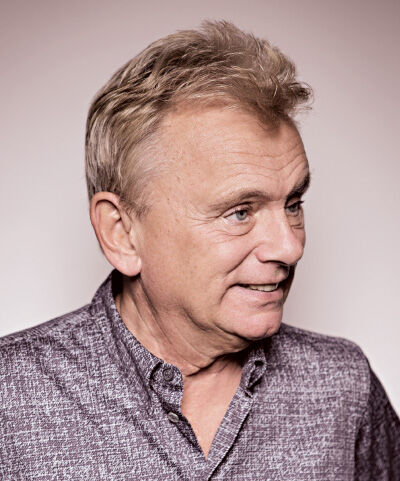
"No matter what I do from here on in, the first line of my obit will be long-time host of a game show," says Pat Sajak. He’s fine with that.
Silber wants to find franchisees who are just as embedded in their communities as he is, as that’s the approach he believes will make the business a success. The web-enabled "daily deals" industry itself is only about six years old, Silber points out, and they’ve spent the past couple of years at Great American Deals perfecting the technology behind the website, after the initial business in the Conejo Valley became a success.
Twelve units are operating so far, all of them franchised and all in Southern California. The pace is slow—they at first thought they could move 100 units quickly, but the education process is long. Now they expect to sell perhaps 15 to 20 units this year. "This is a super, super young" industry "that’s going through the change, and we’re going to be at the forefront of that change," Silber says. "There’s a whole bunch of things you can do to be a go-to site.
"I want it to be a complete page for people to get news, information and daily deals," Silber says. What does he worry about? "People doing what we’re doing, a person with a lot more money than me, who could jump right on it," Silber says.
But the worry doesn’t last very long. "God forbid I check out tomorrow, but I’ve had a better life than 99 percent of all people," says Silber, who’s 51 and concerned with managing his weight because he eats out all the time. "And I’m not talking about extravagances. It’s all the good people I’ve met."
Chief among those "good people," of course, is Pat Sajak, whom Silber said never made him "feel like a nobody" when they were together and fans would come up and ask for Sajak’s autograph, and then wonder who Silber was. Sajak wants some of that "everyday" good feeling to rub off on the franchise, and it’s a personal brand he’s worked hard to create for 33 years on the show. "We’ve always prided ourselves on, we have the biggest variety of shapes and sizes and types of people on our show," Sajak says. "Our slogan is we’re America’s game show, so we have to live up to that. This country is filled with really great folks. They don’t all have to be models living in Beverly Hills."
Sajak splits his time between L.A. and Annapolis, where his wife is from, and he finds life a bit more grounded out East but he knows L.A. has been good to him. "I’m not a Hollywood knocker." He’s not a fan of the 24/7 reality TV slug fest in vogue today, however. "TV has changed a lot, and a lot is about embarrassing people. It’s something we don’t do," he says about the show. "I think to the best of my ability I treat everyone the same," but he doesn’t really know why he’s been popular for so long.
"I’m not self analytical," he says. "I’m basically myself on the show," although he allows he’s "relatively quick and amusing." He’s not puffed-up about his status as the host of a game show. "It goes against the grain of most performers, who want to be in the spotlight, and as charming as you are people are watching because they like the game. It’s not the Pat Sajak show."
Sajak was born in Chicago to a Polish-American factory worker, and went to Columbia College Chicago while working as a desk clerk at the Palmer House hotel. He spent three years in Vietnam as a disc jockey. He recalls broadcasting on Christmas of ’69 when Nixon addressed the troops, but he accidentally cut off the president of the United States. "I was monitoring the CBS broadcast from Nixon," and the president gave his address, delivered his ending, Sajak believed, and Sajak closed the feed. "I flipped the switch back and I listen and he’s still talking."
He joined the U.S. Army "in a spirit of patriotism," he says, although he may have been drafted in time. "I’m glad I did. It was an interesting experience and I came out in one piece." He interacts with veterans groups today and sometimes feels sheepish about it, acknowledging he was in a non-combat role. "Guys were doing heavy-duty combat and I was playing records, but they all said they were glad I was there."
When he came back he worked in local TV, then was hired to do the weather for an L.A. station. "When you’re working in TV in L.A., every night is an audition." Merv Griffin, by 1981 a wildly successful producer, saw him and wanted him for Wheel of Fortune. "I said, ‘I never saw myself as a game show host.’ He said, ‘Do it the way you do it.’ Here we are 33 years later," he says.
"No matter what I do from here on in, the first line of my obituary will be long-time host of a game show." Does that bother him? "No, because I AM a long-time host of a game show." He scoffs when others complain about being pigeonholed when, say, they have a successful sitcom but what they really want "is to do Shakespeare in the Park." Well, he thinks, "return the checks and do what you want, then."
Sajak owns a couple of radio stations and once hosted his own talk show, although it was short-lived. He writes pointed articles for conservative publications, notably an essay in Human Rights offering a "solution to man-made global warming." "Instead of continuing to preach to the rest of us, the true believers need to step forward and set an example," he writes. "I’m not talking about recycling Evian bottles; I’m talking about giving up cars and moving into smaller houses or apartments, or even forming communes." The "obvious choice" to lead this effort by example is Al Gore. "If he would eschew large homes, gas-guzzling cars, private jets and the consumption of meat, millions more would likely do the same," Sajak writes, with tongue firmly in cheek.
Although he thinks artists have just as much right as anyone to speak out about public issues, he thinks they should do it on their own time, not when people are watching their performances. "If I go to a concert I go to hear the music, not to be told how to vote or whatever," he says. "I would never bring that to the show. That’s not why people are watching. I think it’s cheating."
He marvels the show has lasted so long. "Today if I went into pitch the show, the pitch would last 20 seconds. I’d say, ‘It’s hangman. The contestant would guess R. The host would say no.’ That’s the show," but of course he knows Wheel of Fortune is more than something so simple.
"Somewhere along the line we became part of the popular culture," he says. "There’s not a day that goes by that someone doesn’t come up to me and say, ‘I watched the show with my grandma and now she’s gone,’ or ‘my kids learned the alphabet from your show.’ We’ve insinuated ourselves into people’s lives."
Why? "It reminds people of stuff. It’s a half-hour, it’s a safe zone. It’s a bit of a throwback." When he started broadcasting, if the word ‘damn’ slipped out of his mouth, he would have been fired. Now he turns the TV on and "can’t believe what’s said. I feel like civility is gone. It wears me down a little bit. I miss Mayberry."
He plans a few more years to do Wheel of Fortune. "I’d like to leave the show while it’s still popular. I’d like to leave before people say, ‘Look what the hell happened to him.’"
And if Great American Deals allows people to get into business for themselves, help their communities by boosting local businesses and giving back to local charities—and maybe even add a line to his obit—that’s all fine with him. Wheel of Fortune, after all, continues to be the No. 1-rated weekday syndicated program in America. "I want some of this to rub off on Great American Deals," he says.

