We may share a border with Canada and a language, but there are some subtle differences that wise franchisors should note. Here’s the 411 to consider.
Population: 34.8 million
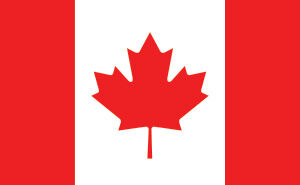
Canadian Flag
Capital: Ottawa
Official language: English and French (Chinese is third) 60 percent English speakers, 24 percent French
Religion: 46 percent Roman Catholics; 41 Protestants
Urbanization: 81 percent
Type of government: Federal multiparty parliamentary democracy, with the provinces holding more power than U.S. states do. Head of government is the Prime Minister.
Layout of the Land: 10 provinces and three territories
Uniqueness: In Quebec, business signage and materials must be printed in both French and English
GDP: $1.8 trillion (ranked 14th in world)
GDP growth: 1.6 percent
Internet users: 86.8 percent of population (more than the U.S.)
Demographics: 15.5 percent of population is 1-14 years (children services) and 16.8 percent are over 65 (senior services)
Entrepreneurship: 18 percent of employable people are self-employed
World Bank’s Doing Business Measurement: 1.07 percent new business density (25,723 LLCs per 1,000 employable-age people) in 2012. This is viewed as a measurement for entrepreneurship.
Literacy: 99 percent
Franchise Association: Canadian Franchise Association (CFA)
CFA members: 600, of which 71 percent are franchisors who represent 500 brands; 29 percent are vendors and 15 percent are U.S.-based franchisors
U.S. Commercial Service Offices: Calgary, Montreal, Ottawa, Toronto, Vancouver
American Chamber of Commerce: www.amchamcanada.ca
Major cities (to start in): Toronto, Vancouver, Ottawa, Calgary
Transportation: 4th in number of airports (1,46 total of airports with 523 that have paved runways); 3 major seaports
Labor force: Highly skilled, although workers can be harder to find outside major metro areas
Examples of homegrown franchises: Tim Horton’s, Canadian Tire, Great Canadian Dollar Store, Second Cup, Mary Brown’s Famous Chicken & Taters, Lice Squad
Franchise mix: 36 percent of franchises are restaurants
No. of restaurants: 81,400
Vanity Index ranking: 12th (meaning only 20 percent of Canadians think about their looks all the time), right below the worldwide rank
Negotiation style: Facts are valued over feelings
Time zones: Spans six time zones
Geography: Second largest country in the world (Russia is first), shares border with U.S.
Population disbursement: About 90 percent of Canada’s population is concentrated within 100 miles of the U.S. border.
Measuring system: Metric
Currency: The Canadian Dollar (at presstime the exchange rate was $1.00 U.S. to $1.10 Canadian)
Law: Common law, except for Quebec which uses the French civil code
Sources: Canadian Franchise Association; CIA World Factbook; "Kiss, Bow, or Shake Hands" guide; Vanity Index; Wikipedia; World Bank; U.S. Commercial Service website.
Canada’s restaurants
Annual restaurant sales : $68 billion
Average yearly spend: $2,167 per household in 2012
No. of direct jobs : 1,126,200
Chain restaurants : 37 percent
Source: Canadian Franchise Association
Major cities
Since the vast majority of Canadians live within 100 miles of the U.S. border, franchises would be wise to consider locating first to the five main cities: Montreal (3.75 M), Ottawa (the capital, 1.2 M), Calgary (1.16M), Vancouver (2.1M) and Toronto (5.3M).
Quebec
If you choose to locate units here, you’ll need to become bi-lingual, or at least your contracts, signage and labels will. The government mandates all business correspondence be in both English and French.

