
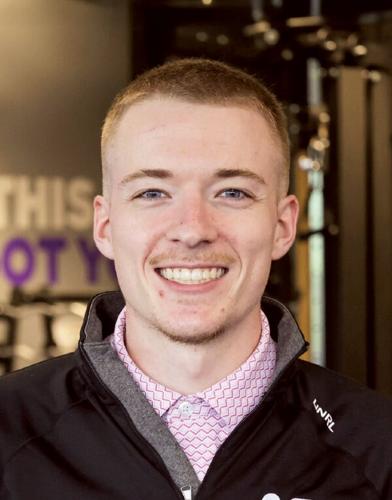


Blue Star investments CEO Luke Andrus expects to end the year with 80 Anytime Fitness locations in 15 states.
Luke Andrus has been in the gym business long enough to have seen a lot of workout trends come and go. And while the CEO of Blue Star Investments and his team update fitness equipment and add new personal training programs every year to their growing network of Anytime Fitness gyms, he said operating successful clubs comes down to three guiding principles.
“The focus for us has always been quality, cleanliness and customer service and satisfaction,” Andrus said. “It sounds a lot easier than it is because achieving consistency at your gyms is always going to be the biggest challenge in this business.”
Thanks to a commitment to maintaining high operational standards and a steady and calculated approach to growing its portfolio of gyms mainly through acquisitions and occasional new builds, Blue Star is a rising star in Anytime’s system. The Sioux Falls, South Dakota-based company is not only one of the fastest-growing franchisees in the country for the gym brand. It also practically wrote the playbook on how to turn underperforming gyms into financially successful businesses.
Although he wouldn’t share sales figures, Andrus said their gyms stack up well against Anytime’s top-performing locations that also use the brand’s SmartCoaching operational and sales tools. Those top quartile units reported average sales of $865,546.
He said Blue Star expects to end the year with 80 gyms in 15 states and upwards of $22 million in revenue, thanks in part to its acquisition of 11 Anytime units in four states in 2025: three in Missouri, three in Minnesota, three in Florida and two in Georgia.
“It’s been a busy, busy year for us,” said Andrus “and we’re not done. We’re always looking at new opportunities and having ongoing discussions that should get us to 100 gyms by the end of next year.”
“We want to be the biggest and best franchisee in the Anytime Fitness system and I have no doubt we will get there,” Andrus continued, showing off the competitive side that has carried him since he started his gym career as a certified personal trainer for Anytime Fitness in 2009. (Blue Star has quite a ways to go to catch Bandon Fitness, the largest Anytime franchisee at more than 260 locations.)
Andrus worked his way up the corporate chain as a business consultant, regional manager and director of operations for Minnesota-based Anytime before switching to the franchisee side. He joined Blue Star, which is backed by South Dakota-based investment firm Cresten Capital, in 2019 and became CEO in 2020.
A competitive landscape
Andrus, who was named Anytime’s top trainer in 2014, is well aware of the growing competition his brand faces in the high-value, low-price gym space. Many of Blue Star’s Anytime Fitness gyms are in or near towns and cities that have either a Planet Fitness or Crunch Fitness, or even both. But instead of stressing about it, he celebrates it.
“The gym industry is booming again with not only the big gyms growing but also the boutique gyms making a big comeback,” Andrus said. “People are getting healthier and that’s a beautiful thing. There is a lot of room for us all to grow.”
Anytime Fitness is the largest gym chain in the world by unit count with more than 5,200 locations in 50 countries, including more than 2,350 in the United States. Texas has the most Anytime Fitness gyms, with about 270 locations, making up about 12 percent of the total in the country, followed by Florida, Minnesota and California, with about 140 gyms each.
A big differentiator for the chain, which operates under the Purpose Brands umbrella, lies in its name—its gyms are open 24/7 and provide its members, regardless of their membership level, access to all its locations. Another advantage for Anytime is that locations can operate successfully with as few as two or three full-time employees, plus one or two part-time trainers or front-desk staff to manage the 24/7 operations, member relations and cleaning.
Again, Andrus pointed out that the success of Blue Star’s gyms, which vary in size from 4,000 to 12,000 square feet, is sticking to the company’s core values and not trying to be everything for everyone.
“Anytime Fitness is not a brand that people are coming to for a lot of amenities. We don’t have pickleball or racquetball courts or a swimming pool. But we do draw a crowd of ordinary folks who want to be in and out of our gyms in 45 minutes and feel they got what they came in for. Convenience is still very much king at our gyms and we just have to continue to execute on the fundamentals to stay on top,” he said.

John Witzke, Blue Star’s senior director of sales, says memberships are up 20 percent year over year.
Blue Star’s formula for operating gyms is clearly working. John Witzke, the senior director of sales, said year-over-year membership increased 20 percent at its gyms and its personal training revenue grew by 20 percent in 2025. He said a big reason for those increases was training staff to execute on a seven-step member onboarding process.
“We came up with our own processes that lowers the barrier of entry,” Witzke said. “We reduced our entry fees to $1 to make sure we captured online visitors and we began a monthly pricing plan because we recognize that a huge hurdle for the consumer is the commitment versus the price.”
Witzke, who worked in sales for Verizon prior to joining Blue Star last December, said that a new family membership plan makes up 18 percent of its memberships now. He added the launching of a referral program that offers a free year of membership to anyone who refers five new members has also helped increase attendance at their clubs.
Witkze was instrumental in helping Blue Star create partnerships with local GLP-1 drug clinics so that their members are better informed on the medication that continues to grow in popularity for those looking to treat type 2 diabetes and obesity.
“Our partnerships with GLP-1 clinics are still in their infant stages, but they are designed to create a more complete ecosystem of support for our members who are using these medications,” Witzke said. “Ultimately, these partnerships benefit members by helping them build the habits that turn initial weight loss into sustainable progress and long-term wellness.”
And while Blue Star is reluctant to jump on every new workout trend that comes along, it has committed to building out its recovery-focused amenities with saunas, red-light therapy and hydro massage at its new gyms.
Still, Andrus believes it all comes down to sticking to the basics and doing it well when it comes to operating successful gyms.
“We feel we have an obligation to our members to provide them clean, safe and well-maintained gyms,” he said, “and that’s what we’ve been able to do better than anyone.”

