

Bar Louie revamped its menu to keep customers in its restaurants beyond happy hour.
Bar Louie is leaning into its martini-fueled heritage while also emphasizing a refreshed culinary program as it again pushes franchise expansion more than three years after it filed bankruptcy.
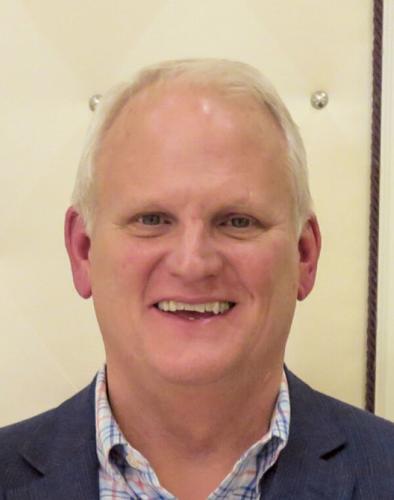
Brian Wright, who took over as CEO in September 2022, said the company has spent more than a year refining the food side of the business. It’s also rolling out a new restaurant design, adjusting its marketing and refocusing attention on operations all in a bid to attract franchise interest and restart growth.
“What I could see right away was that there was a disconnect with consumers,” said Wright of his early evaluation of the brand. “People loved the cocktail aspect, but they were leaving to go have dinner somewhere else.”
Addison, Texas-based Bar Louie, which with 67 locations is half the size it was in 2019, is a gastrobar concept known for its martinis and live music. It grew to 134 locations (110 corporate, 24 franchised) but in January 2020 filed for Chapter 11 bankruptcy protection after owner Sun Capital Partners closed 38 restaurants. Secured lender Antares Capital LP purchased the company and acquired $82.5 million of debt, with Bar Louie emerging from bankruptcy in June 2020.

CEO Brian Wright says solid unit economics will help propel growth.
Now reorganized, the brand is better positioned to pursue new development, said Wright, with a “very sound economic model” and a roughly 50/50 split between alcohol and food sales. “The martini in general is a very profitable business,” he added. “And the amount of martinis we’re selling is enormous.”
The average unit volume for franchise locations topped $3 million in 2022. Wright, who before joining Bar Louie was CEO of Tex-Mex chain Tijuana Flats, said he spent “an enormous amount of time in the actual restaurants” to understand what was working well and what needed to be addressed. The brand began tracking consumer feedback and determined there was opportunity to elevate awareness of its expertise in cocktails and improve the quality of its menu items.
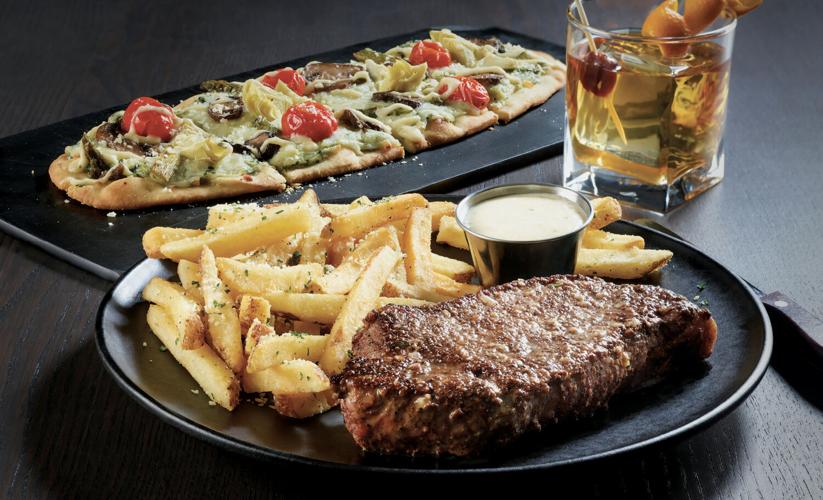
“I will tell you, we had average food at best,” said Wright. The company in May hired Joel Reynders, who Wright worked with at Tijuana Flats, as its executive chef and vice president of culinary. Among the changes is a shift to an 8-ounce burger—a 2-ounce increase—from premium supplier 1855 Black Angus Beef, along with new items such as a truffle mushroom and asparagus flatbread, and shrimp and grits.
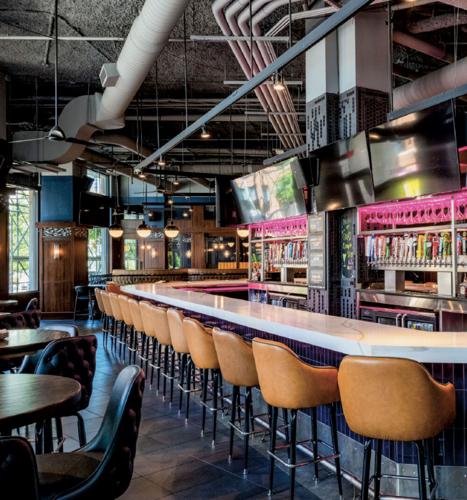
Bar Louie redesigned two restaurants so far, in Denver and Nashville, with new colors and furnishings, a takeout/delivery station, and upgraded kitchen equipment. Technology upgrades include a new point-of-sale system, and Wright said the executive team continues to evaluate operations and make adjustments to franchisee support.

The bar still takes center stage in Bar Louie’s new restaurant design.
A few years ago, Bar Louie was operating with two different types of training programs, one for corporate restaurants and another for franchise locations. “And not in a good way, I might add,” said Wright of the need to enhance training for franchisees and at the store level to ultimately improve execution. Macs & Stacks, a virtual brand launched in 2021, is “slowly going away,” he noted, as Bar Louie focuses on its core business.
Bar Louie’s efforts are beginning to yield results in the form of new franchise agreements. The brand has a five-unit deal with a Midwest-based hotel group to open locations across the Chicago and Indianapolis markets. It already has three hotel restaurants at Holiday Inn properties, and the company plans to pursue more hotel development.
Franchisee Kaushik Patel has been operating his Bar Louie in Brookfield, Wisconsin, since February 2019 and will open a new location in Naperville, Illinois, early this year as part of a five-unit development agreement. After growing up in the restaurant business and managing some of his family’s restaurants, including Subways and Wingstops, he discovered Bar Louie and was intrigued by its energetic vibe and polished feel.
The pandemic was “a roller coaster ride,” he said, but the business now is “really profitable” and he’s pleased with the menu changes, particularly the addition of lunch options to drives sales during that daypart. “We’re not just a happy hour location anymore,” he said.
New leadership, which in addition to Wright includes Chief Operating Officer Michael Mrlik, has followed through on improvements to franchise support, noted Patel. “For an owner-operator like me, that really matters. It’s the biggest change I’ve seen,” he said.
This article has been updated to correct the spelling of Joel Reynders' last name.