

For our Top CEOs in Franchising feature in the November/December issue, we identified notable leaders who are guiding their brands through periods of growth, change and, of course, challenges.
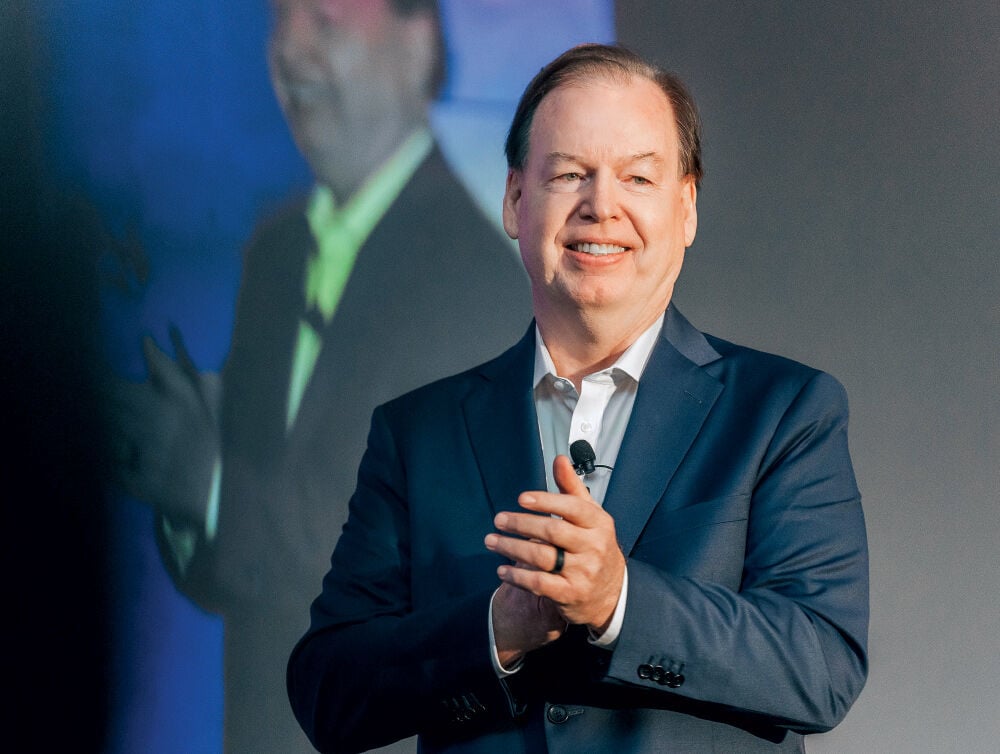
CEO Peter Ross co-founded Senior Helpers with Tony Bonacuse in 2014. The senior care brand has nearly 400 locations and is No. 153 on the Franchise Times Top 400 with $460 million in systemwide sales.
As the co-founder and CEO of Senior Helpers, Peter Ross prides himself on being fully transparent and owning up to his mistakes.
Asked what executive decisions he’s made that he still regrets, the veteran franchise leader’s deadpan response was, “You mean you want only one?”
Ross said one decision that stuck out was selling too many multi-unit agreements early in the franchise journey. “It wasn’t that they weren’t great franchisees. It was more of a land grab and we gave away too many territories early on. I’ve been paying for that mistake for the last 18 years,” he said.
Ross also talked about the time he capped the marketing budget for operators.
“My franchise consultant and attorney told me to not do that and I still went ahead with it, thinking it wasn’t a good idea to ask franchisees to pay more when in fact it would’ve probably helped them grow their businesses,” he said.
Despite a few missteps made along the way, Ross’s decision-making has been instrumental in guiding Senior Helpers to the forefront of the non-medical and in-home senior care franchise space. It was his idea to start Senior Helpers in 2004 with partner Tony Bonacuse after they identified shortcomings in the healthcare system and saw growing demand for senior care services within a rapidly aging population.
His Townson, Maryland-based company is closing in on 400 locations across 44 states and in Canada and Australia. Senior Helpers moved up 23 spots on the Franchise Times Top 400 rankings this year, to No. 153 with $460 million in systemwide sales in 2023. That’s an 18.7 percent year-over-year increase. Its unit count expanded by 18 last year
Along with continuing to grow its footprint, Ross said a priority is to increase the average unit volume beyond its current level of $1.5 million via additional programs and revenue streams.
Perhaps most impressive about Ross’s 20-year reign at Senior Helpers is that he’s been CEO for the last 12 years under four different private equity ownership groups. In May, Advocate Health sold Senior Helpers to Waud Capital Partners. That transaction came three years after Advocate acquired the company from Altaris Capital Partners, which bought Senior Helpers from Levine Leichtman Capital Partners in 2012. Bonacuse exited the company in 2016 with the sale to Altaris.
“Yeah, it’s been quite a journey with all the different private equity ownership groups we’ve had, but through it all we’ve kept to our mission statement as a company and have achieved steady organic growth,” Ross said. “That and the collaborative work of our amazing executive team and operators is what I’m most proud of.”
Options to age at home
Ross said Senior Helpers started off as a personal mission for him and Bonacuse. They each had aging parents and experienced trouble finding affordable quality care for them. They left their corporate jobs—Ross was vice president of marketing at ADP payroll service and Bonacuse was founder and president of an employer services company—to co-found SH Franchising in 2001. They launched Senior Helpers with the goal of giving seniors “the right to age at home and with dignity.”
When Senior Helpers first came on the market there were a little more than a dozen franchisors offering non-medical in-home services for seniors. Today there are at least 60 brands, said Ross, who serves as board president of the Home Care Association of America.
Ross, a self-confessed serial entrepreneur who grew up in large family with nine step siblings in Portland, Maine, franchised three other senior care brands: Doctors Express, Assisted Transition and Town Square. He said a differentiator for Senior Helpers is the extensive training and ongoing support it provides operators and caregivers.
His company continues to innovate by expanding its programming. Senior Helpers added specialized care for Alzheimer’s disease and dementia, along with Parkinson’s, veterans and transitional care, and surgery assistance services in recent years.
Under Ross’s direction, Senior Helpers rolled out its FlexHome program, which provides clients more choices on service levels they sign up for, and VitalTechnology, which allows clients and their families to monitor a loved one’s vital signs 24/7.
Ross said a big shift by his company was to partner with government agencies to help make services available to more clients.
“We stayed away from doing anything with government for a while because we heard too many horror stories. But then we started really working with the government in 2019 and now about 35 percent of our total revenue comes through the government, mostly with the Veteran Affairs, Medicaid, MA or long-term care insurance,” said Ross, who agreed to run Senior Helpers until “the next turn,” when Waud decides to sell the company.
“The challenge in this country of aging in place continues and we have so much more to do,” Ross said.