
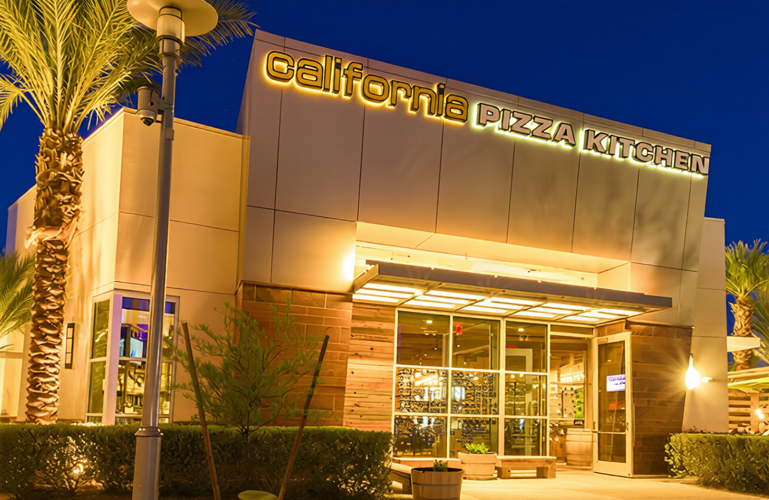


Consortium Brand Partners along with Eldridge Industries, Aurify Brands and Convive Brands will acquire California Pizza Kitchen.
A group of investment firms is buying California Pizza Kitchen, which started franchising domestically last year.
As the pizza category overall struggles to drive sales, a slew of franchisors are considering selling their pizza chains.
While plenty of investment firms plan to hold companies for four or five years, the new owners of California Pizza Kitchen are thinking further ahead.
“It is a long-term vision,” said Jonathan Greller, the president and co-founder of Consortium Brand Partners, one of the newly announced buyers of CPK. “We will continue to invest capital into the restaurants and other areas and provide more support for all of our partners around the globe.”
Consortium, along with Eldridge Industries, Aurify Brands and Convive Brands, will acquire California Pizza Kitchen in a deal expected to close this month. Convive, under Eldridge, will be the master franchisor of CPK globally. Convive CEO Jon Weber will oversee operations of CPK, which has more than 120 restaurants in 10 countries.
“One of the great opportunities beyond picking up such a great brand like California Pizza Kitchen is the partnership that we’ve been able to form with Consortium Brands,” Weber said. “The strength that they bring to retail and [consumer packaged goods] and the depth of experience, coupled with our operating experience in restaurants, is something special in this space.”

Jonathan Greller is the founder and president of Consortium Brand Partners.
This is Consortium’s first venture in the food and beverage category. The group is invested in other consumer-focused companies, such as Reese Witherspoon’s clothing company, Draper James, and home decor brand Jonathan Adler. Convive, meanwhile, owns the U.S. portfolio of bakery-cafe brand Le Pain Quotidien and vegetarian-focused The Little Beet. Aurify Brands is a franchisee of Five Guys and Wingstop, and owns restaurant brands Melt Shop, Fields Good Chicken and Happy Monkey.
“We look for businesses where the brand is bigger than the business,” said Greller. “California Pizza Kitchen is exactly that. It’s a brand that people love.”
Bain Capital Credit funded the deal with debt and equity investments. Reuters reported last month the transaction was being completed for less than $300 million.
In July 2020, CPK filed for Chapter 11 bankruptcy as it cited impacts from the pandemic. Golden Gate Capital had owned the brand for nearly a decade at the time of the filing; CPK's lenders later took control of the chain.
Greller said Consortium looks for brands that have been around for at least a decade, and CPK celebrated its 40th birthday this year.
“We like brands that have been through a pandemic or been through tariffs or different ups and downs, and we see a huge opportunity,” Greller said. “Our first goal is to come in and spend time and really build a winning culture and to create a better experience.”
Weber admires the brand’s value for consumers, which he said differentiates CPK in the ever-growing pizza category.
“It’s very approachable for a broad set of consumers out there and you feel like you’re getting more than you’re paying for when you go there, and that instills a sense of pride,” Weber said. “It makes guests feel like they’ve made a really good decision to go to CPK.”

Jon Weber is the CEO of Convive Brands and will lead California Pizza Kitchen's restaurant operations globally.
Last year the pizza chain launched its domestic franchise initiative. Before that, it franchised only outside of the United States. It signed its first U.S. franchisee, Las Vegas-based Sundine, which will open six locations in Nevada and Utah. CPK sold three of its units to Sundine as well.
At that time, CPK President Michael Beacham said the brand wanted to shift to an asset-light model.
“We came to the realization that having great partners in parts of the country who will love the brand like we do and grow it was going to be the best way forward,” said Beacham, who will lead the brand’s consumer packaged goods division. (CPK sells frozen pizzas at major supermarket chains.)
As pizza brands struggle, franchisors consider selling
The pizza sector has seen some dealmaking activity this year as the category struggles to drive sales overall.
Related: Domino’s, Pizza Inn Sales Rise Within Slumping Pizza Category, Top 400 Data Shows
In November, Yum Brands said it was exploring “strategic options” for Pizza Hut, which could lead to a sale. The pizza chain reported sales of $13.1 billion in 2024 with 20,225 units globally. That’s a 1.6 percent decrease in system sales and a 1.8 percent increase in unit count.
In its third quarter investor call, Yum reported that Pizza Hut’s system sales are down by 1 percent year over year for that quarter, compared to KFC’s and Taco Bell’s sales increases of 6 percent and 9 percent, respectively.
Reuters reported in November that Apollo Global withdrew its offer to take Papa Johns private for $2.1 billion—an announcement that caused the brand’s share prices to fall by 10 percent. In its Q3 earnings call, Papa Johns didn’t mention plans to sell the company, but it noted plans to accelerate its refranchising efforts. Papa Johns this month sold 85 restaurants to franchisee Pie Investments.
MTY Food Group, which owns take-and-bake pizza franchise Papa Murphy’s, is considering a sale of all or part of the MTY company. Canada-based MTY also owns Wetzel’s Pretzels, Pinkberry and other concepts.
This summer, Krystal’s parent company SPB Hospitality sold Old Chicago Pizza + Taproom to an undisclosed buyer.
In February, Wonder Franchise bought 40-year-old Pizza Factory. Wonder is the franchise investment brand of Tucker’s Farm Corporation.