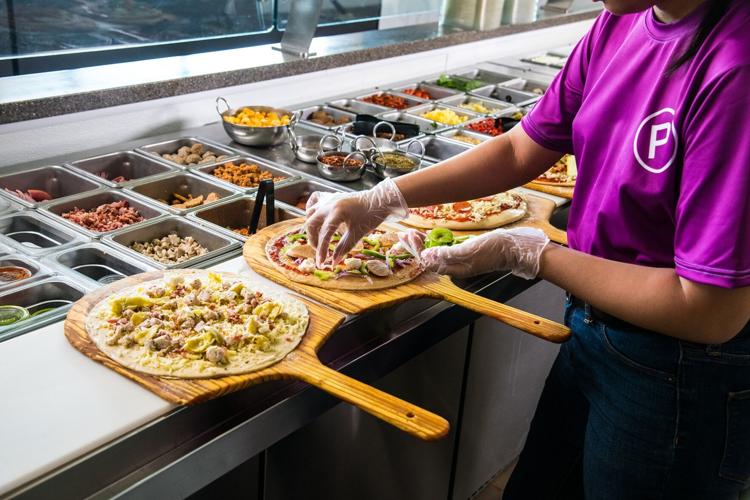

A 45-unit pizza franchise filed for Chapter 11 bankruptcy.
The Little Brown Box Pizza, the franchisor of the build-your-own pizza concept Pieology, filed in the Central District of California December 8. The California-based franchisor has restaurants in six states and Guam. The franchisor filed in conjunction with affiliate company Kustom Partner.
Founded in 2011, Pielogy at its height had more than 200 locations and was among a host of fast-casual brands including Blaze Pizza and MOD Pizza that were adding Chipotle-like stores in the customizable pizza segment. The model was challenged through the pandemic as consumers turned even more toward delivery.
The bankruptcy filing lists between 200 and 999 creditors. LBBP’s assets are estimated between $100,001 and $500,000. Meanwhile its liabilities fall between $1 million and $10 million.
The franchisor owes roughly $360,000 in debt to vendor Sysco, according to court documents. The rest of its debts are related to leases.
Of Pieology’s 45 locations, 29 are franchised. The company operates 16 units, after closing 17 of its stores before filing, according to the bankruptcy declaration.
The cause of Pieology’s financial issues stem from a loss of capital investments earlier this year amidst a significant transaction, which deteriorated the brand’s liquidity, according to court documents.
Like most restaurant brands, the COVID-19 pandemic forced Pieology to invest in delivery, which founder Carl Chang accounted for “substantial capital at a time when industry conditions remained volatile,” according to the filing.
In 2024, Pieology invested in new kitchen equipment, labor efficiency initiatives and a refreshed menu to simplify operations—”all of which was designed to improve throughput and labor efficiency and refresh restaurant interiors to improve guest experiences,” Chang wrote in the filing. The investments led to noticeable improvements, he said.
Related: Franchise Attorneys Talk Bankruptcy and Brand Stability
Earlier this year, Pieology bought 29 restaurants from an underperforming franchisee—the largest in the system—who was behind on payments.
“The goal of the transaction was to stabilize systemwide performance, regain operational control over struggling restaurants and expand the operational improvements across a larger group of stores,” the filing stated. The non-cash transaction closed April 30.
But right before the deal was finalized, “certain critical investors” pulled their commitments for reasons unrelated to Pieology, according to court documents. The brand continued with the transaction to avoid litigation and “prevent a collapse” of the franchisee’s business.
Pieology tried but ultimately failed to find other investors. The lack of cash flow made it difficult to take on the added costs of the additional 29 locations, the bankruptcy filing stated.
“After evaluating all alternatives and exercising their business judgment,” Pieology declared Chapter 11 bankruptcy, which it determined was necessary to “prevent further erosion of liquidity” and “protect employees, customers, creditors and franchisees,” according to the filing.
Bankruptcy concerns continue
Publicly traded franchisor FAT Brands warned investors in November that it might file for bankruptcy. The brand—which owns 18 restaurant brands, including Johnny Rockets, Fatburger and Fazoli’s—owes nearly $1.3 billion in securitized debt, which indenture trustee UMB Bank said is due immediately.
“Such acceleration or any subsequent foreclosure may materially and adversely affect the company’s business, financial condition and liquidity, and could cause the company and/or its subsidiaries to seek to reorganize through a bankruptcy proceeding,” FAT Brands said in the 8-K filing November 21.
Hooters of America declared bankruptcy in March. In October, the founders bought the company through the entity Hooters Inc. The founders, through Hooters Inc. and Hoot Owl Restaurants, own about 140 of the 198 domestic locations and 60 international locations.
Indiana franchisor Jack’s Donuts is another brand that filed for bankruptcy in 2025. In October, Jack’s Donuts said the filing didn’t include franchisees, whose stores would remain open throughout the reorganization process.
Sun Holdings bought Bar Louie this year, after the casual dining franchise filed for bankruptcy in March for the second time in less than five years.