
FAT Brands owns 18 restaurant brands, including Johnny Rockets, Fazoli’s, Fatburger and Great American Cookies.
FAT Brands is trying to renegotiate with lenders to resolve its debt, which the company announced was “due immediately” in November. Months later, it received a delisting notice from Nasdaq because its stock price isn’t meeting the requirements for public listing.
FAT Brands is on the brink of being delisted from the Nasdaq because its stock price is less than the minimum bid price of $1. The franchisor has until July 7 to meet the minimum for at least 10 consecutive trading days, FAT Brands announced in a filing with the United States Securities and Exchange Commission.
Nasdaq notified FAT Brands January 8 of its noncompliance. If a company on the stock exchange fails to meet the $1 share price for 30 consecutive business days, it is no longer in compliance with the Nasdaq’s rule.
The warning from Nasdaq comes on the heels of FAT Brands announcing it may need to file for bankruptcy with $1.3 billion in securitized debt due immediately. The portfolio company reported in an 8-K filing November 21 that it’s considering restructuring through bankruptcy because it doesn’t have the “amounts on hand” to pay the bank back.
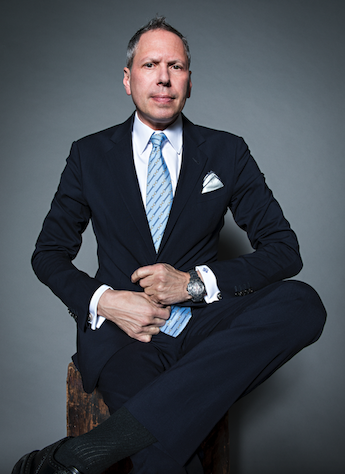
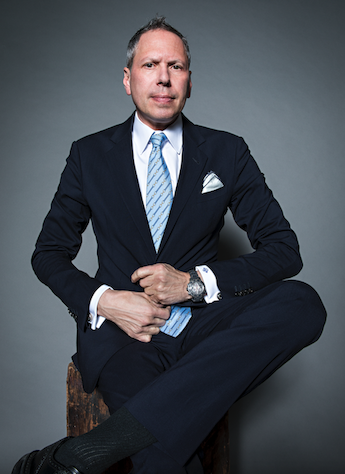
Andy Wiederhorn is the CEO of FAT Brands.
UMB Bank, which is an indenture trustee in the matter, sent notices of acceleration on behalf of investors to FAT Brands in November, stating the outstanding principal amount is “immediately due and payable.” The securitization issuers are FAT Brands GFG Royalty I, FAT Brands Fazoli’s Native I, Twin Hospitality I and FAT Brands Royalty I.
At the ICR Conference in Orlando, Florida, this week, FAT Brands CEO Andy Wiederhorn said the company planned to refinance and pay down its debt in 2022, but doing so “didn’t make sense” with high interest rates at the time.
“The debt we’re talking about … is all debt at the brand level only, and it’s in five different securitization trusts secured by different brands,” Wiederhorn said. “FAT Brands doesn’t guarantee any of the debt, Twin Peaks doesn’t guarantee any of the debt.”
Attempts to renegotiate the debt out of court have been unsuccessful so far, he said.
“I wish I could say that this will go quickly and get resolved, but it may take a couple rounds. Everyone knows I’m not afraid of a couple rounds,” Wiederhorn said. “You got about 25 investors that make up those note holders … but they’re in different places, in one deal or the other deal, and so they’re having a hard time agreeing on anything. … It’s what’s making this painful and slow.”
FAT Brands in 2020 began a buying spree and in the process accumulated significant debt. It acquired nine restaurant chains over 18 months in five separate acquisitions for $917.5 million. It spun off one of those acquired brands, Twin Peaks, with an initial public offering in January in a move to deleverage its balance sheet.
FAT Brands—which owns 18 restaurant brands, including Fazoli’s, Fatburger and Great American Cookies—said in an SEC filing January 7 that several executives agreed to waive their bonuses for the 2024 fiscal year. Those executives are Chief Financial officer Kenneth Kuick, Chief Operating Officer Thayer Wiederhorn and Chief Development Officer Taylor Wiederhorn.
Instead, the company paid half of the “previously granted but unpaid” bonuses as retention bonuses, which amounted to $500,000 for Kuick and $550,000 for each of the Wiederhorns, who are sons of Andy Wiederhorn. Each of the three C-suite executives’ base salary increased from $550,000 to $950,000. The bonuses and salary increases are subject to their employment through June 30 of this year, or if the company files for bankruptcy protection before June 30, until that date.
The company’s financial troubles come after the SEC filed charges against Andy Wiederhorn in 2024, claiming he used about $27 million in shareholder money to pay for vacations, mortgage payments and private jets, among other luxurious purchases. The commission launched an investigation against Wiederhorn and his company Fog Cutter Capital Group in 2021.
Wiederhorn stepped down from the helm of the company in 2023 and took over the position again in 2025 after the SEC dropped the charges last summer.
Speaking at the ICR Conference, he said the federal investigation resulted in “a gigantic waste of $75 million to fight that.”
Same-store sales systemwide last year were down 3 percent, Wiederhorn said at the conference.
The company hasn’t reported its 2025 earnings results, but on the brand’s third quarter earnings call, FAT Brands said system sales were down 5.5 percent compared to Q3 2024. Same-store sales systemwide were down 3.5 percent and the company overall opened 13 new locations.
Last year, FAT Brands sold 200 new locations and opened roughly 70 new units, Wiederhorn said at the ICR Conference. He expects to open 100 locations in 2026.
“The brands are really performing pretty well, and that’s very different than other brands that we witnessed last year go through a transformation where they closed 30 percent or 40 percent of their units and same-store sales were off 20 and 30 percent and just swimming upstream,” he said.
Franchisor Bankruptcies of 2025
Last year, several restaurant franchisors filed for bankruptcy.
Casual dining chain Bar Louie in March filed to restructure its business for the second time in less than five years. In October, multi-brand franchisee Sun Holdings bought the brand out of bankruptcy.
In October, Indiana-based Jack’s Donuts went bankrupt, listing $14.2 million in liabilities versus $1.4 million in assets. Last January, franchisees wrote a letter to CEO Jack “Lee” Marcum asking him to resign, stating his leadership led to struggling sales.
Hooters, the sports bar chain known for scantily clad waitresses and chicken wings, declared Chapter 11 bankruptcy in March. Since then, two major Hooters franchisees, Hooters Inc. and Hoot Owl Restaurants, acquired and took control of the brand. They also now operate 70 percent of the domestic units.
Also in March, Mexican brand On the Border filed for bankruptcy after closing nearly 80 locations nationwide. Pappas Restaurants, a Texas-based restaurant group, bought the brand in May.
Pieology, a 45-unit pizza franchise, filed for Chapter 11 bankruptcy in December, citing a 29-unit acquisition as the primary cause of its financial woes. At its peak, Pieology had more than 200 locations.