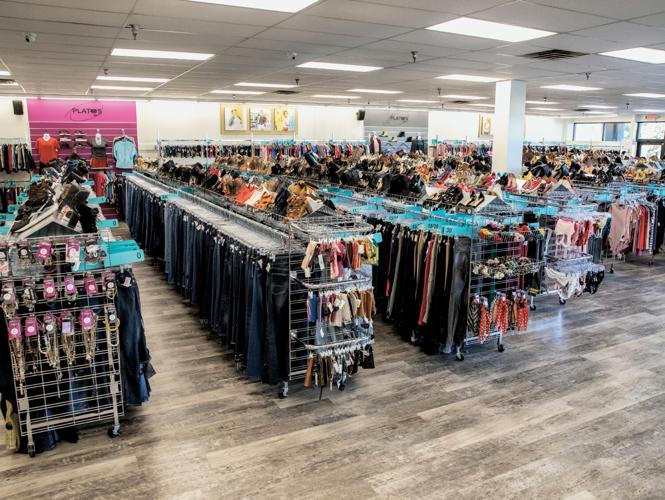



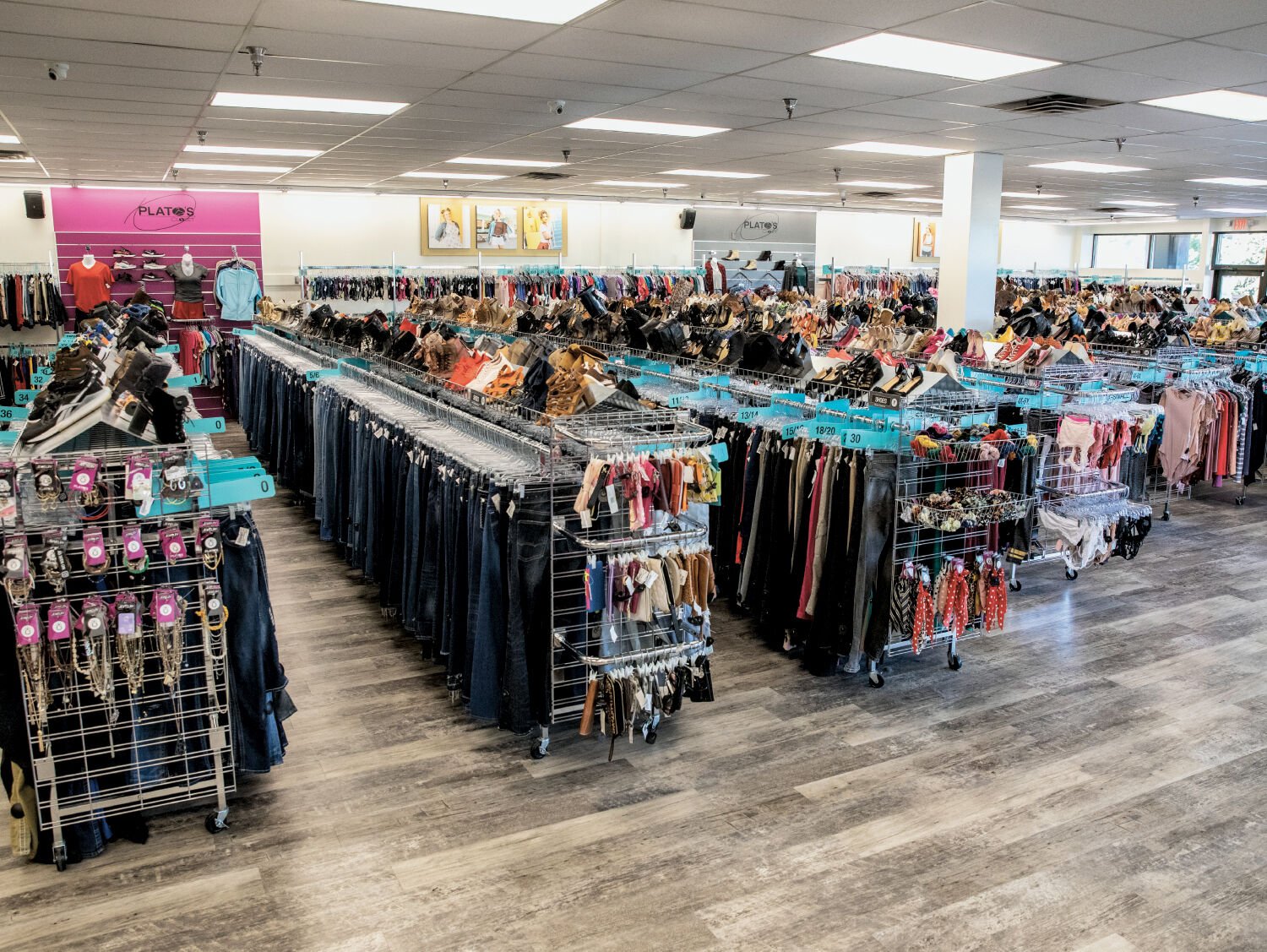
Plato’s Closet grew systemwide sales by $150 million in 2021, to $594.4 million.
“Our goal is to provide resale to everybody. We can be patient with that.”
—Brad Spencer, VP of operations, Winmark
In times of economic uncertainty—a pandemic, for example—the resale clothing industry has historically fared well.
Customers are trying their best to save a dollar here and there, and want to get the best value, often while still staying true to their personal style or modern fashion trends. Plato’s Closet franchisees have seen consumers turning to their stores to buy and sell used clothing, even more so when times are tough.
Plato’s Closet franchisee Rena Milroy has been through a few economic downturns. “I was part of the stores during 2008, as well, when we had a bad economy,” Milroy said. “And we did fine. I mean, we’re very fortunate. I would never say anything is economy-proof, because I think that’s too much, but I will say that … Winmark brands have achieved success even during very difficult times.”
Plato’s Closet—a subsidiary of Minneapolis-based Winmark Corp.—grew systemwide sales by $150 million in 2021, to $594.4 million, to come in at No. 146 on the Top 500 list. The brand’s 33.8 percent growth came with the addition of just four stores to the system in 2021.
Like most retailers, the company took a sizeable hit in 2020, when its 13.9 percent decline brought total sales to $444 million. It’s recovered and then some, and at the unit level average sales surpassed $1.2 million last year.
The cost to open a Plato’s Closet franchise is between $269,700 and $407,400.
Elsewhere in the retail category, which overall had sales of $147.9 billion, other used good concepts also demonstrated growth. Uptown Cheapsake boosted sales 62.6 percent, to $96 million, while Just Between Friends was up 55 percent, to $34 million.
Brad Spencer, vice president of operations at Winmark, likened shopping at Plato’s Closet to a treasure hunt.
“It’s fun, people love it,” Spencer said. “People go from store to store looking for really great deals and specific brands and styles that they love.”
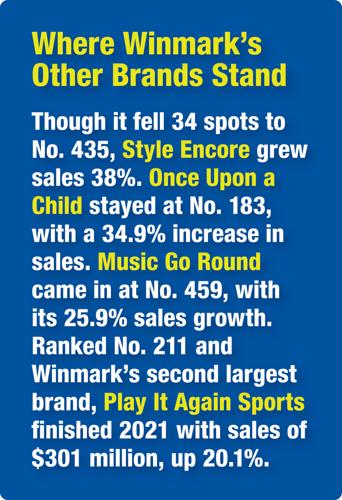
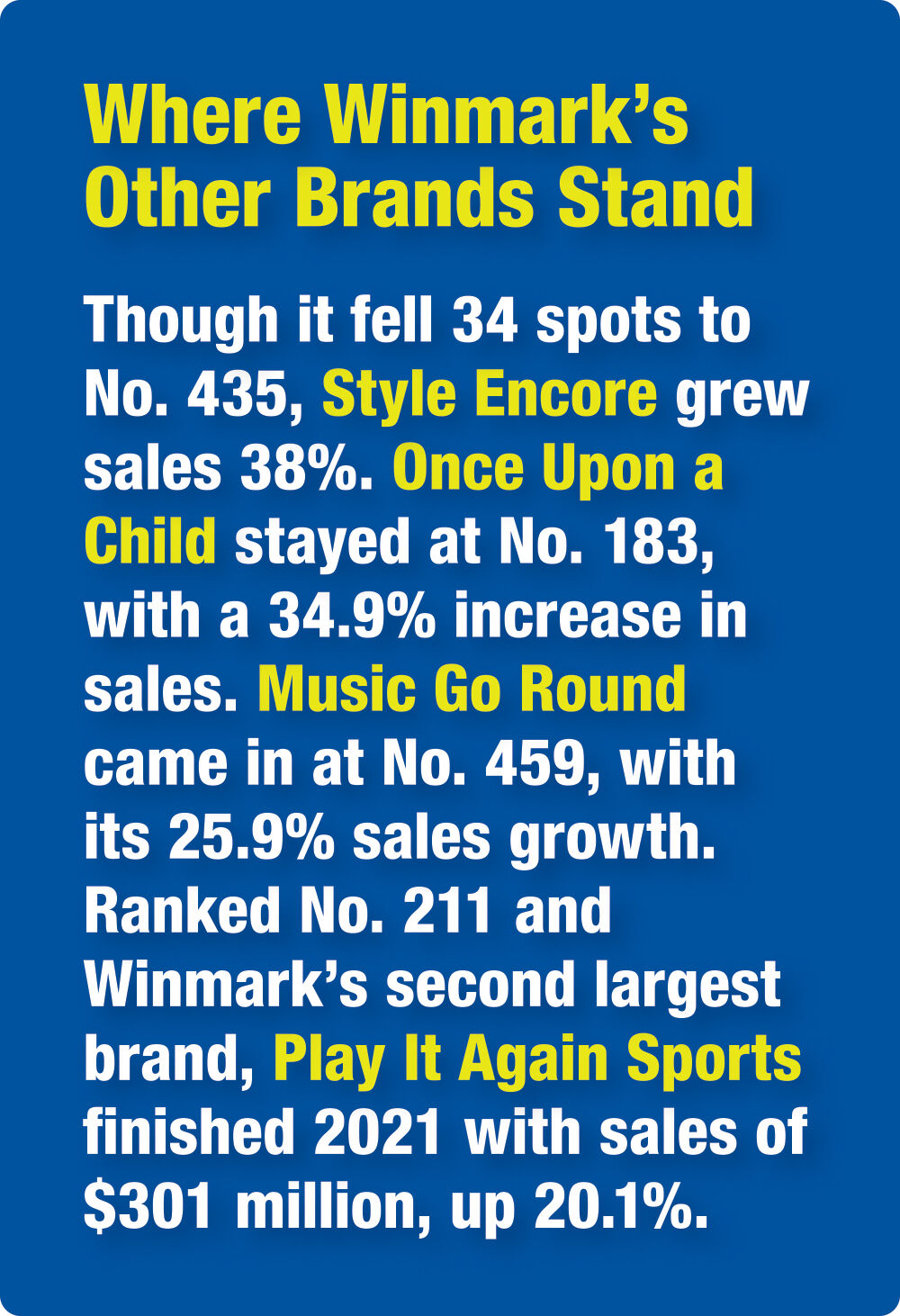
Internally, Winmark—which also owns resale concepts Once Upon a Child, Music Go Round, Style Encore and Play It Again Sports—enhanced its online reporting system so franchisees could more easily analyze systemwide and store-level trends. “We layered in some additional online and virtual support to our franchisees,” Spencer said. “Instead of just going to their stores and calling them, we’re able to kind of connect to them virtually and see what’s going on in their store and be in more contact with our franchisees during the last couple of years.”
When many retailers and restaurants were closing on certain days or shortening hours, some Plato’s locations expanded their hours. “That was a change we actually made because business was so strong, where other retailers were kind of doing the opposite,” Spencer said.
Winmark raked in a total of $1.4 billion across its five brands and 1,300 locations in 2021. The company recycled more than 159 million clothing items last year, and it’s recycled more than 1.4 billion items since 2010.

Brad Spencer
In search of sustainability
Rising awareness about fast fashion’s impact on the environment is another major contributor to the success of a brand like Plato’s Closet. A recent study from retail analytics firm GlobalData predicts the resale apparel industry will grow 16 times its size from 2021 to 2026.
“I would say we’re continuing to see that generational and maybe even cultural shift to a more sustainable way to live our lives,” Spencer said. “In retail, sustainability matters now more than ever.”
The changing needs and trends toward sustainability have been noticeable in the last 30 years Plato’s Closet has franchised, Spencer said, and the brand is preparing for an even bigger spike in sales to come. That preparation includes a push for unit growth.
At Winmark, franchisees sign on for one store at a time before they can expand. After a year, they can elect to purchase additional stores under the Winmark umbrella, and many choose to diversify their portfolios with different concepts. “We’re seeing a lot of our existing franchisees add additional stores to prepare for it in their local markets,” Spencer said.
Milroy started working at Once Upon a Child in the late 1990s, when she was in college. She took a store manager position after graduating college and eventually purchased a Plato’s Closet store in Greensboro, North Carolina, from the owner about eight years ago. She bought her second Plato’s location, in High Point, North Carolina, in 2021. She’s considering expanding again, and is open to adding another concept to her store footprint.
“I love the concept,” she said about her decision to buy. “I’ve always really been into the recycle, sustainability concept, before it was even popular. I’ve just always been encouraged by that and just felt like it was the right thing to do.”
Milroy credited the support she’s received from Winmark, ever since her store manager days, as helping her grow her business. “I haven’t worked with any other franchises, but I feel like they are very hands on about giving us support and in every way that they can, and that’s one of the reasons why I wanted to buy stores,” Milroy said.

Rena Milroy
Creating repeat customers
Spencer attributes the brand’s repeat clientele to the store’s convenience. Sellers can drop off their gently used clothes and make the switch to customer, shopping the store’s inventory while they wait for an employee to sort through their items. They can walk away with some cash (and their rejected clothes), or they can use the money for some new outfits.
With inflation on the rise, customers are becoming more value-driven than ever before. “People want good prices, they want good deals,” he said. Luckily, inflation doesn’t impact Plato’s Closet the way it does a local grocery store or restaurant.
“The customers bring in the product,” Spencer said. “Our franchisees, because of that, don’t have to pay increased shipping and transportation and have those logistic issues that regular retailers have. With that, our franchisees have done a really good job of keeping their prices down, and not raising them to provide value to customers.”
Plato’s Closet doesn’t have an online sales platform like some of Winmark’s other brands. Because its clothing stock sells for relatively low prices, it’s not cost effective to ship a $4 T-shirt across the country.
The company has a goal to fill Plato’s Closet’s 400-plus open territories across North America. Winmark wants to fill those spots with qualified candidates and existing franchisees—and do so at the right pace. “We don’t want to necessarily grow overly fast. But provided that there’s quality candidates applying, we certainly want to grow with those folks,” Spencer said.
“Our goal is to provide resale to everybody,” Spencer said. “We can be patient with that.”