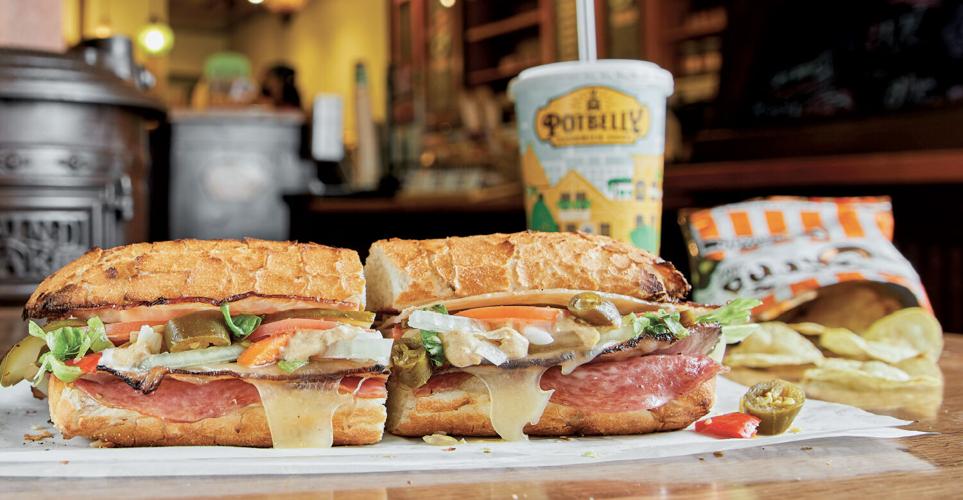



Potbelly in 2021 underwent a menu revamp aimed at improving the value perception of its sandwiches, adding more meats and cheeses.
“Our goal is to make sure that we continue to be a place where you can count on value that fits the needs of your dining patterns. So when you cut back, frankly, you cut back from someone else, not us.”
—Bob Wright, CEO, Potbelly
Bob Wright and Potbelly aren’t afraid to steal.
With consumers still feeling pressure from multiple years of high inflation, and within a fast-casual segment where competitors are angling for a piece of shrinking spend, Potbelly is taking market share.
Traffic growth in 2023 was a major driver of the brand’s sales gains last year, said Wright, Potbelly’s CEO, and remains a focus as its stores aim to prove more appealing than someone’s refrigerator.
“Let’s be clear in what’s happening with today’s consumer: They are cutting back meals outside the home in favor of the refrigerator,” Wright said. “Our goal, with our everyday value, is to make sure that we continue to be a place where you can count on value that fits the needs of your dining patterns. So when you cut back, frankly, you cut back from someone else, not us.
“And that’s how you continue to grow share, even in tough times.”
No. 139 Potbelly, which climbed 26 spots on this year’s Top 400 ranking thanks to 12.6 percent sales growth, finished 2023 with $560 million in systemwide sales from 424 locations. The average unit volume at its 74 traditional franchise stores reached $1.2 million last year. Company-owned shops measured, 333 of them, averaged $1.3 million.
That AUV is almost double what it was in 2020, when Potbelly was contending with multiple years of sliding sales and unit closures. The years since have been more than pandemic recovery as Wright and his leadership team set about a comeback with franchise-focused development in mind.

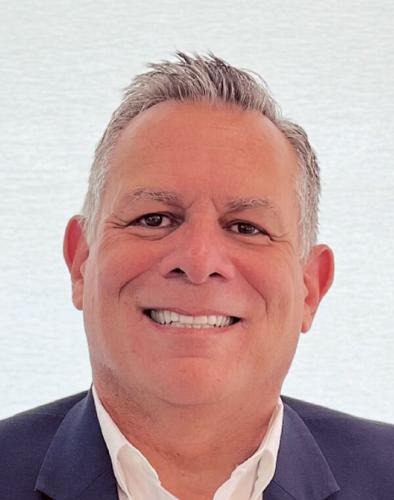
Potbelly CEO Bob Wright says the brand's strong volumes and margins make it attractive to prospective franchisees.
Traffic-driven profitability
Wright joined Chicago-based Potbelly in July 2020, replacing Alan Johnson, who’d been at the helm less than three years. A customer for more than two decades, Wright said food quality and an antique shop ambiance put Potbelly in a unique position in the marketplace, but it had an issue with value.
Potbelly by 2019 was in a multi-year traffic count skid, which Wright said the company tried to compensate for by raising prices. Those moves only worsened the situation.
Customers loved the food, he noted, but didn’t think the cost of a sandwich matched the product. Enter the first in a five-pillar strategy announced after Wright came on board: quality food at a great value.
“By the middle of 2021 we were rolling out what is the foundation of today’s menu with the skinny size sandwiches,” Wright said. “We made our originals and our big sandwiches bigger, and we put more meat and cheese in them. We raised the food cost on those items, because that’s a great translation to value that we gave the customer.”
At a Potbelly in Minnesota, for example, a “Big” chicken club ran $13.89, while the “Skinny” was $6.89 and the “Original” came in at $9.99. Those three sizes “rebased the brand’s relationship with the customer,” Wright said, and the addition of a skinny option opened up an “everyday value layer” with pick-your-pair combos.
Wright, who came from quick-service and before Potbelly spent more than five years as chief operations officer at Wendy’s, knows the potential perils of discounting. He said while Potbelly will run promotions and some deals via its Perks loyalty program, it doesn’t discount core menu items.
“It’s really dangerous to do that. You kind of reprice your menu if you do that,” he said.
“You’ll see brands do $1 hamburgers for a hamburger that’s on the menu for over five bucks. It’s difficult for the customer to absorb why that makes sense.”
A recent Potbelly promo, the $7.99 Skinny Combo with choice of turkey, ham or chicken, protects margins versus including roast beef or a specialty sandwich with higher-cost ingredients. Like the slimmed-down sammie before, the promo is driving traffic and sales without breaking $9, which research by the brand showed is the price point when consumers look elsewhere.
Positive work environment, customer experiences that drive growth, digitally driven awareness and franchise-focused development are the remaining pillars, which Wright acknowledged “can often read like platitudes.”
“The strategic initiatives that underpin those five pillars of our strategy is where the work came in,” he said. “And I think we’ve got, you know, almost four years of success against those strategic initiatives, because that’s what really separates the work from the talk.”
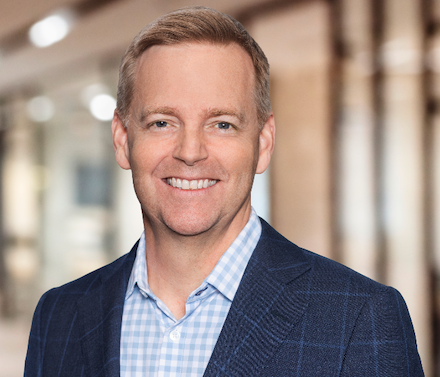
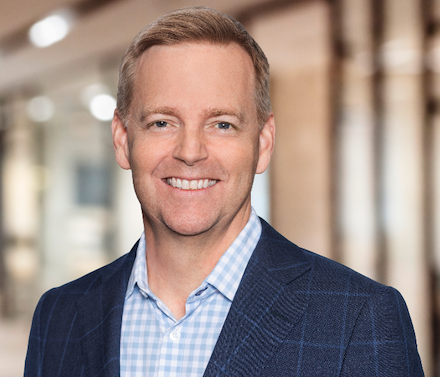
David Daniels is Potbelly's chief marketing officer.
Enhanced operations, marketing
While the third pillar may read as “customer experiences that drive growth,” for Wright, that translates to operations execution. And it was an area in need of attention, from store cleanliness and throughput all the way to staffing in the restaurants and tools to run better shops.
Despite being a chain of 400-plus locations, Potbelly didn’t have some of the essential tools to enable more efficient operations, or, those tools were in need of an upgrade. One key missing component, said Wright, was a labor guide
“Labor was being measured as a percentage of sales after you were finished with the shift, with the day, with the week,” Wright explained, but there was no deployment guide based on forecasted sales and with a scheduling platform for managers. “Frankly, without those tools in place, we had some bad habits in a lot of places, managers weren’t working balance schedules.”
With proper staffing practices came an opportunity to improve the bottom line and enhance sales outside of the typical lunch daypart. Evening and weekend business saw a lift. Managers, using a new scorecard with operational success metrics such as sales and profitability, are incentivized via a bonus program.
With 40 percent of its total sales coming through digital channels, Potbelly last year began accelerating the rollout of the Potbelly Digital Kitchen, a tech-driven system better able to sort orders and utilize a restaurant’s second make-line.
“We saw food quality scores, order-ready-on-time scores, accuracy scores, all of that was positively benefited by PDK,” Wright said. Restaurants are also using inline order-taking tablets to increase throughput on the front line.
By the end of 2024, Potbelly will have retrofitted close to 100 shops with the PDK, and all new builds feature the system.
Digitally driven awareness, meanwhile, is Chief Marketing Officer David Daniels’ purview. Potbelly in 2020 was spending just half a percent on marketing. Today that spend is 3 percent of sales, with heavy emphasis on all things digital.
“We knew we needed to fight for share of voice,” Daniels said, with paid social media, video and connected TV content proving effective to boost overall brand awareness and impact actual sales and traffic.
With a revamped Perks app and loyalty program, Potbelly is seeing 30 percent growth each quarter in active members, he noted, “and we’re not just driving frequency with our most valuable customers, but we’re driving frequency with new customers.”

Randy Pianin leads Royal Restaurant Group, a multi-unit operator of Burger King and Potbelly restaurants.
‘We are supremely franchise-able’
Potbelly’s 400-plus stores are flung across 30 states, with high concentrations in Illinois, Michigan and Texas, and others with just a shop or two. The broad footprint proved the brand travels, Wright said, but having a system that’s 80 percent company-owned meant many markets were “woefully underpenetrated.”
Enter franchising. Potbelly in 2022 announced a goal to hit 2,000 units over the next 10 years, 85 percent of them franchised.
“We are supremely franchise-able. We have great volumes with good margins. We’ve got low cost of capital,” Wright said. “Our sale-to-investment ratio is still two to one.”
Refranchising about 25 percent of the system is part of the equation, with 34 company stores sold so far. Paramjit Josan and Randy Pianin were among the acquirers.
Josan’s United One Group was the first to buy in, purchasing eight shops in New York City last year and signing on to open 13 more. Also a Checkers operator, Josan said he was looking for “an established brand that thinks their best days still lie ahead of them,” and found that in Potbelly.
“Potbelly’s commitment to offering support, from digital systems to marketing materials, that help us operate efficiently was a huge differentiator for my team and I,” Josan said. United One is upgrading to the Potbelly Digital Kitchen and refreshing stores, and at press time was set to open its first new unit in September, with two more slated for this year.
“I’m also excited about the new shop prototype, which includes design elements like a customized-drink station and pickup shelves,” Josan said. “It’s also a smaller footprint, which means cheaper build costs and more options when it comes to picking locations moving forward.”
Pianin formed Royal Restaurant Group with Robert Negron in 2023, acquiring 23 Burger Kings in Florida. Royal now has 61 BKs in that state plus Georgia and South Carolina. Unfamiliar at the time with Potbelly, it was initially a shared Wendy’s connection with Wright that brought them to the brand, as both operators are former C-suite executives for large Wendy’s franchisee JAE Restaurant Group.
“Bob was a big part of the improvement in the Wendy’s operations,” Pianin said. “He was always laser-focused on the customer experience and how do you improve operations so it’s the best it can be for customers and team members.”
Royal in October 2023 acquired four Potbelly units in the Columbus, Ohio region and inked a deal to develop 36 stores in Ohio and Florida.
“We wanted to get into a brand that was in a growth cycle,” Pianin said. Potbelly, he continued, “sits between a Jersey Mike’s and a Panera,” has amazing product quality and a leadership team “that understands how you have to work with franchisees.”
As for the thievery, franchisees can embrace it, too.