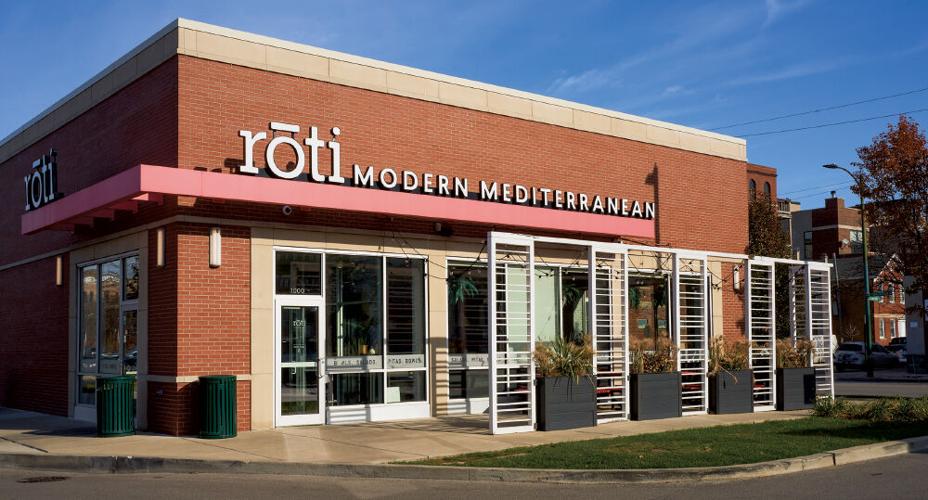



Edible Brands bought Roti Modern Mediterranean out of bankruptcy in the summer of 2025.
Edible Arrangements could be considered the expert in all things fruit baskets and gifts. The franchise is known for its extravagant floral arrangements made of fruit and chocolate, but those are typically reserved for special occasions and holidays. Matthew Walls, the president and chief stores officer of Edible Arrangements’ parent company, Edible Brands, wants to change the way people think about Edible.
“I want people to enjoy [Edible Arrangements] throughout the year,” said Walls, who took the reins at Edible Brands last summer. “Maybe it’s the type of thing where I’ve got an Edible that’s real close to my office. I stop in there once in a while to get a cookie or brownie for myself. … Then when mom’s birthday comes up, I’m like, oh yeah, Edible.”
It’s a mission he’s named “Edible every day.” Walls challenged franchisees to get out in their communities to market Edible’s everyday sweet treats that the common customer doesn’t know about. His goal is to increase in-store sales because about 80 percent of the brand’s business comes from online orders.
Before the holiday season ramped up, Walls told operators to visit craft fairs and other holiday events to spread the word about Edible’s other products, such as (non-edible) flowers, smoothies and baked goods.

Matthew Walls is the president of Edible Brands.
“It’s about awareness,” Walls said. “We have this opportunity, as long as we tell people that they can use us this way to make every day something we’re celebrating or to console people when they’re having a rough day.”
Edible is working to turn its business around but has been shedding stores since 2018. It started that year with 1,153 and by the end of 2024 it was down to 685. That’s a 468-unit drop. The average unit volume has ticked up over the years. Stores open more than three years averaged $431,733 in 2018, according to that year’s franchise disclosure document. In 2024 that figure was $538,054.
The Edible Brands portfolio comprises Roti Modern Mediterranean, Edible Arrangements and Edibles.com, a hemp wellness ecommerce brand.
Edible Brands bought fast-casual Mediterranean brand Roti out of bankruptcy last year for about $4.7 million, a surprising move for a company not involved in the restaurant space and the first deal for BroadPeak Capital, which Edible founder Tariq Farid formed.
But, Walls said, while the two brands don’t seem aligned from an outside perspective, operations are pretty similar.
“It’s just that with gifting, the occasions for you to come back are less frequent than Roti, because you can ... eat at Roti every day of the week,” said Walls, the former chief development officer for Caribou Coffee. (On business trips to Minneapolis, which has three Rotis in the market, Walls discovered and fell in love with the brand. So when he got the call to be the president of Roti’s parent company, he said it was an easy decision.)
Serving a nutritious, delicious, affordable meal is a big reason why Walls loves the brand. A build-your-own rice bowl with chicken, sides, sauces, spreads, toppings and pita goes for $13.50 in the Minneapolis market. Walls said the portions are hearty enough to fill anyone’s belly. “We want to be the place where people feel like we’re being very fair. In the build-your-own world, there’s been a lot of our competitors that have been dinged for having bowls that weren’t completely full,” Walls said. “You won’t find that at Roti. We fill up the bowl.”
Roti has 10 corporate stores in Minnesota, Illinois and Washington, D.C., down seven units from when Edible Brands acquired it. Roti started franchising for the first time in May; the cost to open a restaurant ranges from $509,800 to $869,200, according to the brand’s FDD.
“The Mediterranean sector is growing at a rate where it makes sense for us to bring in franchisees so we can grow quicker,” Walls said. “Since we do have two other brands, we also have to think about capital allocation and where we’re going to put our money.”
If Edible’s dive into the Mediterranean restaurant space wasn’t surprising enough, the company opened a cleverly named ecommerce THC website called Edibles.com in 2025.
The brand emphasizes health and wellness, rather than getting high. “If there is someone who’s using melatonin on a daily basis and they’re looking for a healthy, natural alternative they can use, there’s an edible for that,” Walls said. “Our intention is for this to be an alternative—the things like melatonin, or things like ibuprofen, any sort of pain medication.”
But Edibles.com’s future, just like most of the hemp companies in the United States, is uncertain. The 2018 Farm Bill allowed for the sale of certain intoxicating hemp products, which fueled the growth of the THC industry in recent years with new stores and online sales.
In November, as part of the spending bill that ended the longest government shutdown in U.S. history, Congress set a one-year deadline to close the loophole that allowed producers to extract psychoactive cannabinoids from federally legal hemp. The move could wipe out about 95 percent of the hemp industry, lobbying group U.S. Hemp Roundtable said in a statement.
In states where marijuana is legal in all forms, stores with state-issued licenses can continue to sell products.“Hopefully the government will kind of figure this out. They’ll go tackle bigger issues,” Walls said. “I think the general use of the product should be enough for us to continue. That’s what we’re hoping for.”