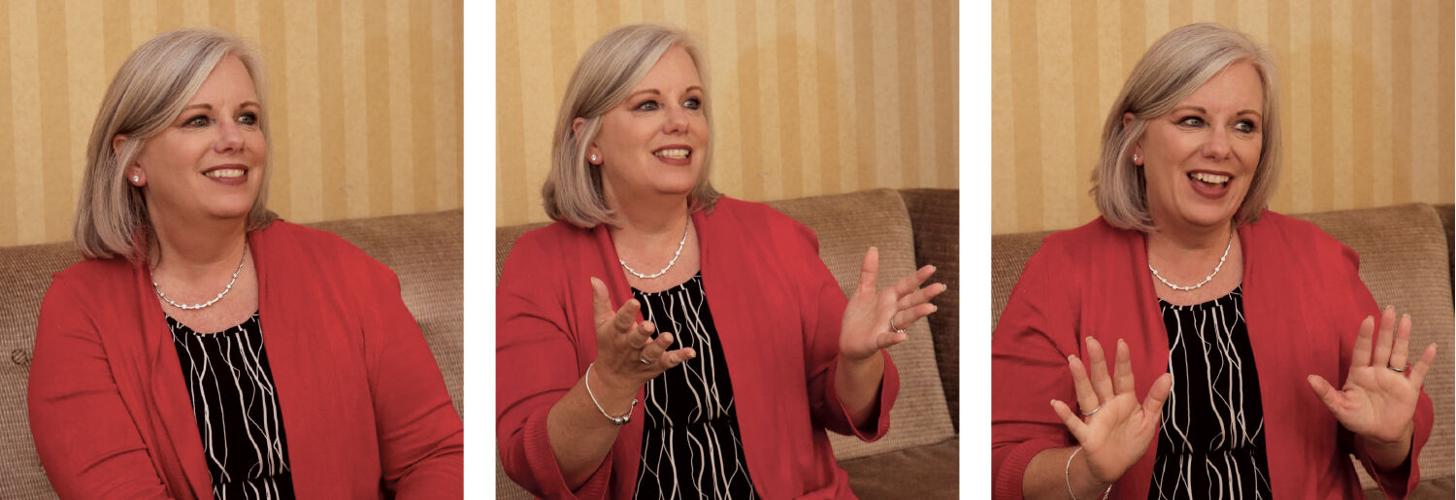


Kristy Chipman joined Ruth’s Hospitality Group as CFO in November 2020 after serving in various roles at McDonald’s, Domino’s and Orangetheory Fitness.
Historically, when a delivery truck arrived at Ruth’s Chris Steak House during dining hours, it was turned away, the driver asked to come back later.
But now, in the land of supply chain and staffing challenges, the upscale chain takes deliveries whenever it can get them, said Kristy Chipman, executive vice president and chief financial officer who in January added the chief operating officer title.
Though franchisees and general managers have the flexibility to make those decisions, the franchisor makes sure they “understand the implications of those decisions so they’re not out of product because they didn’t take a truck they typically wouldn’t at that time,” Chipman said in an interview at the 2021 Restaurant Finance & Development Conference.
Chipman joined Ruth’s Hospitality Group just a year prior, in November 2020, after serving in various roles for franchise giants such as McDonald’s, Domino’s and Orangetheory Fitness. It’s something of a return to the fine dining industry and Ruth’s for Chipman, who said she grew up rolling silverware at white-tablecloth restaurants when her mom—a waitress and single parent—couldn’t find a babysitter. Her stepfather moved up from a broiler chef to an executive chef, so it’s “in my blood,” she said.
“When they called me, I already knew the brand and the quality of the product,” Chipman continued. “It was a place I could go as a family, because I went with my mom and stepdad constantly. When you’re in service and hospitality and you’re going out to spend money, you want to be served in the way you would serve somebody.”
This job married her “love for operations and knowledge of the franchise space with a brand I could really get behind,” Chipman added.
Ruth’s—which has about 150 units and is split 50-50 between franchised and corporate restaurants—saw a dramatic 37.7 percent drop in sales in 2020 and lost 6.3 percent of units, according to Franchise Times Top 400 data. Despite the sizeable hit in 2020, the public brand’s stock price rebounded and exceeded $28 per share for a period of time in 2021, Chipman said—until supply chain and labor challenges kicked in.

Ruth’s Chris Steak House has 150 locations open, split about 50-50 between franchised and corporate restaurants.
Then, inflation was added to the mix. Lobster prices, for example, were up 150 percent, she said. “We’re managing it and making sure we find the right balance of pricing versus accepting some incremental costs for the time being to balance all of our stakeholders,” Chipman said. One strategy is making sure Ruth’s has enough variety on its menu and is taking price increases where it’s possible. Another is spot printing menus because of frequent food swaps, which means making sure restaurants have card stock on hand.
“We’re learning to be a little more prepared than we’ve had to be in the past,” she said.
Chipman figured franchisees would come forward during the pandemic asking for a buyout with all these challenges, but surprisingly, no franchisees wanted to leave the business, she said. She attributed this to the brand’s consistent open communication and education efforts. It may also have something to do with pent-up consumer demand and the steakhouse’s subsequent steady recovery.
“The pent-up demand is real. We’re benefiting from guests wanting to dine in,” Chipman said. “They may have missed a birthday, an anniversary, many different events in life, and a place like Ruth’s is a place to come for special occasions. Others use us every day, but being able to celebrate life’s moments is what we’re all about.”
Because of that experiential focus, Ruth’s isn’t trying to make its takeout business—dubbed Ruth’s Anywhere—or third-party delivery a large portion of its revenue. Instead, the goal is to keep it at a steady rate of 5 percent of business, Chipman noted. That conservative, practical mindset also permeates the brand’s growth plan, which Chipman admits is “pretty slow” with three to five restaurant openings per year on average.
“It takes a long time to get our concept out of the ground, which makes a big difference to franchisees. It’s not like opening up five Domino’s restaurants or McDonald’s. It’s a very different franchise model, one that’s very unique, and I’ll be honest, I’m still getting to know it and learning from our franchisees,” Chipman said.
Because of the brand’s slower development process, Ruth’s is focusing on expanding its corporate footprint in New York, Florida, California, Michigan and Massachusetts. At the same time, Ruth’s will prioritize helping franchisees continue building back same-store sales, Chipman said, especially in markets slower to recover such as Manhattan, Boston and Hawaii.
“Restaurant people are great people,” Chipman added, “and it’s fun being in restaurants, even in the middle of a pandemic. They’re some of the hardest-working people I know.