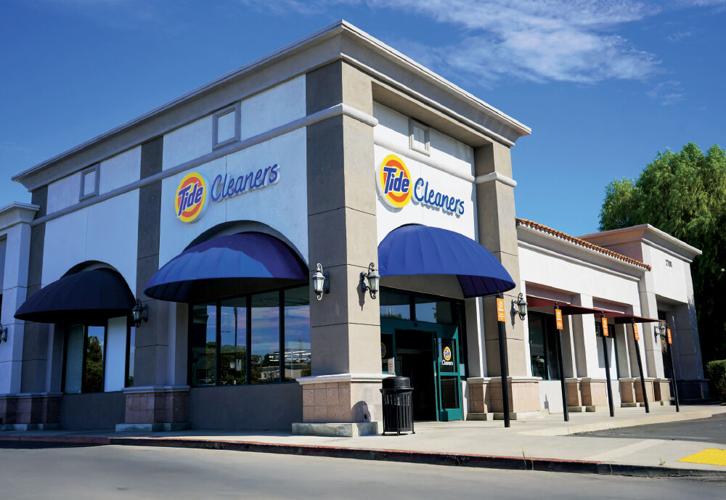


Tide Cleaners and Tide Laundromats are the newest additions to Barry Dubin’s and Navin Nagrini’s portfolios.
As the cost to open and operate restaurants continues to rise, some investors and franchisees are looking to non-restaurant brands to expand their portfolios.
The co-founder of giant Yum Brands franchisee KBP Brands went in a new direction in 2024 when he signed a 53-unit franchise agreement to develop Tide Laundromat locations across seven states. Barry Dubin, the founder and CEO of B Wild Investments, then added Tide Cleaners to his portfolio last year with a deal to open 18 Tide Cleaners units in New York City.
“What I found with Tide Services and Tide Laundromat is a great opportunity to work with a great brand that everyone knows and trusts,” Dubin said when he signed the deal with Tide.
Dubin moderated a panel discussion at the Restaurant Finance & Development Conference in Las Vegas in November, which is produced annually by Franchise Times and sibling publication the Restaurant Finance Monitor. His dive into the laundromat space was “a lot of fun and a great learning experience for me,” he said during the panel.
Joining Dubin were Mike Esposito of Franchise Equity Partners and Navin Nagrani of CMG Companies, who each have deep experience in multi-unit restaurant operations and have expanded into non-restaurant concepts.
The rising costs of labor are affecting the restaurant industry. In California, restaurants are required to pay a $20 minimum wage, which has put a strain on stores that require a lot of employees. Finding the right real estate for full-service restaurants or brands that require a drive-thru lane has also resulted in struggles for franchisees.
CMG operates KFC, Taco Bell, Little Caesars and Sonic Drive-In restaurants, plus Rent-A-Centers, Ace Hardware stores and Valvoline Instant Oil Change units, among other brands. The group most recently signed deals with Dunkin’ and Tide Laundromat.
“A few years ago, we decided to get into non-retail because of diversification and we understood the lower-end consumer. We’ve been very successful,” said Nagrani, a founding principal of Dallas-based CMG. The company is the largest Rent-A-Center franchisee, he said. CMG sees the Tide system, which it signed a 50-unit agreement with last year, as a profitable business model. “We actually really like that brand. … We think that’s a massive opportunity for us.”
Tide Laundromat is a franchise extension of Tide Services, a subsidiary of Procter & Gamble.
With a focus on consumer-facing brands, CMG has learned what the customer, generally, is looking for. But shifting to non-restaurants isn’t as simple as signing a development agreement, Nagrani said.
“Some of the things change, like the dayparts aren’t predictable. Perhaps you have, potentially, seasonality,” he said. “You have all sorts of issues, collections, rental agreements and all that. It’s actually fun when you’re trying to learn a new business.”
Texas Capital Bank, meanwhile, dove into the franchise finance space about 13 years ago. A finance veteran, Peter Clifford, who spoke during the RFDC session, said he joined the Texas Capital team in part because of the bank’s investments in non-restaurant brands.

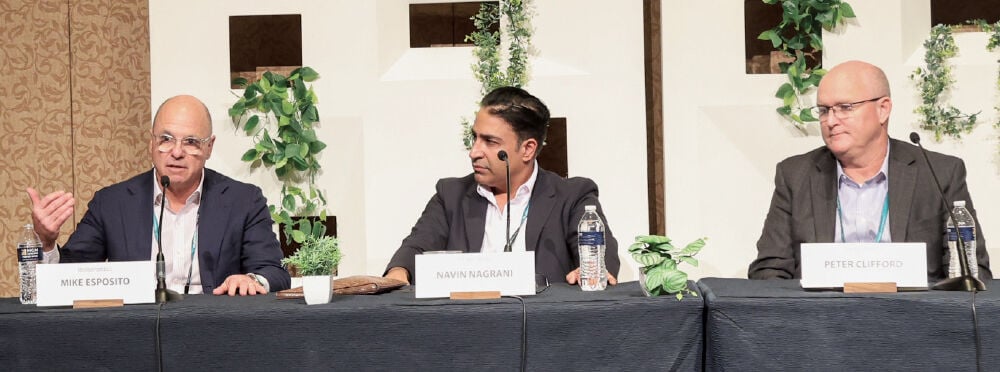
From left, Mike Esposito, Navin Nagrani and Peter Clifford discuss non-restaurant investments at RFDC.
“We obviously still love restaurants,” said Clifford. Texas Capital has a branded retail team dedicated to a variety of consumer-facing sectors. “We leverage our robust investment banking team, our debt capital markets team and we roll up into a group that’s called Diversified Industries. That kind of overlaps to some of the things that we see here today outside of the restaurant space.”
The Diversified Industries Corporate Banking group encompasses, as the name implies, a variety of business sectors, including manufacturing, professional services, wholesale distribution and transportation.
Last year, Clifford noticed a shift in the response to Texas Capital venturing beyond restaurants. In 2024, “Texas Capital’s saying, hey, we’re going outside the restaurant space. They’re like, ‘Why?’” Clifford said of his interactions at conferences. Now, people see the appeal of other fast-growing sectors.
In the past year, there’ve been some significant multi-unit deals with operators who are investing in non-restaurant categories. John Young, for example, signed a 40-unit development agreement with TruGolf Links, a golf simulator franchise with a full-service bar, in February. At the time, TruGolf had yet to open a franchised location and Young was one of the brand’s first regional development partners. Per the agreement, Young has the rights to the state of Tennessee.
Perhaps one of the most notable shifts into the non-restaurant space is from Flynn Group, which dropped the word “Restaurant” from its name upon acquiring 37 Planet Fitness units in the fall of 2023. Led by CEO and founder Greg Flynn, the group bought Alder Partners, an Atlanta and Boston Planet Fitness franchisee.
Flynn Group is the largest franchisee in the United States with thousands of locations of Taco Bell, Applebee’s and Pizza Hut nationwide and in New Zealand and Australia.
“It’s the great circle of life—we help feed them and we help them get fit,” quipped Flynn in 2024 of the purchase. His company undertook a “systemic study” of non-restaurant consumer services franchises, narrowing the list and soon identifying the fitness segment.
“The best brand by far in the industry is Planet Fitness,” he said of the 2,700-unit system. “It stands out as a category of one.”
A family of restaurant operators last summer signed a 36-unit deal with PayMore, an electronics resale franchise. Connor, Austin, Jerre and Jaxon Tews own 14 Crumbl stores, two Dave’s Hot Chickens and two Crunch Fitness gyms. At the time of the deal, Connor Tews said, “It’s going to be a whole lot easier to find real estate and labor for our stores than, say, a restaurant or a gym, which is always going to be a big lift. Just the initial startup costs are dramatically different. So, from the financial side, we figured we can take on more development with the brand.”
Private investment firm Franchise Equity Partners has several restaurant operators in its portfolio, including franchisees of 7 Brew, Taco Bell, Auntie Anne’s and Jamba. Co-founder Esposito started the company with the intention of investing in an array of categories. On top of restaurants, FEP is invested in Valvoline, Precision Garage Door Service and Planet Fitness.
“We do like other industries that generate very attractive top-line economic, top-line growth, lots of white space, lots of development opportunity,” Esposito said. “That really has gravitated us more and more toward our other verticals.”