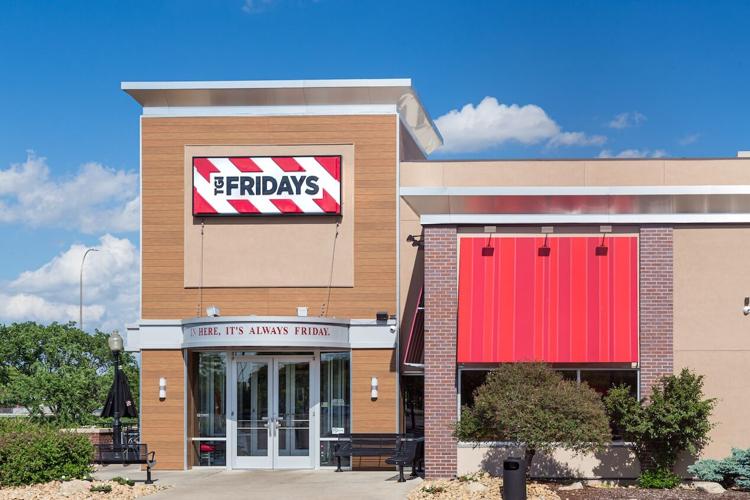

“All the people that called the time of death on casual dining were wrong,” says Ray Blanchette, the CEO of TGI Fridays. The company this week unveiled a turnaround strategy as it looks to restart growth and improve the financial health of franchisees.
Blanchette’s Sugarloaf TGIF Operations also completed the pre-pack administration process to acquire the brand’s restaurants in the U.K.
In Ray Blanchette’s view, there’s only one way forward for TGI Fridays and it requires more than words.
“You can’t talk your way out of a problem you behaved yourself into,” he said. “So we’ll behave our way out of it.”
Blanchette, who under his Sugarloaf TGIF Management took control of TGI Fridays a year ago and returned as the brand’s CEO, said the company went through several years of neglect but he’s committed to turning things around.
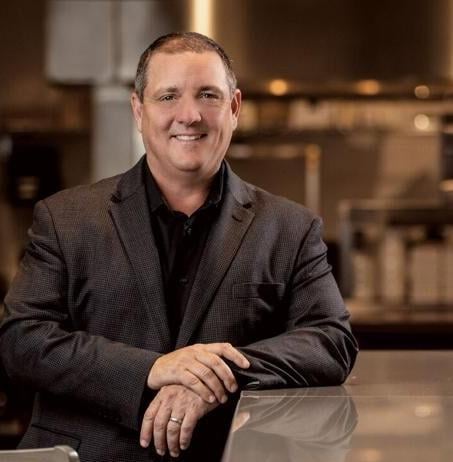
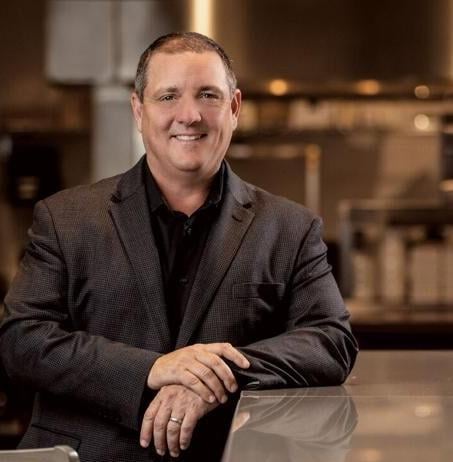
TGI Fridays CEO Ray Blanchette says consumers are looking for great casual dining experiences. "All we have to do is give them reasons to come in.”
“The franchise system was very fragmented, very pissed off with previous management, and rightfully so,” Blanchette said during an interview at the ICR Conference in Orlando, Florida, this week. “I was a franchisee, so I was walking in their shoes. I understood what they were faced with, and knew that it required decisiveness and boldness right out the gate. We had to start getting some early wins.”
A quick review: TGI Fridays filed for Chapter 11 bankruptcy in November 2024 following a turbulent decade for the brand. TriArtisan Capital and Sentinel Partners acquired Fridays from Carlson Inc. in 2014 when it had more than 900 restaurants in 60 countries and global sales of $2.7 billion. By 2017, sales were declining, and in 2020 a merger with Allegro Merger Corp. to take the company public—and clean up Fridays' $350 million in debt—was called off.
Blanchette, who started his restaurant career with Fridays as a kitchen manager in 1989, was named CEO in 2018 but stepped down in 2023, founded Sugarloaf Hospitality, and continued to operate restaurants as a franchisee. A carousel of CEOs followed his departure, and in April 2024 the company struck a $220 million deal to be acquired by its franchisee in the United Kingdom, Hostmore. That deal collapsed a few months later as Hostmore filed for the U.K. equivalent of bankruptcy and Fridays lost control of most of its assets.
More than 500 TGI Fridays restaurants closed globally since 2014. In the United States, the brand is down to 79 locations (it had 527 a decade ago); it has another 312 in international markets.
All along the way, said Blanchette, TGI Fridays management made decisions that affected the food quality, execution at the store level and customer experience. One of his first moves last year was to rebuild the executive team. He hired Eric Easton, who was the chief financial officer for multi-concept franchisee Ampex Brands, as CFO, promoted Ashley Kirkley to chief operating officer and brought in Phil Broad as president of international franchising. The company this week announced Broad as president of the global TGI Fridays brand.
“So often you see people buy distressed businesses, keep the same people in place and expect a different result. And that's just ridiculous, right?” said Blanchette of the need for new leadership.
Menu updates are well underway—“In the first 90 days we touched close to 80 percent of the menu items,” he said—with a focus on improving food quality such as with upgraded chicken and steak products. Signature cocktails were modernized, and the brand is next testing what Blanchette called an “eat like a kid again” menu as a value play.
A revamped marketing team is focused on activating the brand through experiences, such as with the holiday pop-up concept, TGI Elf Days, that Blanchette said generated more traffic, higher checks and strong customer feedback during its run to end 2025. People expect some flair when they come to TGI Fridays, he continued, and the brand is committed to delivering a more interactive experience.
“All the people that called the time of death on casual dining were wrong. This notion of nostalgia is real, and we're a nostalgic brand for a very large part of the population,” he said. “We’ve got a lot of people pulling for us. All we have to do is give them reasons to come in.”
He pointed to the success of Chili’s, which hammered home its “Better than fast food” campaign over the past two years and continues to win with same-store sales and traffic growth, as evidence that consumers still want quality casual dining experiences. But don’t expect TGI Fridays to simply follow Chili’s.
“Anytime we made strategic error, it's when we follow rather than lead,” he said. “You’ve got to stay comfortable in your own skin. You gotta stay true to the experiences that you're trying to sell.”
An essential component of the TGI Fridays turnaround and one of the pillars in its “1-2-3 strategic vision” to get to 1,000 units and $2 billion in annual revenue by 2030 is a strengthening of franchisee profitability. That will come, Blanchette said, as the company executes on the other elements of the plan, which are ultimately aimed at driving traffic.
“The only solution is top line growth, right? There is no bottom up. The math doesn't work. You’re either expanding your customer base or managing yourself out of business,” he said.
Franchisees are aligned on the strategy, he noted, after work was done to reestablish trust with operators and provide them ownership of the brand’s direction through creation of a management advisory committee made up of five international and two domestic franchisees.
“Their underlying health is critically important to our future success,” Blanchette said.
Average sales at TGI Fridays company and franchised restaurants in 2023, the last year data is available, were $2.6 million. Chili’s locations now average $4.5 million, while the average unit volume for Applebee’s is $2.76 million.
International development to power unit growth
While TGI Fridays is seeing inbound interest domestically and plans to push franchise development via different formats such as airport locations and in hotels, getting to 1,000 units will “largely” come via more international expansion, Blanchette said.
In October, the brand signed two master franchise deals to open 51 more locations across Indian and 50 in Mexico. Its franchisees in Peru and Japan extended their development and master agreements, and in December the brand inked a deal with Brew and Feast Holdings to bring TGI Fridays to the Republic of Maldives. Blanchette also sees more opportunity in Asia.
Same-store sales in the Philippines, where there are more than 30 units, were up almost 20 percent last year, he said. “Greece and Cyprus were both up 7 percent. Peru was up 8” percent, he added.
And now that his Sugarloaf TGIF Operations has control of the restaurants in the U.K., Blanchette wants to restart growth there.
After Hostmore, the master franchisee for TGI Fridays in the U.K., filed for administration in September 2024 and put its 87 restaurants up for sale, two investment firms, Calveton UK and Breal Capital, bought the business. They shuttered nearly 40 locations and a year later Sugarloaf stepped in to acquire the remaining restaurants.
Sugarloaf completed a pre-pack rescue deal January 13—essentially an insolvency procedure whereby Sugarloaf was able to more quickly acquire the assets and maintain operations—and now runs the remaining 33 locations.