

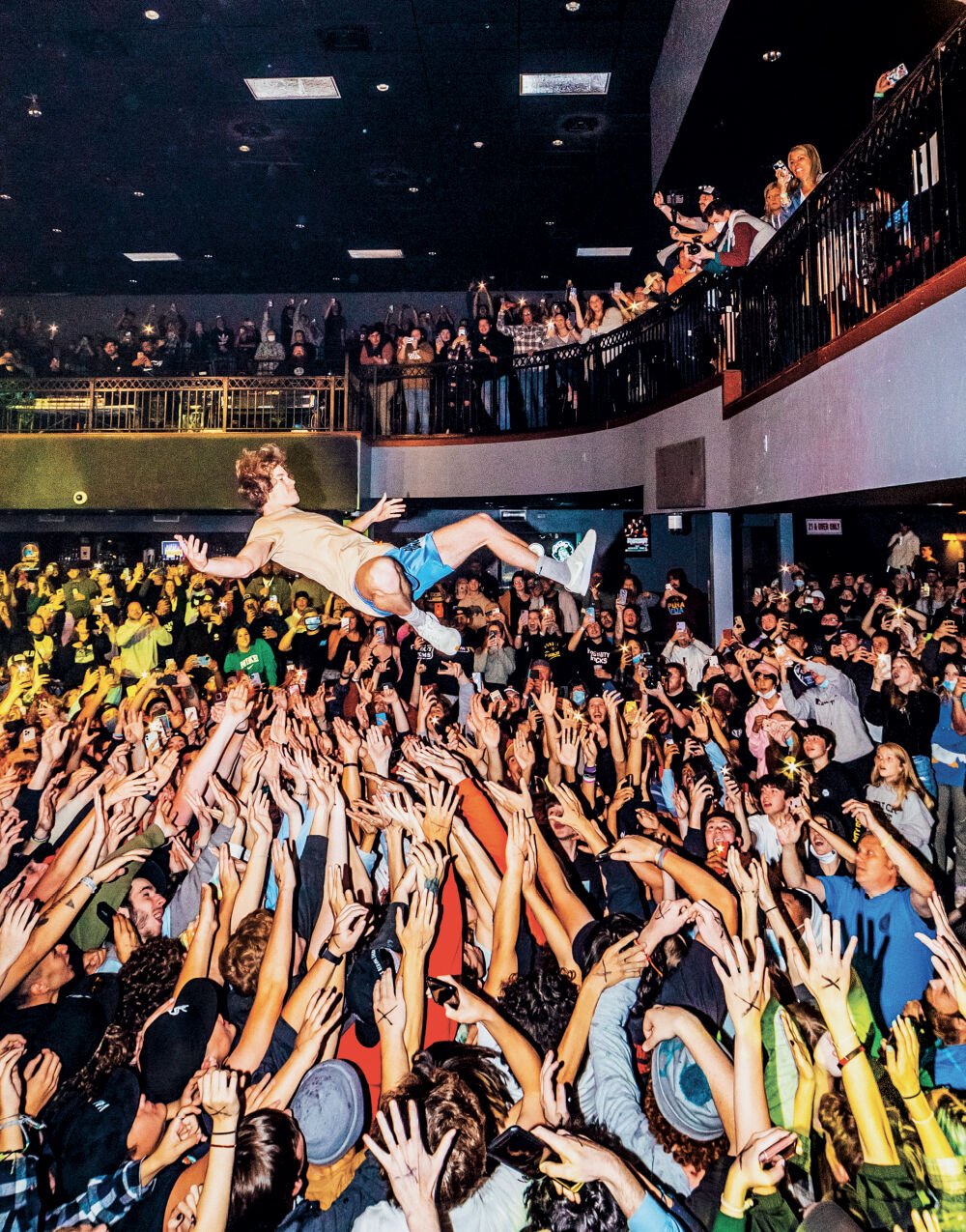
Danny Duncan plunges into the crowd at an arena show at the Knitting Factory in Spokane, Washington.
It’s not easy being Danny Duncan. One day the YouTube star with “millions and millions” of followers is plunging backward into a giant mosh pit at his arena show, hoping his writhing mob of young fans manages to catch him.
The next day he’s putting on a Speedo and climbing to the top of the Hollywood sign in L.A.
Or sinking his sister’s car in a pool of water, then presenting her with a brand new one.
Or popping skateboard tricks while wearing his “Virginity Rocks” T-shirt from the clothing line he purchased.
Or paddling a little kayak into the huge retention ponds surrounding fancy mansion developments in Englewood, Florida, where he says he grew up poor with his mom.
“People say, ‘You can’t do that.’ I always say, my Daddy owns it,” Duncan said about that last caper. “I just try to have fun and mess with people in a not harmful way.”
Duncan visited New York City for the first time last summer, and his friend took him to a 16 Handles shop. He raved about it to his 7 million-plus YouTube followers and the new owner reached out; within weeks he’d signed on to be minority investor and the brand’s first chief creative officer.
Duncan is also building a 16 Handles store in Englewood, as a first-time franchisee, which if successful will be his biggest feat to date.
But here the story switches to Neil Hershman, the 16 Handles franchisee and former hedge fund manager who last year assembled cash and debt to buy the brand from its founder, Solomon Choi, and assumed the CEO role, all while he was 27 years old. (He turned 28 this March.)
The pair’s mission is to bring an intense operator focus—everyone on the new management team owns or owned 16 Handles stores—and Duncan’s mostly male and under age 22 Gen Z followers to blow up the brand. “16 Handles is so popular in New York City. We want to bring it nationwide and to the world,” Hershman said, sounding like a CEO.
Duncan said the same thing but in his own way. “This is the sickest yogurt place I’ve been in.” Why not give everyone a taste?
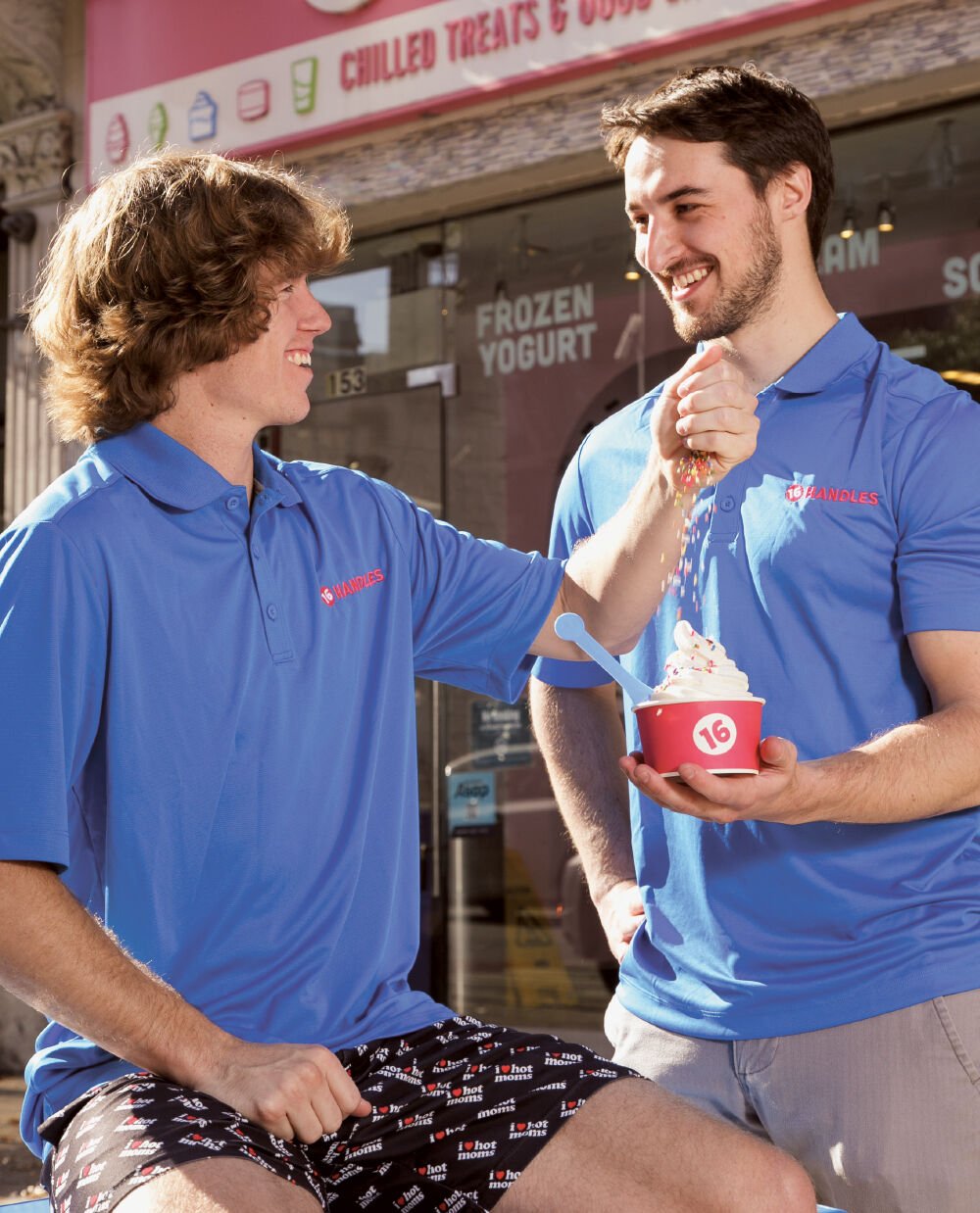
16 Handles CEO Neil Hershman, right, with YouTuber Danny Duncan.
An entrepreneur on an electric scooter
Franchise Times first met Hershman in 2021, when he zoomed down to his Dippin’ Dots/Doc Popcorn store in New York City for an interview. At the time 26 years old, he owned five 16 Handles stores, from Times Square down to Tribeca, plus the flagship co-branded Dippin’ Dots/Doc Popcorn, adjacent to Madison Square Park, with leases for two more.
Stay close to your stores was his mantra. “It became my signature management style. I can get to the stores in 10 minutes,” he said about his transportation mode. “It’s been a big success because emergencies happen.”
Hershman shared philosophies for other facets of his growing enterprise, too, and for his life. In June 2021, he had just returned from climbing Mount Everest, the latest of the month-long trips he took each year to challenge both himself and his staff to step up and run the stores in his absence.
“The hardest part of Everest wasn’t the summit day. It was the whole process, three weeks going up and down and up and down and sleeping with an oxygen tank and hoping it didn’t break and you’d die in your sleep,” he said, perhaps spinning a metaphor for the snacks and treats business.
Those days are gone, and not only because of the arrival last year of Summer Elizabeth, his baby daughter and first child. From about 30 stores last August, 16 Handles now has five new units under development, in Boston; Tampa and Naples, Florida; and Jersey City, New Jersey, as well as Duncan’s location in Englewood. In February they were close to announcing additional multi-unit deals in Texas, Hershman said.
16 Handles’ startup investment range is between $242,500 and $553,000, its franchise disclosure document says. Average unit volumes of the top third of stores will be between $850,000 and $900,000 for 2022. The bottom third will be about $475,000.

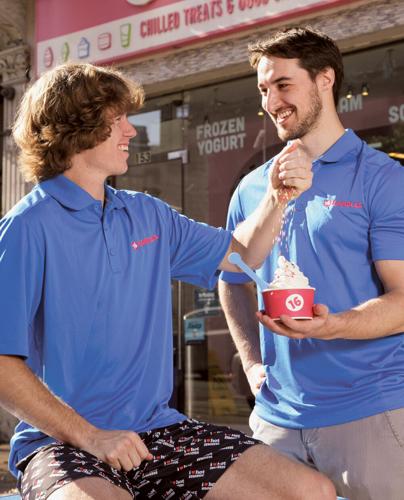
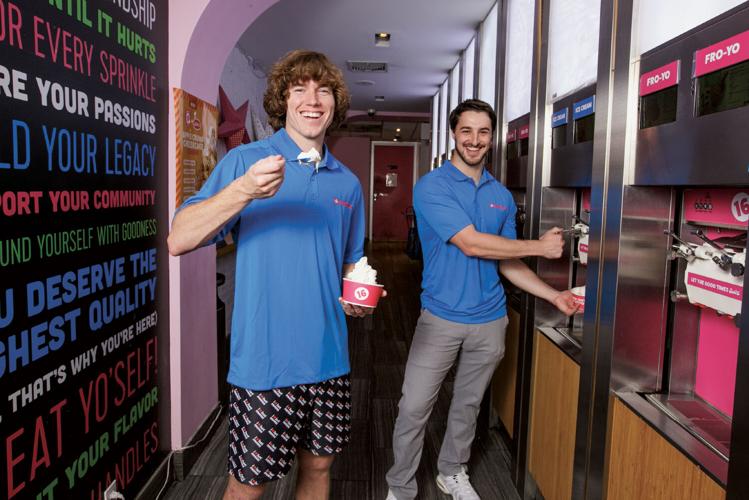
Danny Duncan, left, and Neil Hershman sample frozen yogurt at 16 Handles, named for the 16 dispensers of different flavors.
Being Danny Duncan
The sun is blazing in early November in New York City, and Chief Creative Officer Danny Duncan and CEO Neil Hershman are hanging out at their 16 Handles store in the East Village. (The name stands for the 16 types of soft-serve that customers can serve themselves.) Wearing “I Heart Hot Moms” short shorts—he’s trying to buy that trademark to add to his “Virginity Rocks” line—Duncan has his entourage in tow.
There’s his business manager, Stefan Toler, his videographer, his photographer and a couple of other dudes who seem to be there to hold everyone else’s extra stuff. Duncan answers questions politely, jumping up only to snap a quick selfie or exchange a secret hand grip with fans who walk by, every few minutes, always a young male.
At one point Duncan’s videographer is recording myself and the New York City-based photographer I hired, Stuart Ramson, as I ask questions and hold the umbrella (to diffuse the sunshine) and Ramson shoots photos of Duncan and Hershman as they playfully toss sprinkles and pretend to eat their giant scoops of froyo.
It’s a fitting scenario for a story about a YouTube star, who describes how he became one, in thoughtful and unusual ways.
“Neil messaged me” after he posted about his first visit to 16 Handles and NYC last summer, and offered assistance. That naturally morphed into a partnership, which appealed to Duncan—he doesn’t like anything that’s forced or fake.
“I’m always trying to do big stuff. Any ideas I have, I wanted to let my fans know this exists out of New York City. I have millions and millions of people that watch me every week,” Duncan says.
“I have a good relationship with my fans. They know it’s not bullshit. I’ve really focused on that my whole career.”

His rise to YouTube fame has been “very slow and steady” over the last decade or so, until 2017, “when I started becoming really famous.” He has more than 7 million YouTube subscribers, according to HypeAuditor, and 3.7 million on his personal Instagram.
Between 2020 and 2021, during COVID lockdowns, he sold more than $50 million of merchandise. And he sold out three world tours to over 95 percent occupancy, “with the market that everybody’s trying to get to know, Gen Z,” as Hershman puts it.
In those tours, Duncan tries to take his prank videos live on stage. “I do an old man haircut,” bald except for a little patch in the middle, “and kids will line up to get one,” Duncan explains. Or he’ll joust with kids wielding giant, blow-up lances. Or he’ll plunge into their arms. “They just want to go nuts. If you go to a rap show, they’re very mellow,” compared to the fans at his shows.
Has he done anything he regrets? “Yeah, hasn’t everyone?” he says, with a huge grin, his biggest all day. “I try to live my life so I don’t have any regrets,” however.
“I don’t want to be the guy who went broke. I look to my parents, they had nothing,” he says, and now he likes to give gifts to his mother and sister and friends. Is he buying his friends now? I ask. “We’re already friends. Like I gave my manager a car,” a Mercedes G-wagon. “I was making a million dollars a month in T-shirts for a while. I think he deserves a $250,000 car.”
He believes in the 19th century concept of “manifest destiny,” although he probably doesn’t know the origin, adopted by millennials today and translated roughly to: “If you can see it, you can be it.”
Did he know he’d someday be a rich YouTube star? “I was positive. I was 100 percent sure. I knew I’d be wealthy one day,” and he once put on his phone a picture of the house he wanted to buy his mother, for Christmas.
“I got a mortgage, put $150,000 down and paid 30 grand a month until it was paid off. That was 2017.”
And if he ages out of his core demographic, and they don’t like his pranks anymore? He says he’ll grow along with his followers. “No one wants to struggle financially as they get older,” and his investment in 16 Handles is about as adult as it gets. “I don’t just do dumb stuff every day. I will help people when I can.”
As for aging out, “I have a good gauge on what people like. I could go into an old folks’ home and figure out what they’d like in a week,” he says.
He takes critics in stride. “I don’t care. I could cure cancer tomorrow and there will still be people who talk shit. If you hand out free tacos to people, someone will say, why didn’t you give burritos?”
Above all, he is what he is, which is the only way for a social media influencer to be. “If you’re just yourself you’re different from everyone else,” Duncan declares.
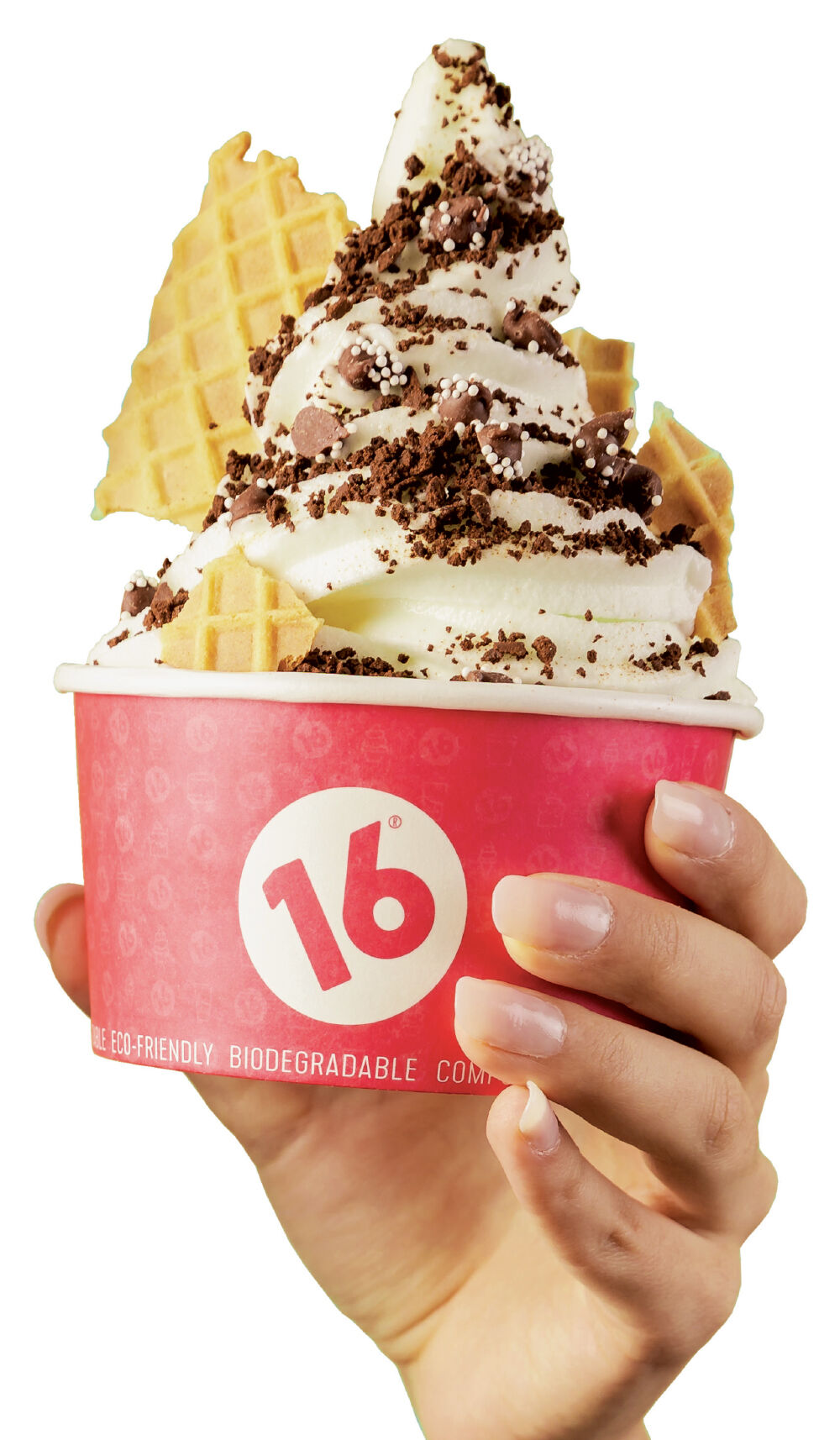
‘If anyone can pull it off, he really can’
Richard DeCesare and his sister, Dina DeCesare, own two 16 Handles stores, one in Stamford, Connecticut, purchased in 2014, and the second in New Rochelle, New York.
“I lived down the street” from the New Rochelle store, “and it was a Friday afternoon in the summer. There was literally a line wrapped around,” DeCesare said. “I’m like, what’s 16 Handles? They had a DJ inside, they had LED lights flashing. It seemed like such a cool concept and business.”
His father was in real estate, flipping properties on the Upper West Side, and the son of one of his business partners wanted to invest with the younger DeCesare. Then came a meeting with Solomon Choi and his cousin Alex Choi, the owners at the time. “Nothing was panning out. And then Stamford all of a sudden” came up for sale, DeCesare said.
“There were a lot of ups and downs. It started off very strong in the beginning, and then it dipped in 2017, 2018.” Why? “I don’t know. There were a lot of competitors. It was very saturated.” Then came COVID. “COVID really hurt us bad to the point where I thought we were going to lose everything.”
New Rochelle, in Westchester County in southeastern New York, “was the center of COVID, and that made the owner want to sell. It was a good grossing store, so we jumped all over it. Then after COVID, sales just started to skyrocket. Both are better than ever.”
Gross revenue at his stores is in the $700,000 range, net in the mid- to high $600,000s. “I was talking to Neil about this last week. There’s less competition. Places like Peachwave, Red Mango, they don’t have the flair, the whole flair and the whole vibe.”
That includes sparkling clean stores, a welcome surprise in a category rife with sticky floors from all those people making their own froyo sundaes. “You should see our stores. We actually get on our hands and knees and scrub ourselves,” he said.
DeCesare said he welcomes the changes at 16 Handles, including Hershman’s purchase. “The fact that he’s 27 years old and he’s got the whole brand, that’s very impressive. He has a lot of high hopes for the brand, and I think we’re going to wind up having a monopoly on the self-serve, because everything else is flat.”
DeCesare is almost 40, and when Danny Duncan signed on, “I didn’t know who he was. I’m like 10 years older. And then I looked him up and said, this guy is out of his mind. And I realized, he’s got 3.6 million followers” on Instagram. “This brand targets a younger crowd, so the fact that he’s advertising, that’s a lot of brand recognition.”
For Hershman, it’s all about the operator. “It’s really this operator-first kind of mentality that I have, having owned and operated one store kind of on my own for a few months, and then expanding to become a multi-unit operator. So it’s taking that approach to the franchising, which I just don’t think had been done,” he said.
What does that mean? “Systematically going through how we do inventory, how we get product to stores through distribution, and marketing, and loyalty.” He’s learned from “having been in the stores when we received product, and helping customers redeem the points that they earned, and seeing where the flaws were.”
Cost-cutting is another focus. “We’re just saving costs all over the board,” he said. “A lot of it is little, internal things. It all adds up and you can help your franchisees be more profitable.”
Being a franchisor is different from being a franchisee, he concedes. “It’s easy to say, this is how I’d fix it if I was the franchisor. Now I am the franchisor, and it’s not as easy as it seems. But one by one we’re tackling those. I think franchisees are more optimistic than they’ve ever been.”
As the brand grows, so does the complexity. “Obviously a franchise system has different markets and different owners in those markets, so not everybody agrees on everything all the time. Which is fine. You get a lot of really creative ideas and influences that way, so that you can achieve broad market success,” he said.
“But at the same time, you want to make every franchisee feel valued, feel heard. So now it’s worrying about the execution not just in my stores, but all of the franchisees’ stores.”
Erik and Lisa Mallon, who’ve owned a 16 Handles store in Connecticut since 2011, have joined the management team to help with the efforts. Erik is VP of franchise development, and Lisa is VP of operations and training.
“I thought it was a unique opportunity to have someone else who has experience on the franchisor side, and is a franchisee,” Lisa Mallon said, which she and her husband had with another brand, My Gym Children’s Fitness Center
“When I look at most franchising operations, there can be two different mindsets: franchisors trying to do something for them, and franchisees doing what’s important to them, and they’re not necessarily the same. When you can play on both sides, it just gives you the opportunity to balance,” she said.
Mallon’s role is to “be really focused on training, to make sure our stores are operationally running the way to meet our expectations. We have a very high level of expectation in how we run our stores,” she said.
“We believe it’s the sparkling clean stores, and it’s an incredible team that we train and have ready. It’s a whole experience, and that’s what I want to make sure we are able to continue as we grow. Sometimes that can get lost if you don’t keep on top of it.”
Like Duncan and Hershman, she too has a destiny in mind for 16 Handles. “I hope there’s hundreds of stores across the country. I hope we bring the message of happiness” everywhere.
“I’ve always believed in 16 Handles and the growth. Neil, he’s very passionate about it, he has a vision, and he’s certainly very impressive,” she said. “If anybody can pull it off, he really can.”
The long, hard road to Froyo dominance
16 Handles is not the first to try to corner the froyo market. Launched in Little Rock, Arkansas, in 1981, TCBY or The Country’s Best Yogurt today has about 350 stores. In 2001, there were 1,777 locations, and in August 2008 its parent company, Mrs. Fields Famous Brands, filed for bankruptcy protection.
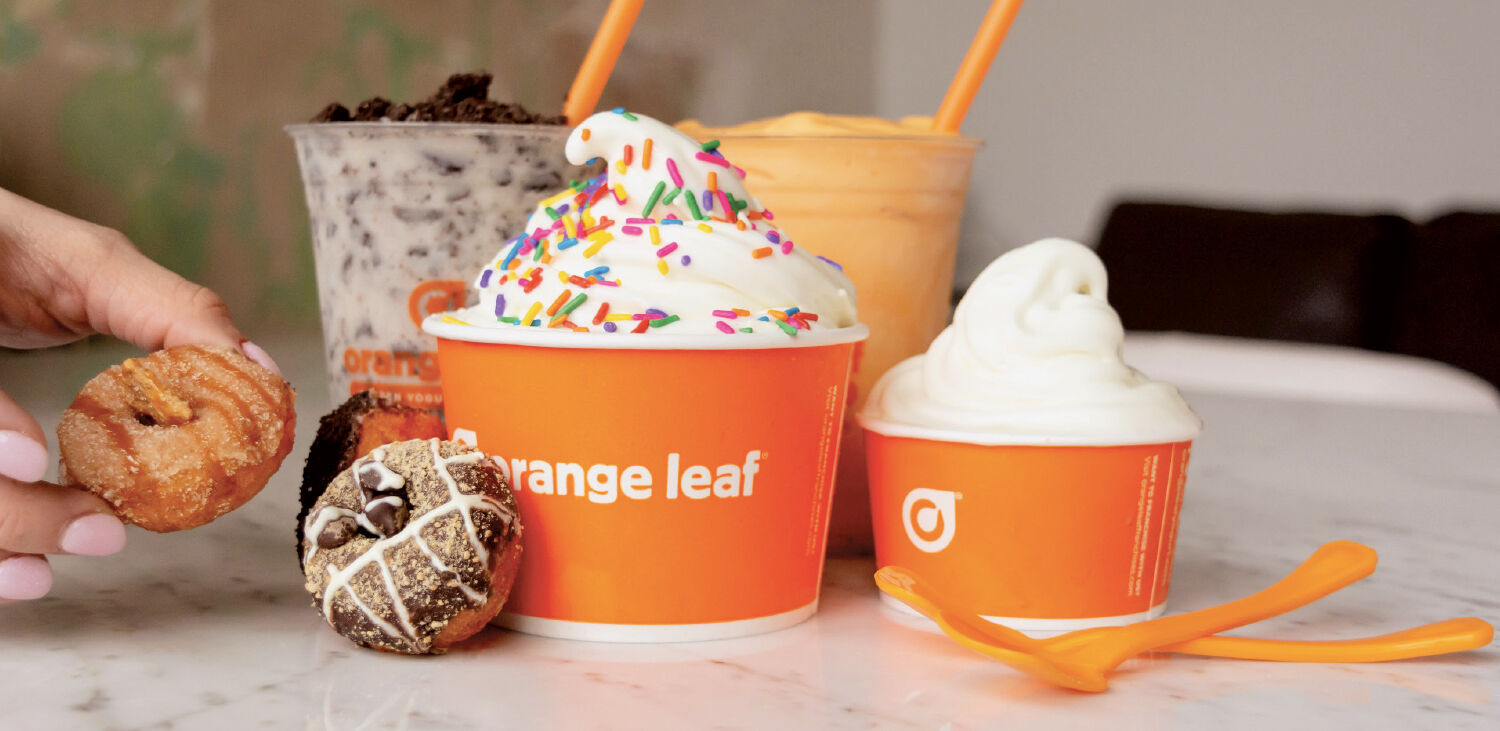
By 2015, self-serve, choose-your-own-toppings frozen yogurt chains were booming, such as Orange Leaf, YogurBerry, Cups, Red Mango, Let’s Yo, Pinkberry, Sweet Frog, Yogurtland, Menchies and Peachwave.

Yogurtland has about 230 stores but wants to grow again.
Yogurtland has hopes to double its store count in the next five years, President Sam Yoon told Franchise Times in January, but the 230-store chain closed 60 stores from 2019 to 2021. It had grown to more than 320 locations across 17 states and five countries by 2016.
Canada-based Yogen Fruz had system sales of $208.6 million in 2021 from nearly 600 stores (only 33 in the U.S.).
Brix Holdings tested out expanding yogurt franchises Orange Leaf and Red Mango via ghost kitchens in 2022. Red Mango has about 315 units, and Orange Leaf has about 82 as of 2022, down from more than 300 in 2015.
Pinkberry opened in 2005, but closed its Los Angeles-based flagship store in 2010. It claims to still operate more than 100 locations around the country.

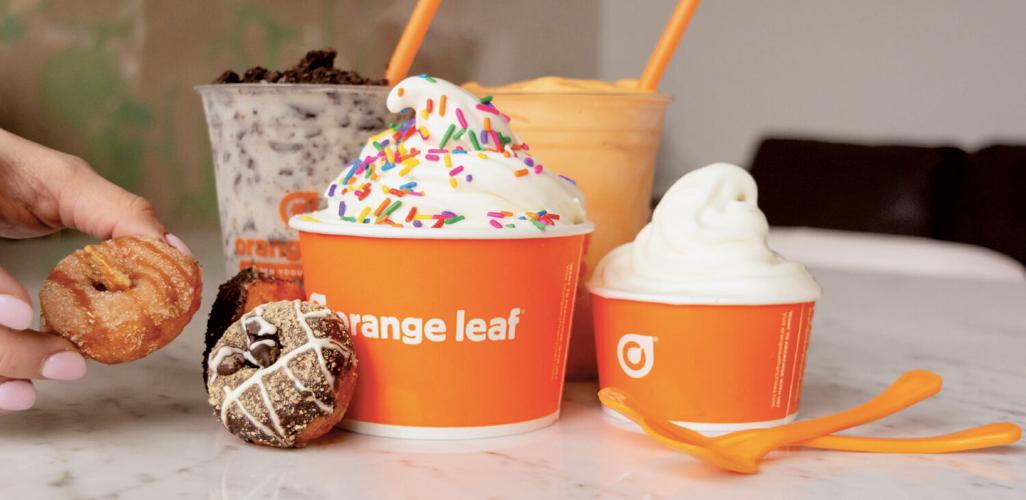
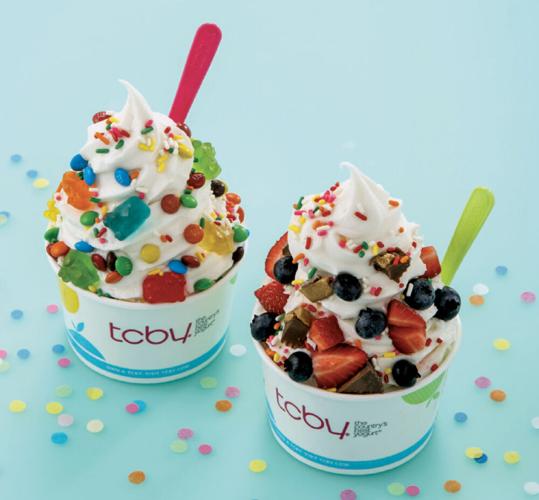
Top, Orange Leaf is among the many competitors in the frozen yogurt space, as is TCBY, above, which once had 1,777 stores.
Cups Frozen Yogurt opened its first brick-and-mortar location in 2010, and had 13 locations by 2013. With some likening it to a nightclub, and customers calling it “the Hooters of froyo,” Cups had a mere five locations operating by 2022, according to Eat This Not That.
16 Handles itself made waves when in 2015, the company opened 40 stores across America, a few locations in Saudi Arabia, and struck a deal to open 150 more across the Middle East. The brand had 30 locations when Neil Hershman and Danny Duncan bought it last summer.
Since then they’ve been busy. In January, Hershman bought DÖ Cookie Dough Confections, founded by Kristen Tomlan who will become chief brand officer at DÖ. DÖ will be sold exclusively in 16 Handles stores as part of the deal. This Valentine’s Day, 16 Handles partnered with Ketnipz, an online entertainment and clothing brand co-owned by Duncan, to celebrate “Palentines” day where anybody can bring their friends to try 16 Handles.
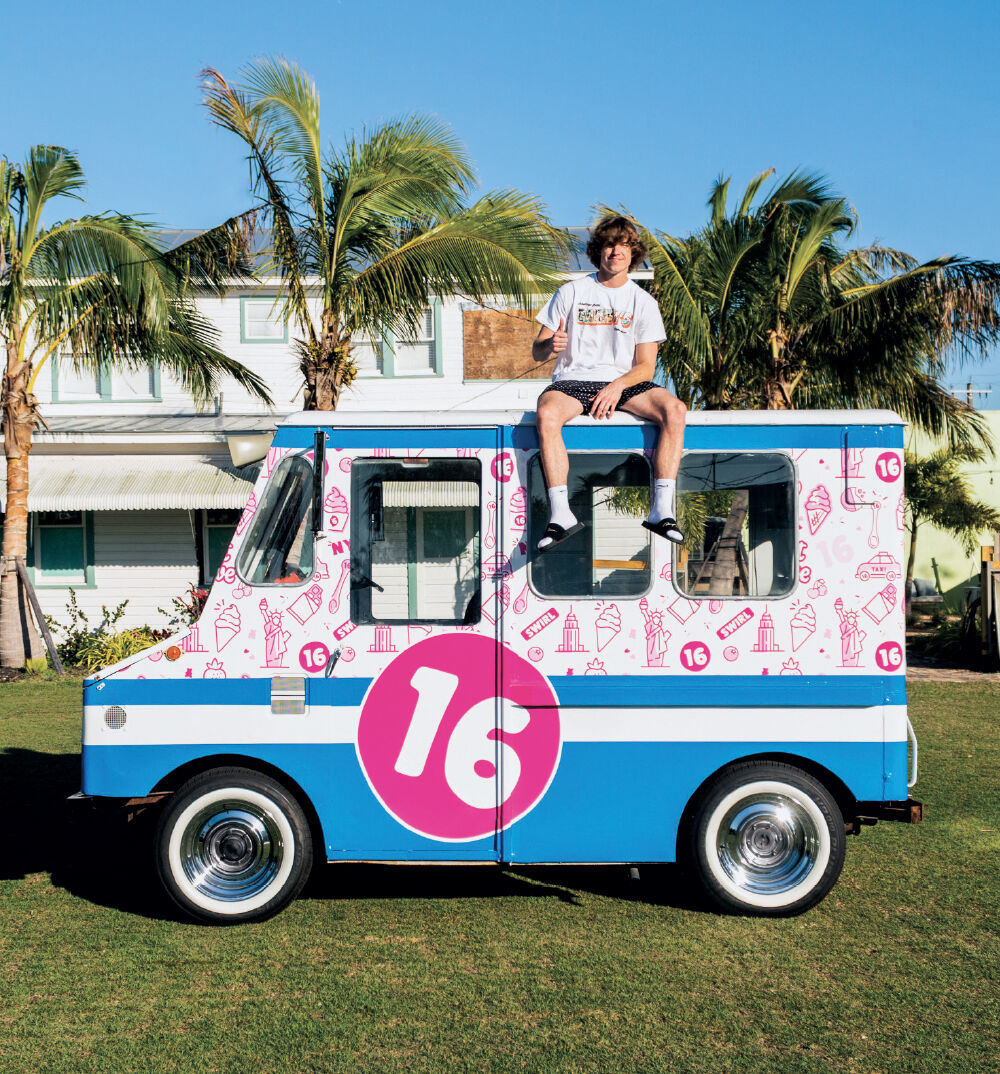
Danny Duncan, verbatim
“I don’t just do dumb stuff every day. I will help people when I can.”
“I could cure cancer tomorrow and there will still be people who talk shit. If you hand out free tacos to people, someone will say, why didn’t you give burritos?”
“I have a good gauge on what people like. I could go into an old folks’ home and figure out what they’d like in a week.’
“Like, I gave my manager a car. I was making a million dollars a month in T-shirts for a while. I think he deserves a $250,000 car.”