
“Our mission is to spread the joy of Korean comfort food around the world by offering these indulgent experiences.”
— Bryan Shin, CEO of Bonchon

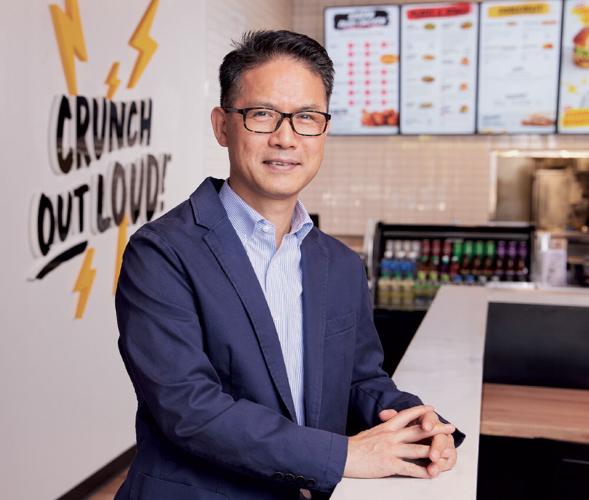
With the brand since 2019, Bonchon CEO Bryan Shin was promoted from global chief financial officer and head of international earlier this year.
Korean pop bands like BTS and Blackpink have taken over the global music scene in recent years, while Korean television and movies have likewise gained international popularity. There’s Psy’s mega-hit “Gangnam Style,” the Korean language song released in 2012; the Korean horror movie “Parasite,” which won Best Picture at the Oscars in 2020; and Netflix’s record-setting drama series “Squid Game,” which debuted in 2021. The world seemingly just can’t get enough of Korean art and culture.
Bonchon is seeing that trend reflected in sales of its signature Korean fried chicken. “K-wave content is hitting the global market very hard, like K-pop, K-food, K-movies, K-dramas,” Bonchon CEO Bryan Shin said. “We are the pioneer of Korean-style fried chicken. We are in a very good position to leverage this Korean wave, to be a brand of choice that everybody loves.”
Bonchon is No. 186 on the Top 400 list, which ranks franchise brands based on global sales growth in 2022. The chicken brand had systemwide sales of $327 million last year across 409 locations worldwide—a 19.5 percent increase over 2021. “I think Bonchon is at a critical juncture for exponential growth further,” Shin said. Bonchon also added 20 new stores systemwide, a 5.1 percent increase.
“Last year’s performance was phenomenal,” Shin said. “We initiated more important strategic actions, actually. This is for the more longer-term, sustainable growth, putting more weight on new product development and make the store expansion program more accessible to potential partners and enhance our digital ordering systems. I think we will see the fruit for the next couple of years.”
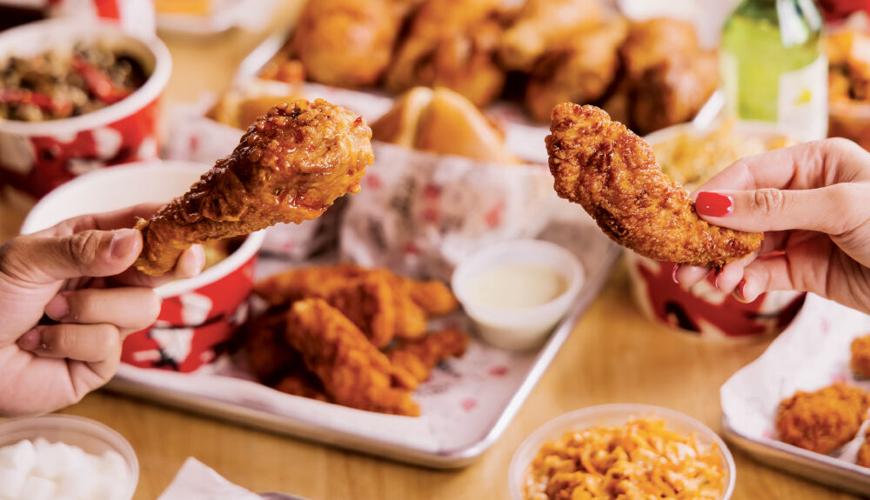
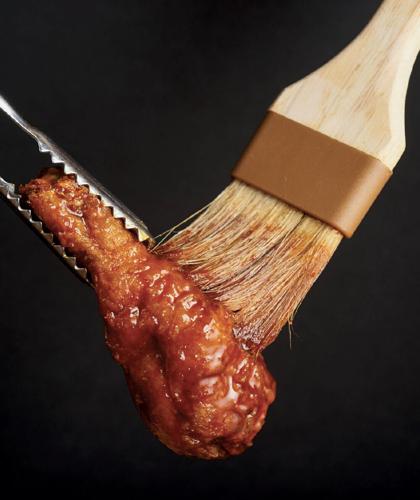
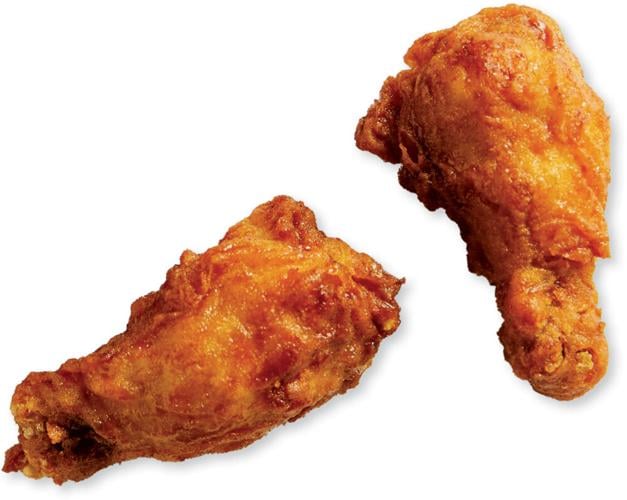
The company, which relocated its headquarters from New York City to Dallas in 2021, has a variety of Korean menu items, but the star is its fried chicken wings, coated in one of two signature sauces, soy garlic or spicy. (Shin’s favorite is spicy. “Koreans are very good at eating spicy food,” he said.) Korean fried chicken differentiates itself from other styles with its extra crunchy exterior. The wings are less saucy, too, so eating them doesn’t require a handful of wet wipes once the meal is over. “As an ethnic Korean, I want to highlight Korean heritage in menu offerings and taste profile,” Shin said.
Bonchon’s other traditional Korean offerings include bibimbap, a Korean rice dish, and bulgogi, a stir-fried dish composed of thinly sliced beef.

The star menu item at Bonchon is the Korean fried chicken, which earns its distinction with its signature crunchy exterior and variety of sauces. Bonchon serves its chicken with either soy garlic or spicy sauce. The franchise also serves bibimbap and bulgogi, each traditional Korean dishes.
Shin joined Bonchon in 2019 as the company’s global chief financial officer and head of international. Before that he led the restaurant business in South Korea for beer company Goose Island, and earlier in his career spent several years in business development for Yum Brands in Asia.
In May 2023, Shin took the top spot at Bonchon. “I’m going to tweak or fine tune … the overall business supporting systems by including IT, supply chain and marketing programs, so that the brand continues a meaningful and sustainable growth trajectory,” Shin said.
Jinduk Seo founded Bonchon—which means “My hometown” in Korean—in 2002 in Busan, South Korea. In 2006, Bonchon made its United States debut in New York City. The brand also has restaurants in Australia, Cambodia, Myanmar, France, Thailand, Singapore, the Philippines and Vietnam.
“Bonchon has been a very fast-growing brand and it is still a very young brand as well,” Shin said. “I think there are a lot of things I’m excited about, being part of the Bonchon history. … I’m proud of introducing high-quality and authentic Korean food to global customers, which is in line with our mission and vision.”
The cost to open a Bonchon restaurant ranges from $771,105 to $1.2 million for a dine-in store, $554,279 to $825,721 for a fast-casual store, $467,279 to $695,171 for a carryout-only store and $202,557 to $369,312 for a remote kitchen, according to the brand’s franchise disclosure document.
‘Spice of life’
The company implemented new initiatives to increase Bonchon’s average unit volume, which in 2022 hovered around $1.7 million across its 105 U.S. units that were open all of last year. After new openings, Bonchon had 122 U.S. stores open in 2022, all but five of which are franchised.
“One driver is the product,” Shin said. “We are very proactive, very aggressive on new product introductions, because if we have new products and we can leverage those products for the effective and exciting marketing campaigns, which brings us a lot more foot traffic.”
Bonchon’s AUV has continued to increase since 2019, despite the COVID-19 pandemic—something many brands can’t say about their unit economics. In 2019, the average unit volume was $1.3 million across its 98 U.S. stores.

In the next five years, Bonchon hopes to see a $2 million AUV in the United States and 500 total restaurants nationwide. It also wants 500 international units in the same timeline. Bonchon had 287 international units open by the end of last year.
“I feel like Bonchon has a long runway,” Shin said. “This is just the start of a long journey, but we are at a very good position to leverage our good assets and good legacy.”
Chicken is a major category, with new brands popping up all the time. There are established brands like KFC, Chick-fil-A, Buffalo Wild Wings, Wingstop and Popeyes, which dominate the sector. But there are more emerging brands, including Bonchon, that make up an increasingly large percentage of the category. Slim Chickens, Dave’s Hot Chicken, Lee’s Famous Recipe Chicken and Wing Zone are all expanding and working to snag a larger share of the market.
Bonchon categorizes its food as a simple luxury. In international markets, the brand has run ads with the tagline “spice of life.”
“Our mission is to spread the joy of Korean comfort food around the world by offering these indulgent experiences,” Shin said. “We aim to provide some nice touch of life. So, we call it spice of life in international markets.”
Systemwide, Bonchon has been revamping its store interiors to give restaurants a fresh look. “This will provide some unique dining experiences for the customers,” Shin said.
‘The food is what got me’
When it comes to signing multi- or single-unit franchisees, Bonchon isn’t just targeting one or the other. “We are pretty much flexible. We’ve pursued both,” Shin said. Instead, the focus when awarding new franchises is more about the operators’ philosophies.
“These franchise partner candidates are required to have … a passion for the brand and they should know Bonchon very well,” Shin said. Bonchon looks for business ownership and managerial experience as well.
Manish Singh is a multi-unit operator who has been a Bonchon franchisee for about a year. He purchased three existing locations in Maryland and Virginia and more recently signed an agreement to develop six new restaurants in the Virginia Beach area.

“I think we can build a good customer base, and that’s the reason I ended up signing additional locations,” Singh said.
Singh has 13 years of franchising experience. He worked with his father, a Papa Johns franchisee, after college and later opened a few Tropical Smoothie Cafe stores.
For Singh, what really appealed to him was what came out of the kitchen. “I think the food is what got me,” he said. When he first tasted it, he knew it was something customers would want to have again.
“If the quality is there and the taste is there, the customers will come if you serve them properly,” he said. “That’s why I got into Bonchon.”
He bought an existing store in Rockville, Maryland, and five months later he purchased two more stores in Virginia. One of the two wasn’t yet finished, so Singh had to wrap up the buildout before it opened in December 2022.
Bonchon has provided the support Singh needed throughout his time as a franchisee thus far. “Other brands, bigger brands, they listen, but they don’t really listen, so you just kind of fall on a deaf ear,” he said. “But with Bonchon, they actually do make a commitment to listen and follow through with any changes, and I’m happy to see at least they’re trying and listening.”
On the financial performance front, Singh said the endeavor has proved very profitable for him.
“I’m happy and passionate about being part of it,” he said. “I think others should look into it if they want to grow in the food business.”