

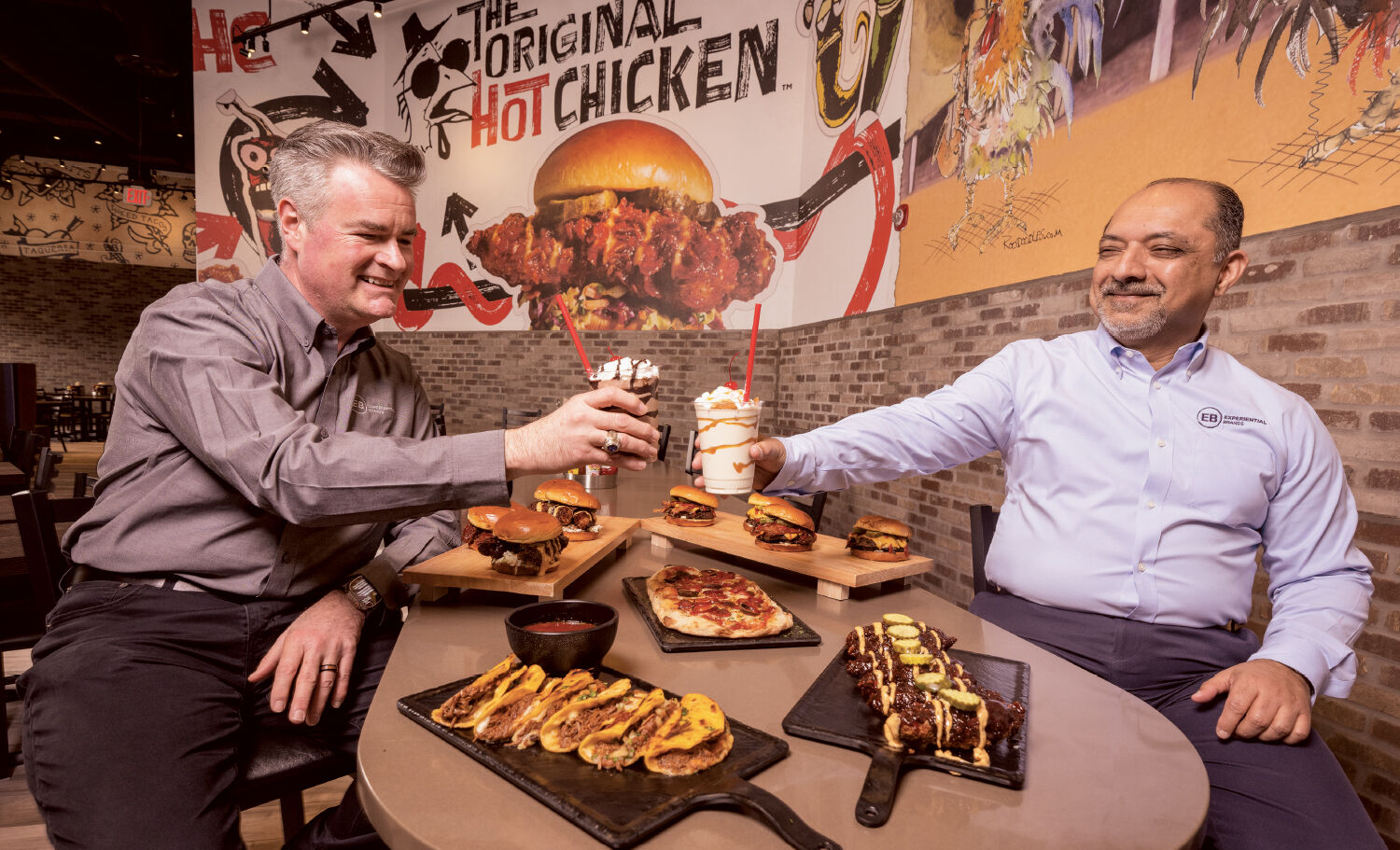
Experiential Brands execs James Walker, left, and Aziz Hashim are combining multiple food brands in their SocialBites Food Hub concept, with focused menus hitting chicken, tacos, burgers and pizza—plus milkshakes.
Return on invested capital. That’s the financial metric that matters to Aziz Hashim, and its emphasis within the franchise model is lacking.
“I’ve got to get my money back. I can’t bank percentages, that’s not a currency,” Hashim said. “So if you have an X amount of cash investment into a facility, then how soon do you get it back?”
It’s the same approach private equity firms take—how quickly is money returned to investors and with what profit—and one Hashim honed as the founder of his own PE firm, NRD Capital. The thinking likewise underpins his latest venture, SocialBites Food Hub.
Created within NRD’s Experiential Brands portfolio, SocialBites evolved from four separate brands—The Original Hot Chicken, Inked Tacos, Flametown Burgers and Pinsa Roman Pizza—designed on their own to deliver compelling unit-level economics. Put them together, said Hashim, and the result is an ideal conversion opportunity for larger casual dining spaces or buffet restaurants. The social component comes in the form of hosted activities such as trivia night, Bingo, karaoke or the occasional live band, which help drive traffic and sales.
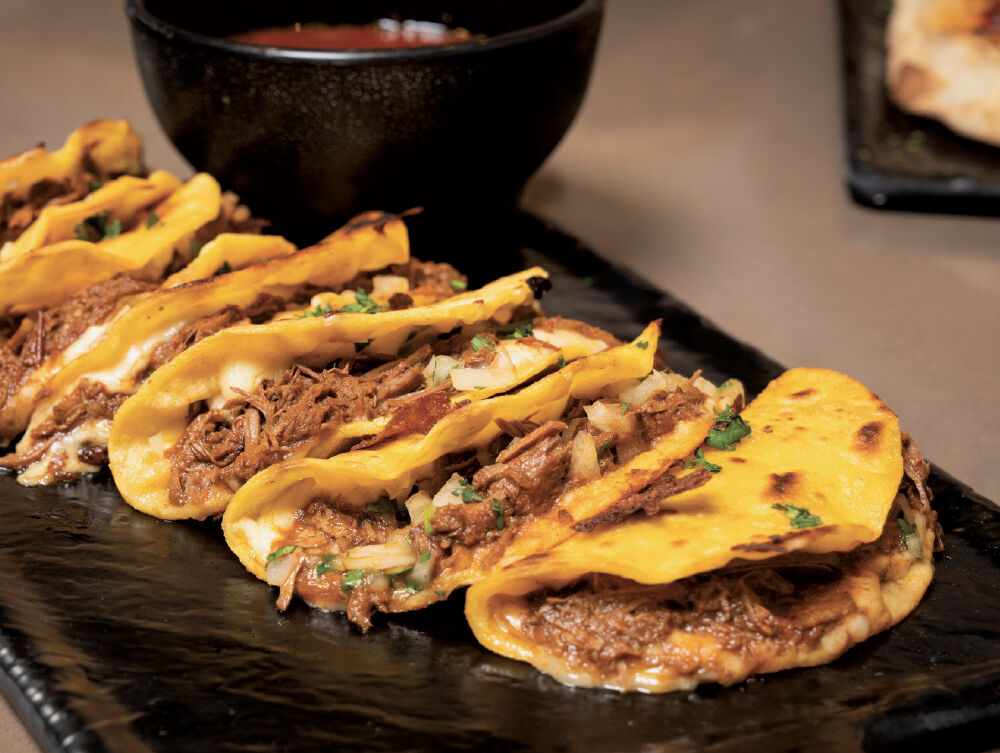
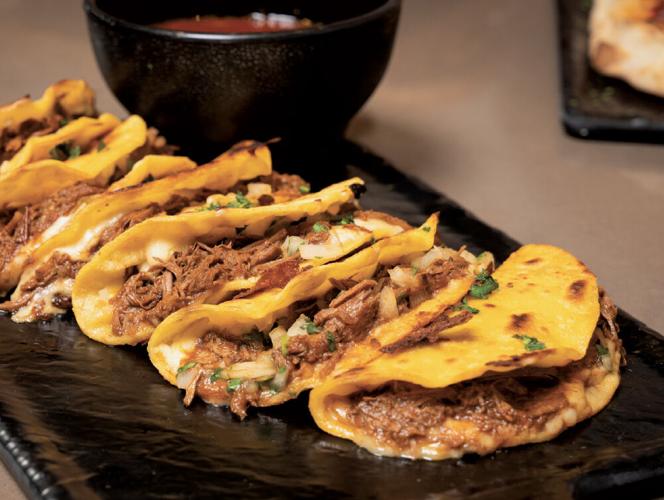
Chief Culinary and Concept Officer James Walker says the birria beef tacos at Inked Tacos are demonstrative of the emphasis on high-quality ingredients and the close eye kept on food costs.
But wait, a franchisee might be thinking, isn’t this simply akin to a food hall? While some of the characteristics are similar—multiple food brands under one roof—the typical food hall is not practical as a franchise, Hashim said. It requires a much larger site, carries higher buildout and operational costs to execute menus with varying equipment needs, and usually necessitates dealing with different business owners who lease stalls with separate point-of-sale systems and their own staff.
SocialBites provides four branded concepts with limited menus, a common kitchen platform to minimize equipment requirements, a single POS and carefully engineered labor model to maximize efficiency in the front and back of house.
“My concern always has been franchisee unit economic profitability,” said Hashim, who got into KFC in the ‘90s and built a holding company that at different points included Popeyes, Subway, Long John Silver’s, Domino’s, Moe’s Southwest Grill and others.
Today, NRD Capital owns the Frisch’s Big Boy chain, along with Altitude Trampoline Parks and POS platform Qu. It’s a minority investor in technology companies Harri and 1Huddle, and last year sold Fuzzy’s Taco Shop to Dine Brands Global.
Under its Indoor Active Brands, the platform company that operates and franchises more than 80 Altitude parks, NRD is also developing a new pickleball-focused entertainment concept, The Pickle Pad.
Hashim has long been vocal about the tight margins restaurant owners face, exacerbated by the mounting development costs and overcomplication of operations that, in his view, have franchisees resigned to a return on investment in seven or eight years. And by then, it’s time to remodel. (The cost to open an Applebee’s, for example, starts at $2.4 million and can go upwards of $7 million.)
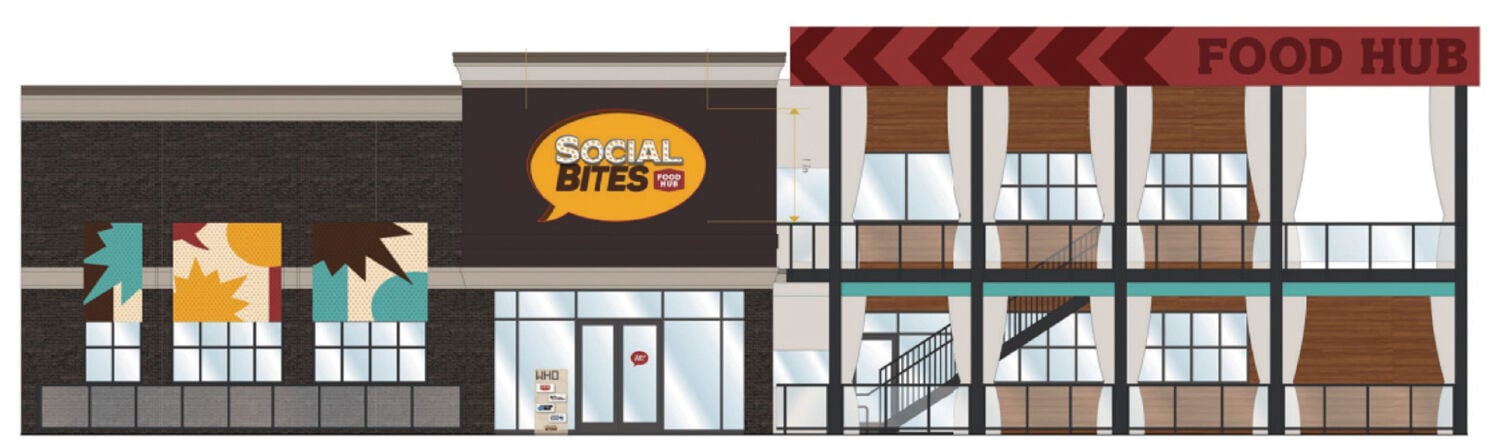
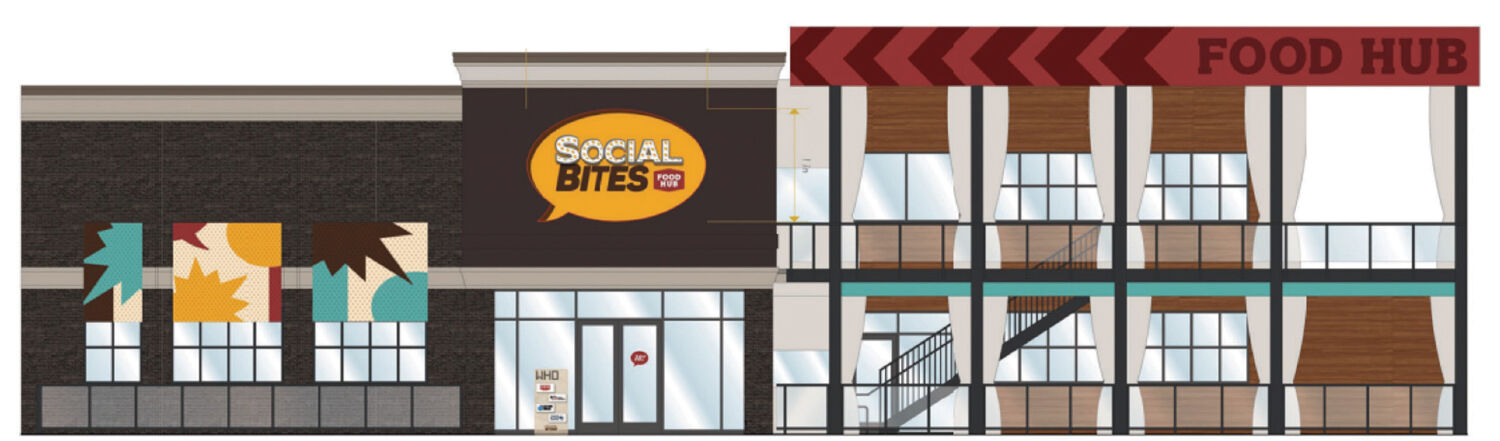
The SocialBites Food Hub branding makes its debut at the location in Sandy Springs, Georgia, in June, where The Original Hot Chicken, Inked Tacos, Flametown Burgers and Pinsa Roman Pizza are all operating on the same point-of-sale system and with food prepared from a single kitchen.
“This is where I started feeling that the return rates were not commensurate with the risk and the realities of the cost of opening a restaurant. That was the genesis,” he said. “I’ve been working on this for quite some time to think about how to reset.”
With its franchise disclosure document still in the works—a franchise program for SocialBites should launch next year—a final investment range wasn’t available but Hashim said the goal is to keep the conversion cost of an existing restaurant space to no more than $500,000. He wants franchisees to be able to recover their investment in two years.
“Our premise is lower the cost of investment, because that’s the number one factor in how fast you get your money back,” he continued. “The less you put in, the faster you make money.”
Also the creator of Franklin Junction, a host kitchen company that works with restaurants to generate sales during off hours by producing food for delivery under virtual brand flags, Hashim likened SocialBites to a host kitchen but for the front of the house. What was a 3,000- to 5,000-square-foot casual or family dining restaurant is repurposed with the chicken, taco, burger and pizza brands to bring “highly elevated food” to customers “at a very reasonable price.”
At the first SocialBites Food Hub in the Atlanta suburb of Sandy Springs, Georgia—a Mexican restaurant conversion completed for less than $200,000—The Original Hot Chicken’s chicken sandwich is $7.99. Two sizable birria queso tacos from Inked Tacos go for $8.99.
“A family can come in or a group can come in and enjoy the type of food that they wouldn’t expect at that price, in an environment that’s inviting,” said Hashim.
A second company-owned SocialBites is slated to open in August in Woodstock, an Atlanta suburb where The Original Hot Chicken has an inline location. Site selection is underway in Ohio for No. 3 and for a fourth in Atlanta in late fall. The chicken concept is also in 15 Frisch’s units via Franklin Junction, while Flametown Burgers is in 26 Frisch’s restaurants.
Both brands will launch in the United Kingdom and Dubai through partnerships with cloud kitchen platforms Rebel Foods and Kitopi, respectively.
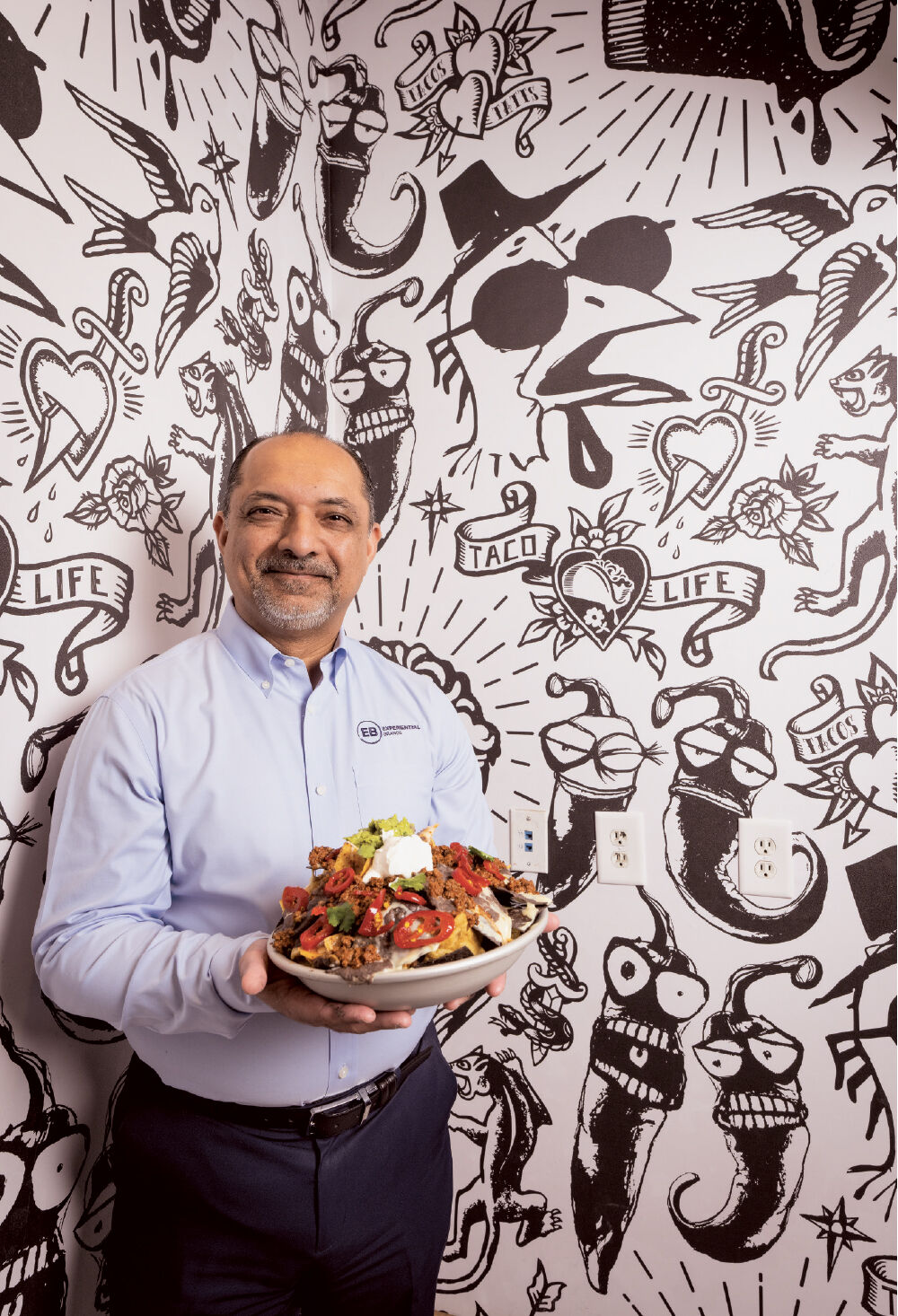
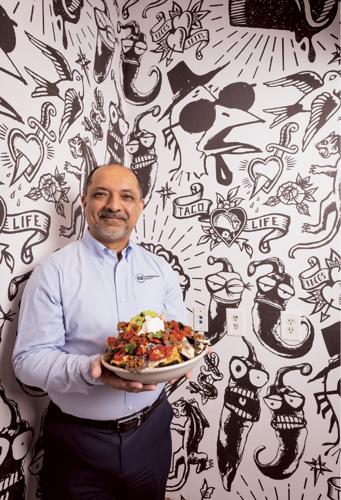
NRD Capital founder Aziz Hashim says the SocialBites Food Hub concept and its focus on restaurant conversions helps keep costs down and shorten the time frame for franchisees to see a return on invested capital.
Meet the menus
High quality, mass appeal. Those were two requirements James Walker had in mind as he developed The Original Hot Chicken, and they permeate each SocialBites concept.
As multiple hot chicken brands burst onto the restaurant scene in recent years, Walker, chief culinary and concept officer for Experiential Brands, noticed they were targeted at young males and had a “how hot can we make it” mentality.
“I thought that there was an opportunity to create a concept that would have more mass appeal, that absolutely wouldn’t alienate young males, but also that there would be something for families, families with young children,” he said. “And when I think of fried chicken, not necessarily just hot chicken, but fried chicken, I think of the South, and Aziz came up with the name.”
The core menu item, a pickle-brined chicken tenderloin dipped in wet tempura batter and rolled in corn flakes, brings different mouthfeels and flavors, said Walker, and the corn flakes keep it crunchy for a better delivery experience. (Each menu was designed with delivery in mind.) A banana pudding milkshake, which Walker created using his grandma’s pudding recipe, is another Southern nod.
“We bring a fine dining attention to our food,” noted Walker as he also pointed to the birria beef for Inked Tacos, the candied jalapenos used on a Flametown burger and the cupped pepperoni for Pinsa Roman Pizza. The menus were refined to a handful of top-selling items, with an eye toward cross-utilization of ingredients and simplified execution in the kitchen. The chicken, for example, shows up on Pinsa’s Nashville hot pizza, and the queso makes multiple appearances.
“It’s making sure that we’re taking the complexity out, and that just requires due diligence,” he said. “We were able to craft the food in such a way that the end product tastes chef-driven, but it can be executed with a minimally experienced cook in the back.”
On the labor front, Walker said even during busy lunch or dinner rushes, two cooks and a couple food runners can handle duties in the kitchen.
Each brand was built to fit the same equipment package while allowing for flexibility and the introduction of new items, or even a new concept, to help drive ongoing customer interest. The digital menu boards and Qu POS platform that connects on- and off-premises order channels in what Hashim termed a “menu ecosystem” bring even more adaptability to the model.
“I think one of the keys here in the future of restaurants is, how do you retain dynamism at low cost? Because traditionally, if you want to change anything in your restaurant, it’s a big deal, it’s a big affair,” said Hashim. “We don’t think that’s the future. The future is flexibility, very quick response to customer demand, the ability to change menus without fear. That is what we try to create here.”
As someone who’s been on both sides of the franchisor-franchisee equation, Hashim understands the mindset of each. Franchisors want to boost sales to maximize their royalty streams, while too often an item or marketing tactic might not wind up being profitable for the operator. With SocialBites, he wants to find common ground he called profit-focused franchising.
“It’s in everything we do. I think that is the number one area where franchisors and franchisees can get alignment is on that particular term,” said Hashim, because both sides want profitability. “We’re designing brands that are very, very profitable for franchisees. We believe that in turn results in faster franchisee growth, which makes the franchisor more successful.”